Table of Contents
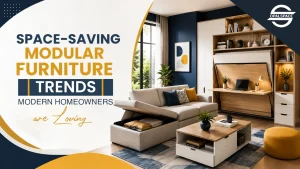
Modular furniture no longer sits in luxury catalogues alone. Today, it has entered regular Indian modern homes where people want a smart storage solution. Families living in small flats and apartments cry out for furniture to serve their modern lifestyle. This shift has pushed modular furniture into the spotlight.
What is Modular Furniture?
Homeowners can customise modular furniture as per their taste and storage needs. These units are building blocks you can arrange in different layouts and shift them. These types of furniture narrow down to smart planning, unlike traditional heavy furniture.
Modular Furniture vs Ready-Made Furniture
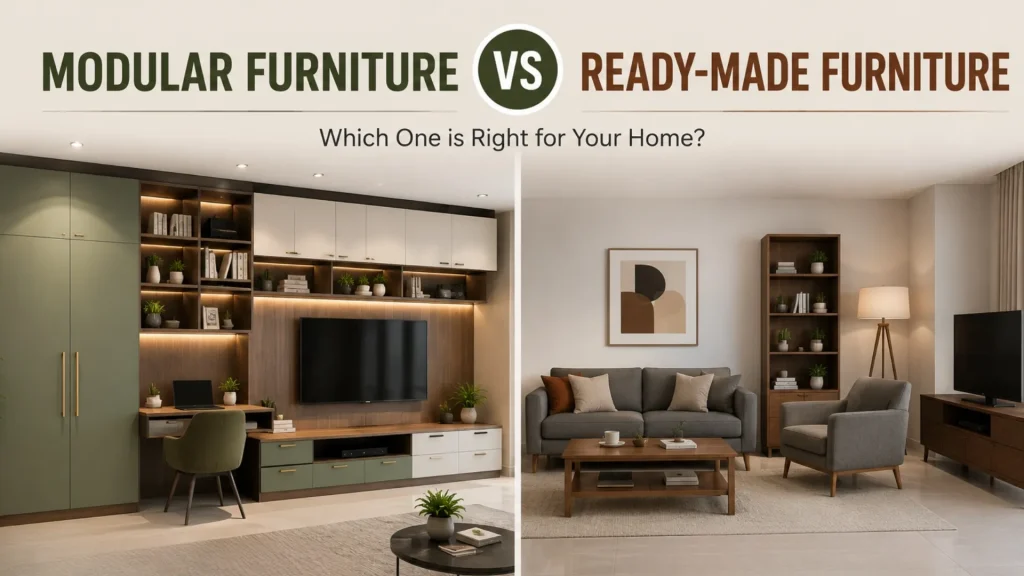
Why modular furniture has become a smarter and more practical choice than traditional ready-made furniture for modern homes.
| Parameter | Modular Furniture | Ready-Made Furniture |
|---|---|---|
| Cost |
Higher initial cost due to custom sizing and planning |
Lower upfront cost with standard factory-made designs |
| Durability |
Better durability when manufacturers use plywood, HDHMR, or premium hardware |
Durability depends on material quality and mass-production standards |
| Customization |
Homeowners can customise size, storage, layout, and finishes according to room requirements |
Limited customisation because furniture comes in fixed sizes and designs |
| Maintenance |
Easy maintenance with replaceable modules and organised storage layouts |
Repair and replacement become difficult if any section gets damaged |
| Installation Time |
Requires planning, measurement, and installation time |
Quick purchase and immediate placement inside the house |
| Flexibility |
Supports future upgrades, layout changes, and modular storage expansion |
Limited flexibility after purchase due to fixed structure and dimensions |
What is Modular Furniture Design?
Another important part of modular furniture design involves flexibility. Families can upgrade storage sections later according to changing requirements. Someone may start with a small wardrobe and later include extra cabinets or drawers. This practical approach makes modular setups more useful for modern Indian families.

What is the Advantage of Modular Furniture?
Modular furniture design has multiple advantages with the surge of smart storage options in large or small residential spaces.
- Cabinets, pull-outs, wall storage → Save floor space
- Drawers, corner baskets → Use left-out awkward corners
- Customizable to dimensions → Fits any room
- Wardrobe compartments → Find items faster
- Rearrangeable sofa sections → Adapts to seating needs
- Hidden storage (sofa/bed) → Conceals extra items
- Foldable dining setup → Makes room when needed
- Easy relocation → Simplifies moving
- Upgradeable sections → Avoid buying new, save money
- Dedicated spaces for items → End random mess
What are the Types of Modular Furniture for Modern Homes?
1. Modular Kitchen
- Use a modular kitchen for smart storage planning in modern homes and compact apartments.
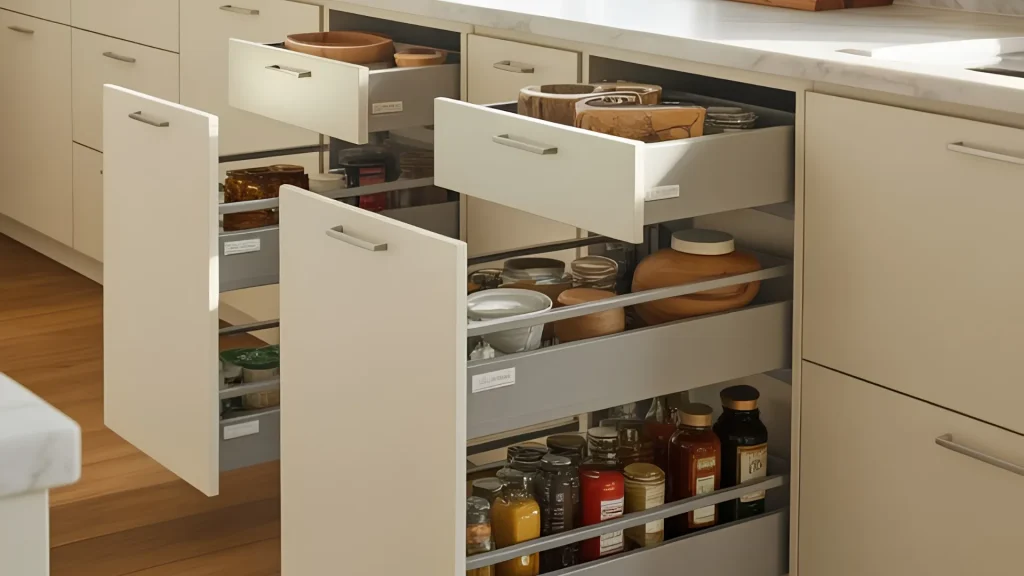
- It provides separate storage units for utensils, groceries, cookware, spices, and kitchen appliances.
- Tall units help you store large and extra kitchen essentials in an organised section.
- Wall-mounted storage frees up countertop space and keeps daily-use items in reach.
- Pull-out drawers and corner baskets help homeowners use difficult kitchen corners neatly.
- Overhead cabinets and under-counter storage improve kitchen organisation and space management.
- Modular kitchen layouts support better movement inside small cooking areas.
- Interior designers customise modular kitchen setups according to cooking habits and kitchen dimensions.
- Modern modular furniture prioritises organised layouts and useful storage
2. Modular Wardrobe
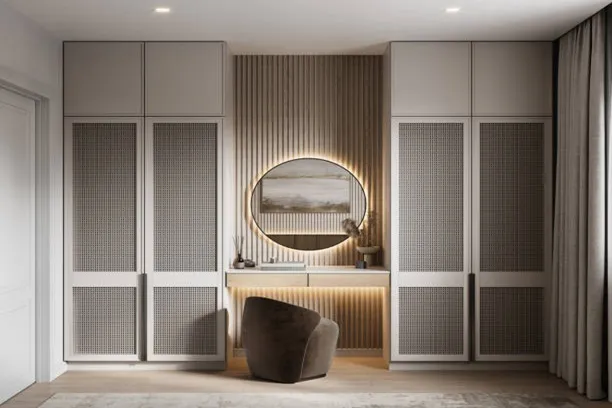
- A modular wardrobe gives systematic storage for daily essentials.
- Modular wardrobes use separate storage units like drawers, loft storage, and shelves in one wardrobe setup.
- Built-in wardrobe layouts help you use wall space, especially in compact bedrooms.
- A sliding wardrobe saves space for navigation because the shutters move sideways, and not outward.
- A 2-door sliding wardrobe works well for small bedrooms and studio apartments.
- A 3-door sliding modular wardrobe gives larger storage sections for extra clothing and accessories.
- Many homeowners now prefer modular wardrobe designs with hidden compartments, pull-out organisers, and dedicated shoe sections for better storage management.
- Wall-mounted storage above wardrobes is for storing seasonal items and less-used belongings.
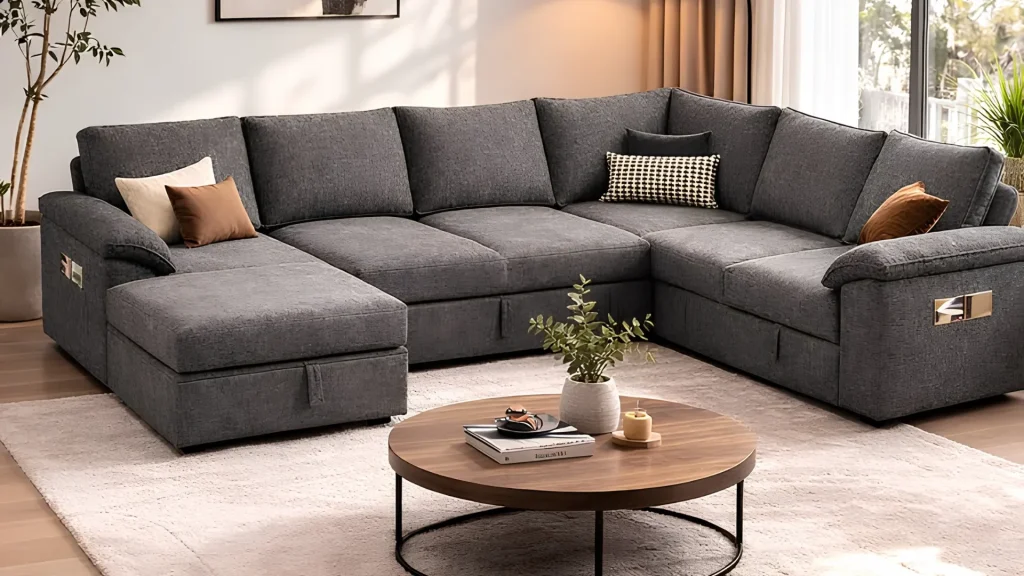
3. Modular Sofa
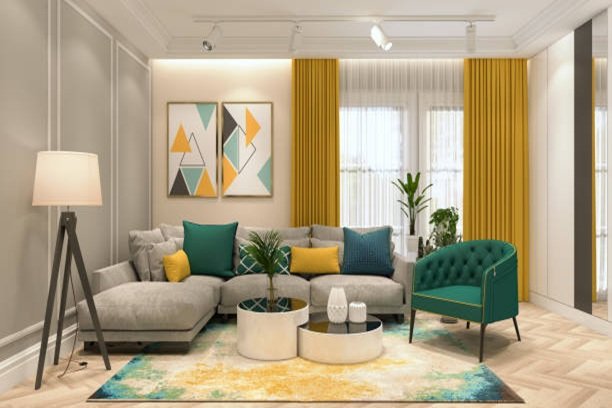
- Modular sofa concentrates on flexible layouts, and trending sofa designs support this concept.
- A modular sectional sofa does wonders for small flats as you can rearrange sections.
- Many of the latest sofa setups have hidden storage sections for textiles and draperies.
- L-shaped and sectional sofa layouts can use corners in a small living room.
- You can expand seating later by adding extra sofa modules.
- These sofa systems also support easier shifting during relocation.
- Due to better space management and practical seating arrangements, modular sectional sofa designs have become a popular choice in modern Indian homes.
4. Modular Shelving Systems
- Modular shelving systems are meant to organise books, decor items, office supplies, and kitchen jars with planning.
- Interchangeable shelving upgrades storage management and cuts down unnecessary floor occupation.
- Wall-mounted modular shelving always saves space, and it uses vertical wall areas.
- Open modular shelves give quick access to items that are used time and again.
- Modular shelving systems also support flexible layouts. You can expand shelf sections later according to changing storage requirements.
- Floating shelves, cube shelves, ladder shelves, and corner shelving units are popular choices in modern day homes.
5. Modular Storage Units
- Modular storage units are for organising household items through dedicated storage sections.
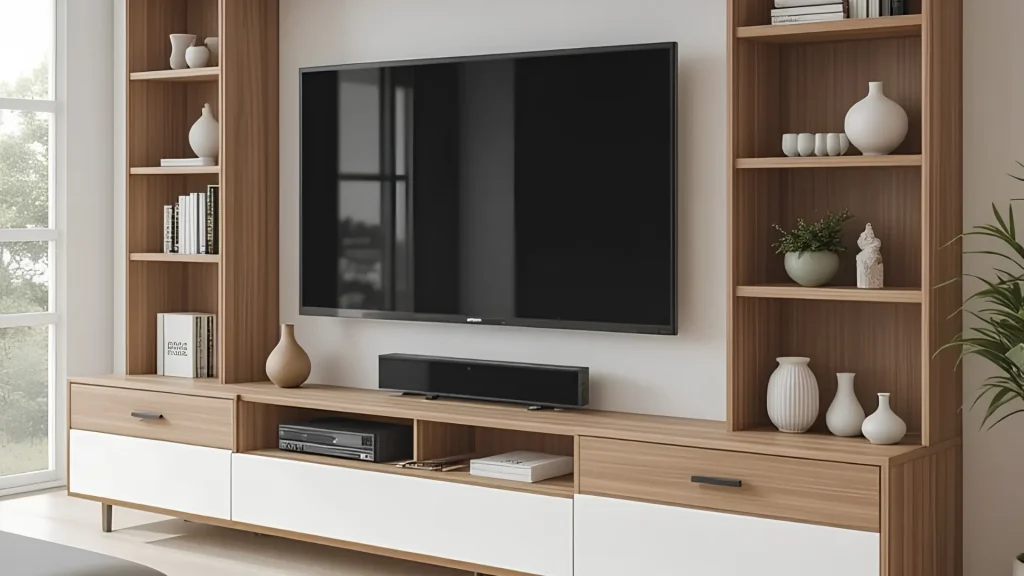
- It has storage units like TV consoles with drawers, bedside cabinets, study storage, under-bed storage, and movable organisers.
- Under-bed storage units store blankets, luggage, and seasonal clothing in unused spaces.
- Study storage units can easily organise your books, files, and gadgets in one planned setup.
- TV storage cabinets come with drawers and closed sections for remotes, wires, routers, and electronic devices.
- You can shift these modular storage units whenever you want.
6. Multifunctional Furniture
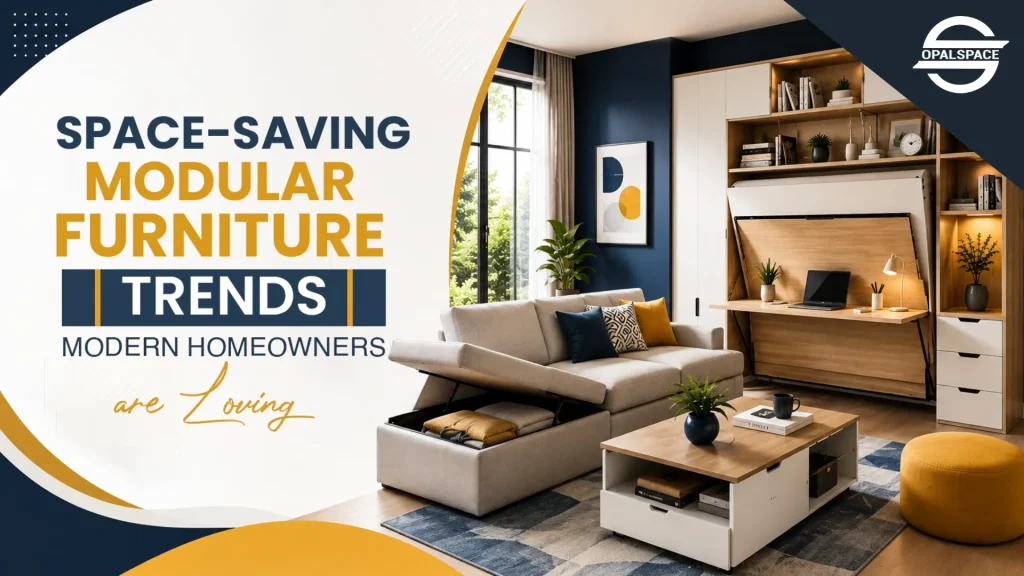
- Multifunctional furniture serves modern homes in so many ways at the same time. It’s a great way to use the smallest of spaces completely.
- Clever furniture options like sofa-cum-beds, foldable dining tables, wall-mounted study desks and storage ottomans.
- A foldable study table can turn into a work desk during the day and free up movement space later.
What are the Best Materials Goes into Modular Furniture?
Materials hold the accountability of the quality, strength and lifespan of modular furniture. The materials used in its construction make selection an important part of modern interior planning.
- Plywood: It’s a strong material used to handle moisture better than many other boards.
- MDF (Medium Density Fibreboard): MDF is popular for smooth finishes and decorative furniture panels.
- Particle Board: It’s a budget-friendly option. You can use it in lightweight modular furniture and basic storage setups.
- Engineered Wood: Engineered wood is a very common choice nowadays. Because it is affordable and serves a utility in contemporary flats and apartments.
- Laminates: Laminates work as a protective surface layer. It resists scratches, stains, and daily wear. On top of it, it is available in many colours and textures.
- Acrylic Finishes: Acrylic is a glossy finish material. You can opt for it in your modular kitchen cabinets and wardrobe shutters for a high-end look.
- HDHMR Boards: These boards are moisture-resistant. They combat humid areas where regular boards fall weakly.
What are the Latest Modular Furniture Trends?
Space-Saving Modular Furniture:
Sustainable Modular Furniture:
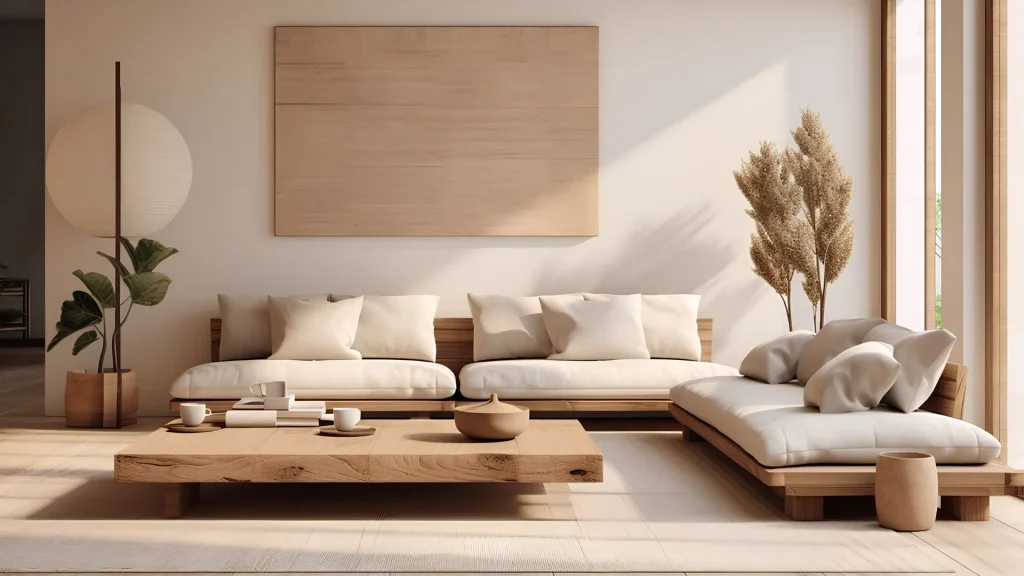
Japandi Furniture Style:
Smart Storage Furniture:
Minimalist Furniture Design
Curved Modular Sofas
Customizable Furniture Systems
Home Office Modular Furniture
Modular Furnitures for Different Rooms
Different rooms have different needs and different layouts. You cannot think of installing the same type of furniture in different rooms. You must select your modular furniture type on the basis of the storage, movement space, and daily usage you need. This is why modern homes now use customised modular setups.
- Living Room: Modular TV units, modular sofa layouts, modular shelving, display cabinets, and smart modular storage.
- Bedroom: Modular wardrobe systems, sliding closets, bedside storage units, under-bed storage, and wall-mounted study tables.
- Modular Kitchen: Tall units, pull-out drawers, corner baskets, pantry cabinets, wall-mounted storage, and overhead cabinets.
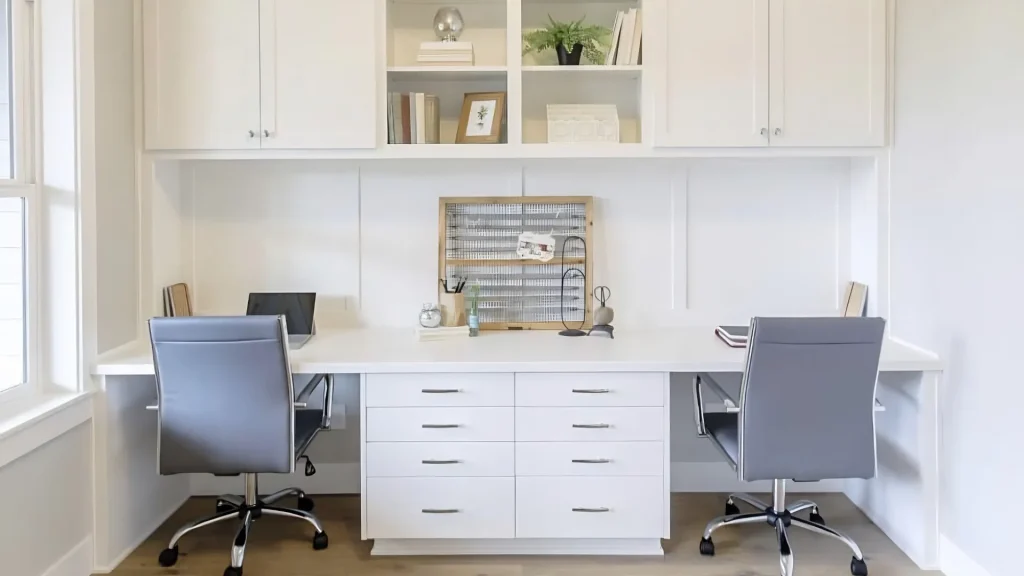
- Home Office: Foldable workstations, modular shelving, file storage units, wall-mounted desks, and compact storage cabinets.
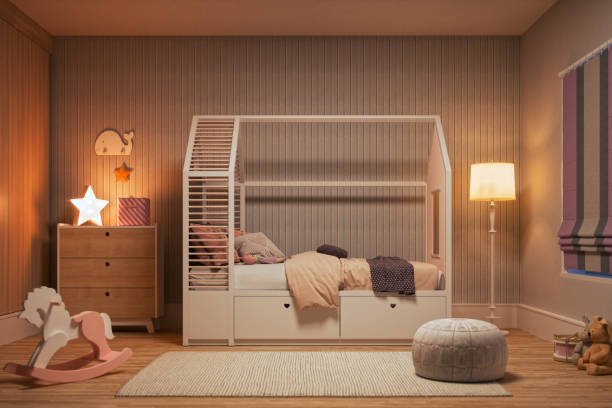
- Kids Room: Modular study tables, toy storage units, bunk beds with storage, wall shelves, and compact wardrobes.
- Balcony Storage: Weather-resistant storage benches, vertical shelving units, compact cabinets, and wall-mounted planters.
- Dining Area: Foldable dining tables, crockery storage units, corner cabinets, and bench seating.
How to Choose the Right Modular Furniture?
When you are at the point where you get stuck among multiple modular furniture options, trying to choose the right one, that’s when you must know how to go about it.
- You should measure your space properly
- Prioritise storage needs
- Go for durable materials
- Select easy-to-maintain finishes
- Match interior theme
- Check warranty and hardware quality
- Consider future flexibility
Common Mistakes to Avoid When Selecting Modular Furniture
Many homeowners invest in modular furniture for better space management, but poor planning and wrong material selection can lead to storage and usability problems later.
- When you ignore room measurements
- Pick style over practical use
- Poor hardware quality
- Overcrowding small rooms
- Not planning storage properly