The blog explores the best room divider design ideas for 2026, covering materials, styles, and how they fit different home layouts.
Table of Contents
Homes in India are becoming smarter, but not bigger. A 2BHK in Noida, a studio in South Delhi, a rental flat in Gurugram, and each open room cannot do the job of two. That is exactly where a room divider partition comes in place. It is not furniture. It is a design decision that redraws your space without a single brick or a builder’s quote.
In 2026, room divider ideas have moved far beyond folding screens and curtain rods. Homeowners, tenants, newlyweds, and young professionals now have access to materials that look deliberate. They work well. They suit Indian interiors and Indian budgets. This blog covers the best room divider design ideas for a modern home, such as wooden slatted panels, bamboo, glass, and more. Each entry includes guidance on matching the type of space you have.
In 2026, room divider ideas have moved far beyond folding screens and curtain rods. Homeowners, tenants, newlyweds, and young professionals now have access to materials that look deliberate. They work well. They suit Indian interiors and Indian budgets. This blog covers the best room divider design ideas for a modern home, such as wooden slatted panels, bamboo, glass, and more. Each entry includes guidance on matching the type of space you have.
What is a Room Divider?
A room divider is a temporary or semi-permanent device used to split a single room into multiple functional zones without construction. It splits one room into two or more zones. No construction required. No cement. No permission from a builder. It is not a wall. A wall is permanent. A room divider is a movable, replaceable, or removable.
A room divider partition can be a single panel or a series of panels. It can be made of wood, glass, bamboo, metal, or a combination. It can sit on the floor. It can hang from the ceiling.
A room divider partition can be a single panel or a series of panels. It can be made of wood, glass, bamboo, metal, or a combination. It can sit on the floor. It can hang from the ceiling.
What is the Best Room Divider for Home Interiors in 2026?
A room divider partition separates zones within a single room, requiring no permanent construction. In 2026, the most popular options are.
- Slat Room Dividers
- Wooden Panel Room Dividers
- Bamboo Living Room Dividers
- Minimalistic Glass Panels
- Half Wall Half Glass Dividers
Why a Room Divider Partition is a Smart Interior Move in 2026?
Open-plan layouts look great in listings. In real life, a bed visible from the front door is a problem. So is a study desk next to a sofa. Or a dining table squeezed into the living area. No defined zones. No sense of purpose in any corner.
- A room divider solves this without demolition. For renters, especially, it means that change is fully reversible. For homeowners, it is a faster route to a redesigned floor plan. Far less expensive than knocking or raising walls.
- Beyond privacy, room dividers manage how light and sound travel across a space. A slatted wooden partition lets morning light pass through. It also gives visual separation. A glass panel keeps a room bright and marks where the living zone ends and the work zone begins.
- In Delhi NCR, 900 sq ft routinely serves as a living room, dining area, bedroom, and home office. A well-placed room divider partition is one of the most practical investments for that constraint.
Top Room Divider Design Ideas For Every Home Type
Each of the following divider types serves a different spatial need, budget range, and interior preference. Here is a detailed look at what is trending and what works.
1. Slat Room Divider
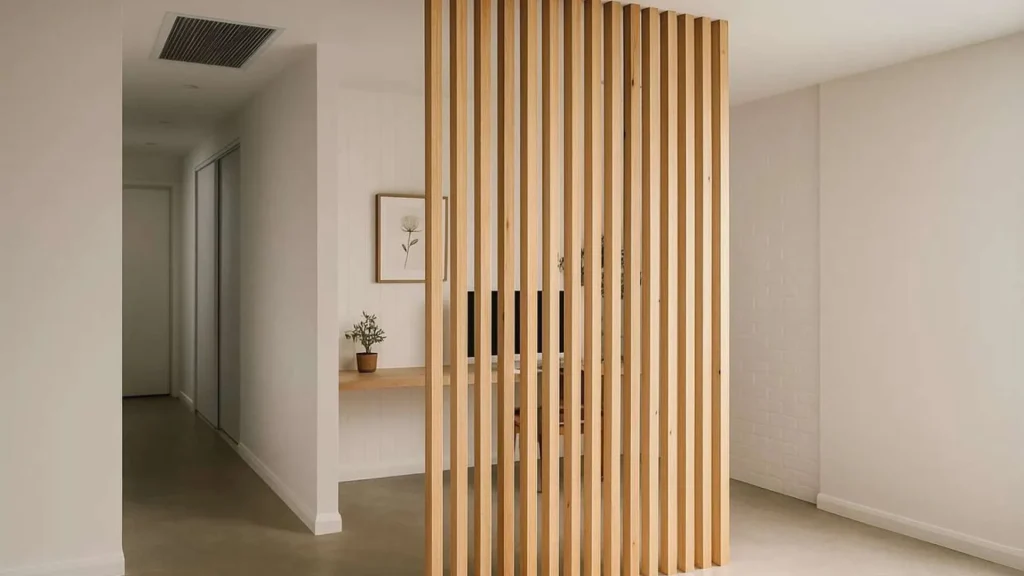
Slat room dividers are having a strange moment in 2026, and for good reason. Slats spaced 1 – 3 inches apart let light pass through and maintain airflow. The room gains architectural quality, and the sightline stays open.
Wood leads as the top slat material. Power-coated metal slats are gaining popularity in modern interiors. A floor-to-ceiling slat room divider design in dark walnut or matte black makes a statement.
Wood leads as the top slat material. Power-coated metal slats are gaining popularity in modern interiors. A floor-to-ceiling slat room divider design in dark walnut or matte black makes a statement.
2. Wood Room Divider
A wooden room divider remains one of the most requested options in Indian homes. Teak, walnut, sheesham, and engineered wood bring natural density to a space. Designed well, none of them looks heavy. The most common form is the panel room divider. It uses vertical wooden panels that sit on a base frame. Heights run floor-to-ceiling or stop at partial height. This panel divider draws a clear line, living on one side, dining on the other.
3. Bamboo Living Room Divider
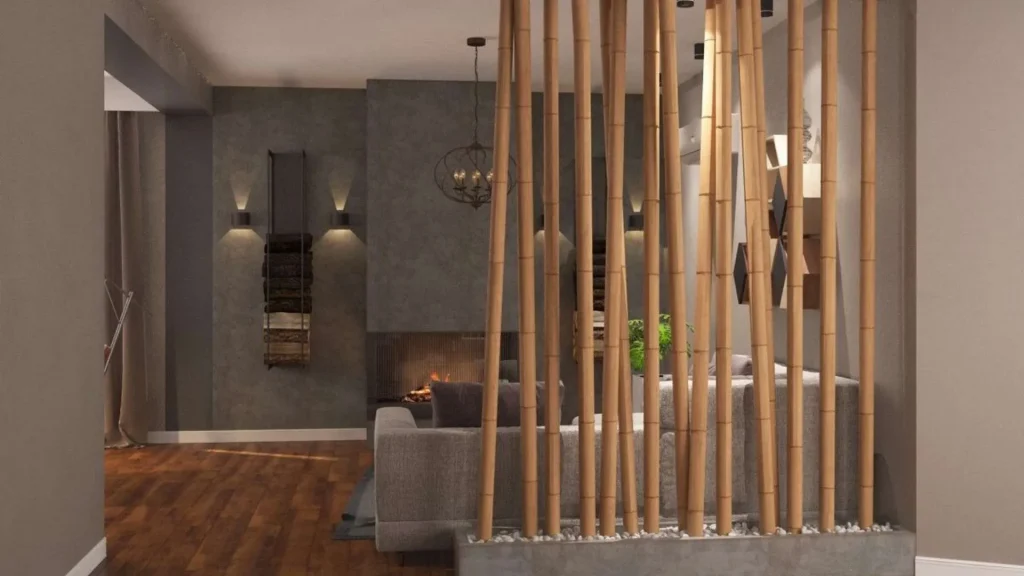
A bamboo living room divider is lighter, more organic, and noticeably more affordable than hardwood alternatives. Bamboo grows faster than most timber species, making it a lower-impact material choice. Bamboo handles Indian humidity well. Bamboo works equally well indoors and in semi-open spaces. Balcony extensions, covered terraces, and sun-facing rooms are all fair territory.
4. Minimalist Glass Panel Room Divider
For homes where light is the priority, a minimalist glass-panel room divider provides separation without visual weight. Frameless or thin-profile aluminium-framed glass panels allow full light transmission, the room stays bright, and the zones stay defined.
This approach suits larger apartments and newer construction in Delhi NCR, where floor-to-ceiling windows are common. Placing a glass room divider between a home office and a living room keeps the workspace visible but acoustically separated.
This approach suits larger apartments and newer construction in Delhi NCR, where floor-to-ceiling windows are common. Placing a glass room divider between a home office and a living room keeps the workspace visible but acoustically separated.
5. Vintage Glass Panel Divider
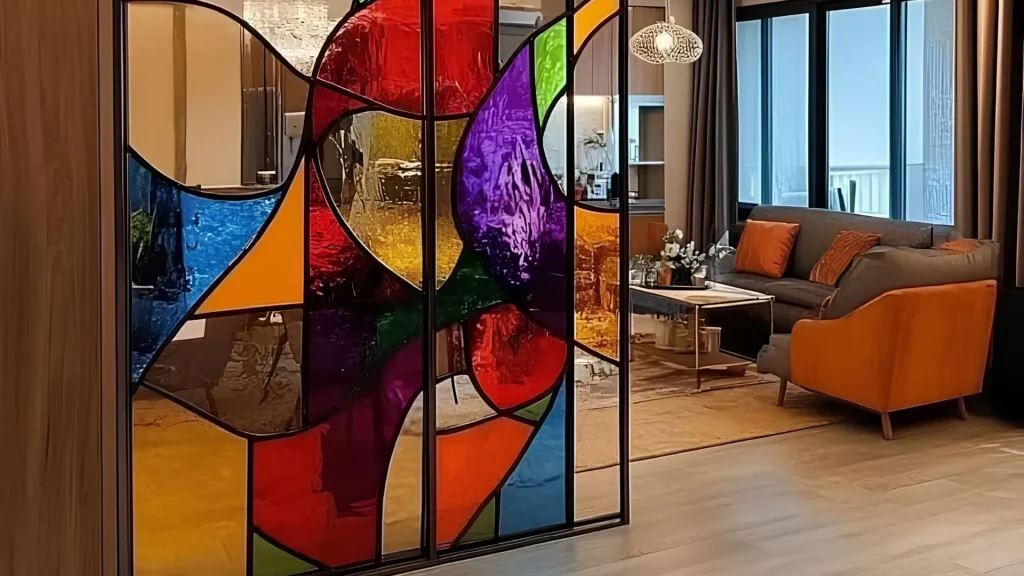
Not all glass is the same. Vintage or decorative glass, reeded, fluted, obscured, or stained, brings texture and visual interest that plain panels cannot replicate.
Reeded glass has become one of the most requested glass types in India. It diffuses light beautifully, obscures detail without being opaque, and pairs exceptionally well with warm wood frames.
6. Half Wall Half Glass Room Divider
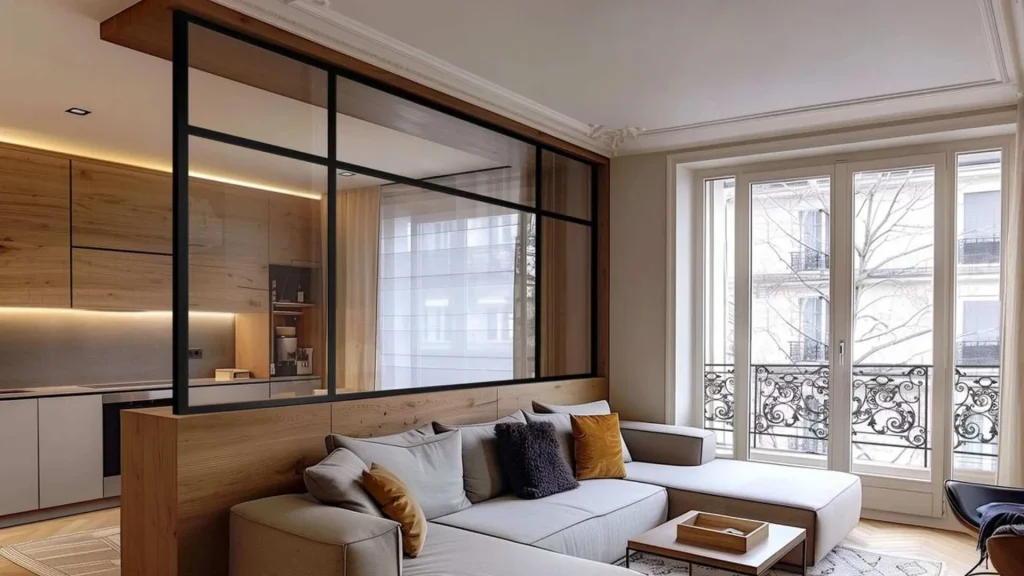
A half-wall, half-glass room divider is a solid lower section combined with a glass upper section that runs up to the ceiling or a defined height.
The solid base provides real privacy and a sense of architectural weight, it reads like a wall from a seated position. The glass section above keeps both zones connected. Light travels across the full height of the room.
7. Partial Glass Living Room Divider
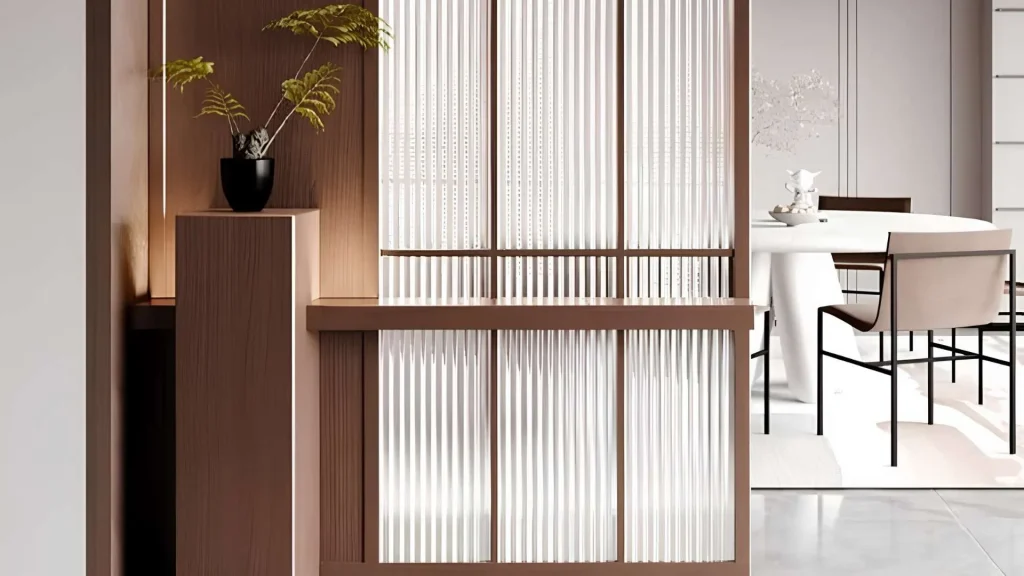
A partial glass living room divider is the glass that does not span the full width of the opening. The installer places glass panels asymmetrically, offset to one side or staggered at different heights. Light gets in where it is needed.
A full glass panel is too exposed for some rooms. A solid wall is too closed. The partial glass sits between the two. A partial glass divider between dining and living keeps the two zones linked.
A full glass panel is too exposed for some rooms. A solid wall is too closed. The partial glass sits between the two. A partial glass divider between dining and living keeps the two zones linked.
How to pick the Right Room Divider Design for Your Home?
The right room divider comes down to five practical factors. Work through these before making a purchase or commissioning an installation.
- Measure your space first: Note ceiling height, available floor width, and the choice between freestanding or fixed installation. A 9-foot ceiling calls for a different panel proportion than an 8-foot ceiling.
- Identify your light source: A solid wooden panel blocks light if the room is lit from one end only. Slat or glass panels keep that light moving.
- Match the material to your maintenance capacity: Solid wood requires seasonal care in Delhi’s heat and humidity. Glass needs regular cleaning. Bamboo and engineered wood need far less maintenance.
- Own a home or rented a flat: Renters need freestanding, non-drilling solutions, slat frames, bamboo panels, and modular units that all work without landlord approval. Homeowners have the full range available, including half-wall, half-glass, and fixed-panel installation.
- Match the divider to the room’s function: A bedroom divider should prioritise privacy. A living room divider can be more open and decorative. A home office divider needs acoustic separation, go with a thicker wooden panel or a full-height slat wall.

Best Places to Use Room Dividers in Your Home
Room dividers are very useful in some areas of the home where space needs to be divided into specific zones.
Living Room
Place a wooden panel room divider or a half-wall, half-glass divider between the lounge and the dining table. Each area has a clear boundary. Each area gets a clear boundary. A slat divider works well when the living room is also an entryway.
Bedroom
A floor-to-ceiling slat room divider between the sleeping zones and a study nook turns one room into two functional areas. It is a popular setup in Delhi NCR 1BHK flats where a dedicated home office is not an option.
Studio or Bachelor Flat
A freestanding bamboo or partial glass divider placed between the bed and the living area immediately improves the sense of layout. It also makes a studio feel more intentional, less like a single room, more like a home.
How Can Opalspace Help You?
A well-chosen room divider does more than split a space, it gives structure to how a home works day-to-day. It can be a slatted wooden partition, a glass panel, or a simple bamboo screen. The right design defines zones, improves privacy, and keeps the space open and comfortable. In modern Indian homes, space serves multiple purposes. This level of flexibility is now a practical need.
Opalspace designers create room divider solutions that will fit with your home space and layout. Along with room divider designs, the team handles complete home interiors. This includes modular kitchens, wardrobes, bedrooms, and living spaces. All areas follow a consistent design plan that supports daily use.
Opalspace designers create room divider solutions that will fit with your home space and layout. Along with room divider designs, the team handles complete home interiors. This includes modular kitchens, wardrobes, bedrooms, and living spaces. All areas follow a consistent design plan that supports daily use.
FAQs
1. What is a room divider in home interiors?
A room divider is a structure or panel used to separate different areas within the same room without building a permanent wall.
2. Which type of room divider is best for small homes?
Slat dividers, glass panels, and bamboo partitions work best because they divide space without making the room feel closed.
3. Are room dividers suitable for rental homes?
Yes, freestanding or modular dividers are ideal for rentals since they do not require drilling or permanent changes.
4. Which material is best for a room divider?
It depends on usage. Wood offers durability, glass keeps spaces bright, and bamboo is a budget-friendly and lightweight option.
5. What is the difference between a slat divider and a panel divider?
A slat divider has spaced vertical strips that allow airflow and light, while a panel divider is solid and offers more privacy.