Skip to content

Why has CNC Cutting Designs Become Essential for Modern Home Interiors?

CNC Cutting Designs for Modern Living

Why has CNC Cutting Designs Become Essential for Modern Home Interiors?

CNC cutting design has become a key feature in modern home interiors. It brings fine detailing and customisable patterns across materials for mandirs, partitions, railings, facades, and more.

Table of Contents

CNC cutting design has emerged as the invisible hand of modern interiors. It bridges the gap between imagination and reality. It enables designers to shape flowing forms and custom patterns for upgrading ordinary spaces. In many ways, this technology redefines how we perceive form, harmony, and innovation in our living environments. This blog explains its applications, materials, costs, and the practical factors homeowners should consider before picking a design

What is CNC Cutting Design?

CNC cutting design is a process of using computer numerical control (CNC) machines. They are designed to cut, carve, or engrave detailed, intricate patterns and shapes into different materials according to digital instructions. In home interiors, it produces decorative and serviceable elements with consistent accuracy. Achieving this level of precision manually is difficult and time-consuming.

A designer imports a desired pattern with CAD (computer-aided design) software. This design is then converted into G-code, which is a set of numerical instructions that dictate the machine’s movement along X, Y, and Z axes. These instructions also control the cutting depth, speed, and tool type. The CNC machine then follows these commands on the selected material. The process supports 2D contour cutting, 3D carving, engraving, and pocket cutting. And it is especially useful for producing identical designs repeatedly with consistent results. 

Why CNC Cutting Design is Becoming Popular in Modern Homes?
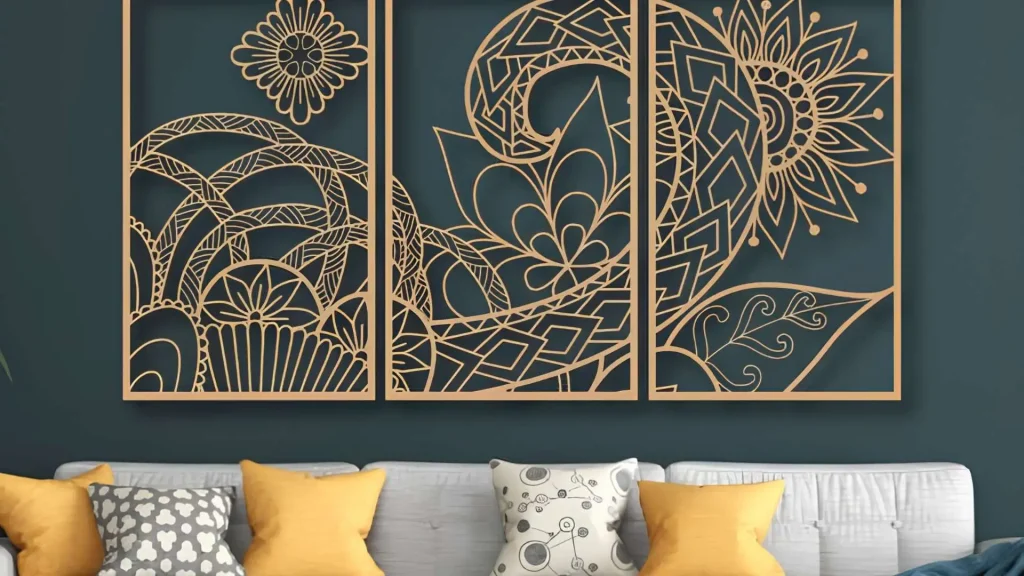
CNC Cutting Design
CNC machines follow digital instructions to produce exact cuts and patterns with hardly any variation. This property of CNC cutting design commits clean edges and uniform details across multiple pieces, which is hard to achieve manually.  

Precision and Consistency

CNC machines follow digital instructions to produce exact cuts and patterns with hardly any variation. This property of CNC cutting design commits clean edges and uniform details across multiple pieces, which is hard to achieve manually.

Speed and Production Efficiency

Fine details take time and therefore cost more. CNC cutting smartly delivers intricate designs faster and keeps complex work on schedule. It handles repetitive production and high-end custom builds with the same efficiency.

Affordability and Accessibility

CNC-cut jali panels, partitions, and wall accents are now affordable for mid-range apartments and independent homes in urban India. You no longer have to pay extremely high extra costs just because you want a single piece or a small batch customised.

Design Flexibility and Customisation

Designers can quickly modify digital files to adjust patterns, size, or proportions to suit specific room dimensions or client preferences. This flexibility supports minimalist geometric designs and more detailed motifs. Homeowners get designs customised for their space neatly.

Functional Benefits in Modern Layouts

Open-plan homes and smaller urban apartments need visual dividers. CNC cutting serves the purpose modestly. These screens do not block light or airflow. They provide privacy between living and dining zones or around pooja areas. The same panels can also serve as feature walls or cabinet fronts.

Material Versatility

CNC routers and lasers can work with materials like MDF, plywood, wood, acrylic, and some metals. This gives designers the flexibility to pick the capable fit for your home in terms of durability, finish, and maintenance. After cutting, these pieces can be painted, veneered, or sealed so they mix smoothly with the rest of the interiors.

Integration with Contemporary Aesthetics

Many homeowners want a balance between modern simplicity and traditional design elements. CNC cutting brings back lattice and jali patterns in updated forms, with cleaner lines, varied densities, and mixed materials. There is no heaviness of traditional carving. The result works well in minimalist and transitional interiors common in today’s homes.

How CNC Cutting Design Is Improving Modern Home Interiors?

CNC cutting design is steadily changing the way modern homes are planned and detailed. It allows homeowners to introduce defined patterns and functional elements in a practical manner across different areas of the house.

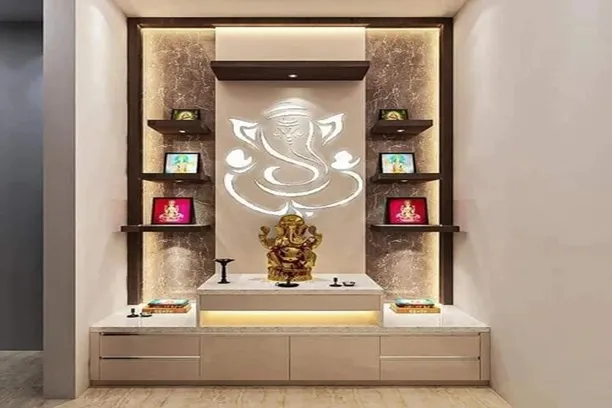
1. CNC Cutting Design for Mandir and Pooja Units

CNC Cutting Design for Mandir and Pooja Units

CNC cutting for the Pooja mandir design draws inspiration from traditional temple architecture and historic jali work seen in Indian and Mughal-era structures. It allows precise devotional patterns like Om, lotus, bells, and temple arches to be recreated with symmetry.

These designs are commonly used on back panels, shutters, side partitions, and overhead frames to define the pooja area and allow light and ventilation. The patterns can be scaled to suit compact apartment niches or dedicated pooja rooms in contemporary homes.

2. CNC Cutting Door Design and CNC Cutting Gate Design

CNC-cut door and gate designs draw inspiration from traditional Indian carvings that once symbolised protection and status at entrances. Today, the same motifs are recreated and give entryways a balanced and symmetrical appearance. These designs are commonly used on main doors, internal panels, and gates to define the entrance. Their benefit lies in controlled customisation, like how patterns can be adapted to suit compact apartment entries or large villa facades.

Like Rajasthani and Islamic art of interiors, CNC cutting replicates geometric, floral, and arabesque patterns on materials like MDF, mild steel, stainless steel, and wrought iron. For interior doors, MDF and wood composites are common because they take paint and veneer well. CNC cutting for main gates uses mild steel with a powder-coated finish since it is durable. For decorative gate panels, 16-18 gauge steel sheets work well.

3. CNC Cutting Design for Wall

You can plan to install CNC-cut panels as feature walls in living rooms, bedrooms, and home offices. They can be mounted over the existing wall surface. TV panels, staircase highlights, and ceiling-to-wall transitions to introduce texture.

These panels form controlled shadow effects with integrated backlighting, particularly in living rooms and bedrooms. Recent trends also include parametric and geometric patterns for a modern identity for the walls.

4. CNC Cutting Ceiling Design
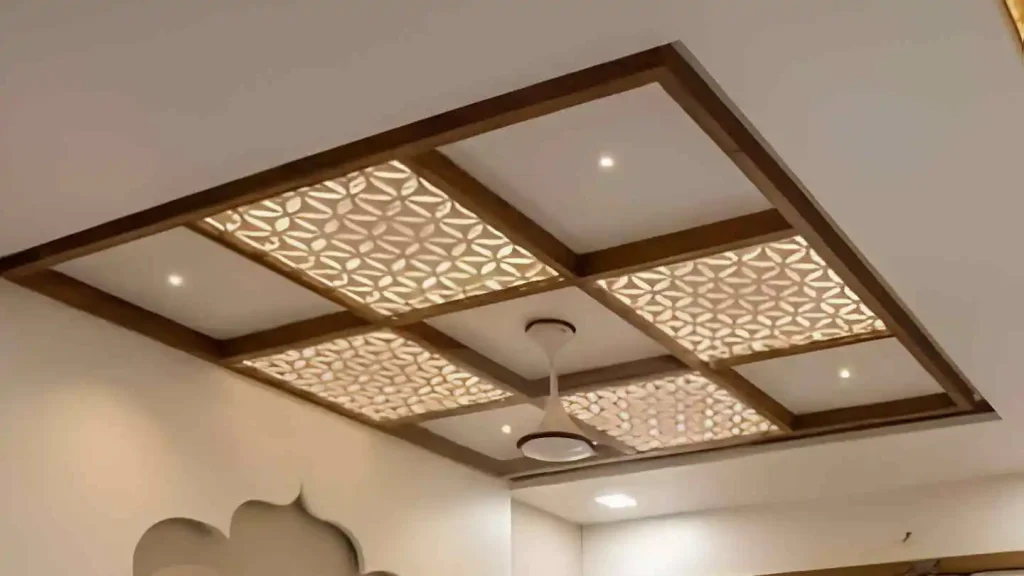
CNC Cutting Ceiling Design
CNC cutting ceiling design is used as part of false ceilings in modern home interiors. The benefits of adding this feature to your home are better light diffusion, improved room acoustics in some patterns, and the ability to conceal wiring or ducts. Designers install them across living rooms, dining areas, or pooja spaces.

5. Popular CNC Jali Design Styles for Trending Home Interiors

Moroccan and Arabic lattice designs have made a strong comeback, particularly in partition walls, pooja units, and balcony screens. Geometric patterns are the most requested CNC jali styles for contemporary homes because they work across modern and transitional interiors. In premium interiors, the current direction favours oversized, low-density cuts (fewer, larger openings instead of busy fine-lace patterns) because they photograph better and collect less dust.

6. CNC Cutting Designs for Window Panels and Balconies

CNC-cut panels for windows and balconies work really well if you’re going for an Arabic or Mughal-inspired look. A delicate jali design is a good fit for small windows or ventilation openings. If your home already follows a traditional Indian or periodic style, jali on windows and balconies will complement it naturally.

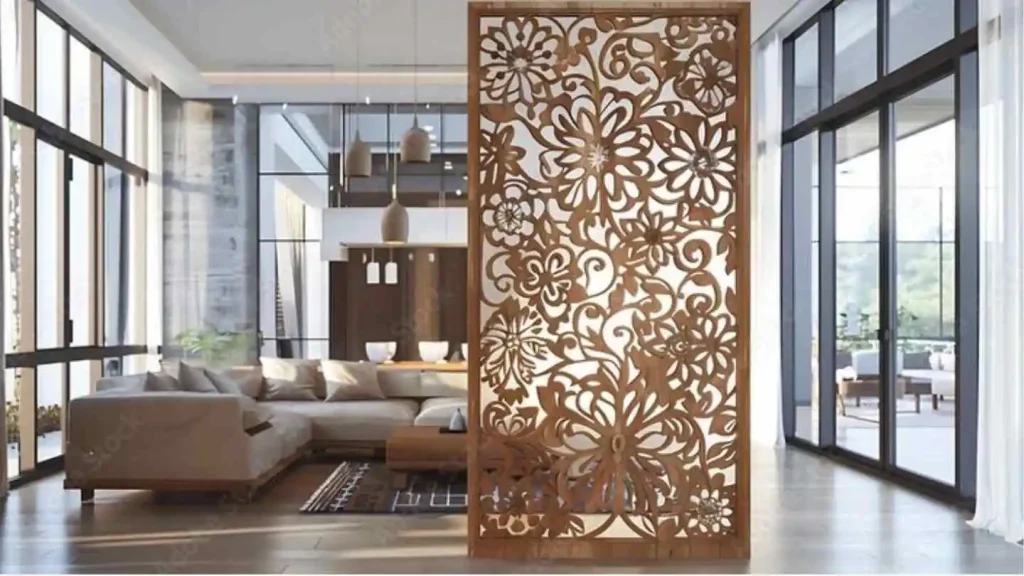
7. CNC Screen as Room Divider

CNC Screen as Room Divider
Most living rooms today are designed with an attached dining area. A jali partition is a useful way to define spaces in a common extended space. There are many modish options like fixed single-panel partitions or folding variants. Meanwhile, CNC screens provide a neat separation between the two different areas and sincerely maintain a continuous flow of the interior as well.

8. CNC Cutting for Bedroom Decor

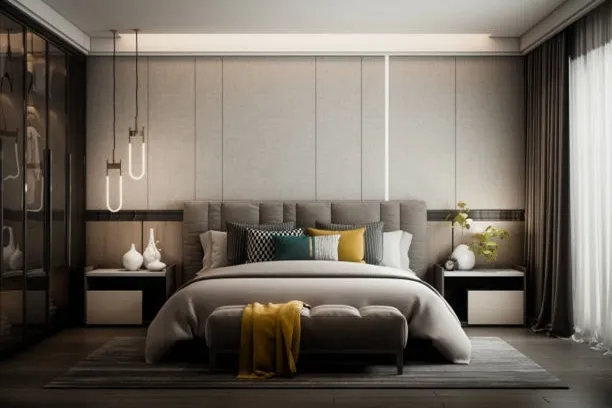
Make statement headboards, backdrops, feature wall panels, wardrobe shutters, or subtle ceiling details for richness. A backlit jali panel behind the bed can give you the effect of a custom headboard and ambient lighting in one fixture. It doesn’t require separate installations. Wardrobe shutter fronts with CNC cut patterns are increasingly replacing plain laminate shutters, particularly in master bedrooms.

9. CNC Cutting Design for front Elevation

A home gets a distinct architectural identity with CNC cutting design for the front elevation. You can use them to define entrance frames, highlight balconies, screen service areas, or add patterned panels. This breaks the monotony of the flat walls. Once they are installed, they give an intentional detail from a distance. 

10. CNC Cutting Design Patterns for Railing
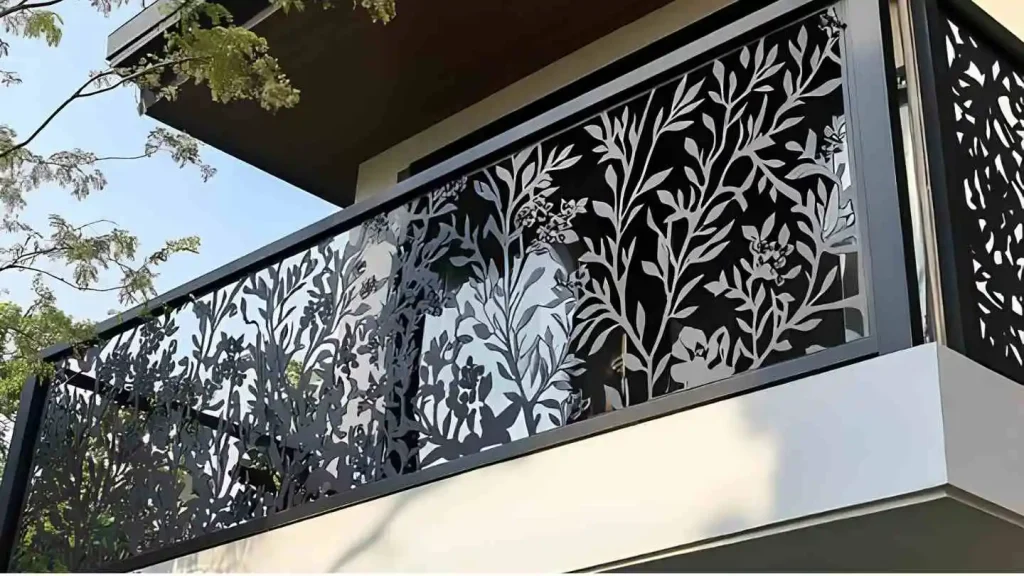
Geometric fills, vertical blade patterns, and jali-style infill panels rank among the most common choices for CNC cutting design patterns for railing. Vertical patterns work particularly well on staircases because they draw the eye upward and make ceiling heights feel more generous. Floral and arabesque cuts work better on balcony railings, where viewers see the panel as a whole from a distance. In duplex and triplex homes, designers now extend a single continuous CNC pattern across the entire staircase railing run.

11. CNC Cutting Design for Jhoola

An indoor swing, jhoola, has moved well beyond its traditional courtyard context and now serves as a considered design element in living rooms, balconies, and, in fact, in master bedrooms in larger homes.

In contemporary interiors, designers generally pair clean-lined jhoola frames with a single bold geometric or mandala CNC-cut back panel. They keep the rest of the swing minimal so the detail stands out clearly. For balcony jhoolas, many homeowners now go for CNC-cut side screens alongside the swing. This makes a semi-enclosed nook, and it doesn’t even block light or air.

Best Materials Used in CNC Cutting Design

When we talk about CNC cutting design, the pattern may catch your eye first, but the material behind it decides how it performs, ages, and holds its shape. As a designer, I always say the right material is what turns a good cut into a lasting design element. 

1. MDF (Medium-Density Fibreboard)

MDF is one of the most commonly used materials for CNC cutting in interior applications. It provides a smooth surface, which becomes valuable for sharp, clean detailing. It is especially for intricate jali patterns and decorative panels. It is best suited for indoor use in dry areas.

2. Plywood

Plywood provides better strength compared to MDF and handles structural applications more reliably. Designers use it when CNC-cut elements need to carry slight loads or require added durability, such as partitions and cabinet panels.

3. Solid Wood

Solid wood delivers a premium, natural finish and is ideal for heritage-style carvings and high-end projects. CNC cutting on solid wood combines traditional aesthetics with machine precision, though it requires careful finishing to avoid warping.

4. WPC (Wood-Plastic Composite)

WPC is moisture-resistant and termite-proof, which makes it suitable for humid areas and semi-outdoor applications. It has become popular for balcony screens and bathroom partitions where durability is essential.

5. PVC Boards

PVC boards are lightweight, water-resistant, and don’t demand much maintenance. That’s why interior designers use them for decorative panels in areas exposed to moisture.

6. Acrylic Sheets

Acrylic allows laser-cut precision and is mostly used where backlighting is required. It works well for contemporary feature panels and illuminated signage.

7. Mild Steel (MS)

Mild steel is widely used for gates, railings, and exterior screens. It offers strength and is feasible for intricate CNC plasma or laser-cut patterns suitable for structural applications.

8. Stainless Steel

Stainless steel provides corrosion resistance and a sleek appearance. It is a smart option for CNC cutting. You can use it in exterior facades, balcony railings, and modern architectural elements.

9. Aluminium

Aluminium is light in weight and naturally resistant to rust, which makes it easy to handle and long-lasting. It is frequently used in facade panels and outdoors, especially in areas where weight reduction is important.

10. Brass & Other Decorative Metals

In luxury home projects, designers turn to brass and similar metals for CNC cutting when they want to create ornate panels or standout statement pieces. They believe in adding a rich and classic finish.

11. Stone & Marble (Waterjet CNC)

Waterjet CNC cutting helps in complex designs in marble and stone for flooring inlays, wall panels, and temple designs. This technique preserves traditional craftsmanship.

Cost of CNC Cutting Design in Delhi NCR

If you’re planning to use CNC cutting in your home project in Delhi NCR, the cost structure is essential before finalising designs. It is true that pricing varies based on detailing, scale, and application, so having a realistic estimate helps you budget with transparency.

Service / ApplicationCommon Pricing RangeNotes
Very basic CNC/laser cuts (simple shapes, industrial jobs)₹15 per cut / per sq. inchTypical base rate offered by some Delhi vendors for basic laser cuts, may apply to simple design jobs too.
CNC jali / decorative cutting (entry-level)₹50 – ₹100 per sq. ftCommon for MDF/wood jali panels used in interiors; exact price depends on pattern size and detail.
CNC jali decorative cutting (mid-complexity)₹150 – ₹300 per sq. ftMostly seen for larger feature panels, partitions, and wall accents with fuller patterns.
CNC facade / detailed decorative panel₹300 – ₹500+ per sq. ftUsed for larger facade elements, front elevation cut patterns, or premium interior feature walls.
CNC jali cutting offered by some job work vendors~ ₹28/sq. ft (low end)Indicative starting fees seen for basic jali cutting jobs.
CNC carving work (premium carving)~ ₹80/sq. ft or moreSeen in local listings for more sculpted or premium cut work.

Things Homeowners Should Consider Before Choosing CNC Cutting Design

Before finalising a CNC cutting design, it is important to think beyond just the pattern you like. A few practical considerations can help you avoid costly changes and ensure the design works well in your space.

  1. Purpose of the Design – Homeowners should decide the purpose of the panel like if it is mainly decorative, for privacy, or for dividing spaces. 
  2. Pattern Scale – Extra detailed and complex patterns can look busy and harder to clean. You should choose according to your space and its interior. 
  3. Compatibility with Interior Style – The design should match your home’s overall look, modern, traditional, or transitional. 
  4. Light and Ventilation – You must consider how much light and airflow the cut pattern will allow. 
  5. Maintenance Needs – Complex designs can collect dust more easily, especially near windows or balconies. You can go for some minimalistic design if this concerns you.
  6. Budget – If you have a restricted budget, then you should go for less detailed patterns. 
  7. Vendor Expertise – Review past work and confirm they can handle your design file properly. 
  8. Installation & Structural Fit – For railings or gates, it is wise to confirm that the design does not affect strength or safety. 
  9. Society or Municipal Rules – Check regulations before installing CNC panels on exteriors. 

Plan Your CNC Cutting Design the Right Way with Opalspace

Opalspace designs and builds CNC cutting panels for different purposes as part of complete home interior projects. We handle everything from pattern selection and material finalisation to fabrication and site installation. Each piece is designed in context with the surrounding space, like the room layout, existing furniture, and the entire interior direction. So it fits the home rather than sitting as a standalone addition. For homeowners who want a single point of accountability, we deliver end-to-end interior design services covering every room, finish, and fixture from concept to handover.

FAQs

1. Is CNC Cutting Design Suitable for Every Home?

CNC cutting design works in most homes because it lets you customise patterns to match your style, scale panels to fit small or large spaces, and control light or privacy. If you live in a compact apartment or a larger house, simple or bold designs can be adapted without overwhelming the decor.

2. What are the future Trends in CNC Cutting Design?

Current trends show growing use of minimalist geometric and parametric patterns for modern interiors, integrated lighting behind CNC panels, and large continuous runs across stair railings or facade surfaces for a cohesive look. These approaches keep CNC work both contemporary and visually engaging.

3. What is the cost of CNC railing?

In India, designer CNC or laser-cut railings generally range between about ₹350 and ₹1,200 per sq. ft for decorative patterns, depending on design complexity and finish, the actual installed cost may vary with fabrication and installation charges.

4. How long does it take to complete a CNC cutting design?

Once the final design file is approved, most CNC cutting jobs are completed within 24-72 hours for standard residential applications. Larger or highly detailed projects may take longer due to programming time and finishing processes.

5. Can CNC panels be customised for specific spaces?

Yes, CNC cutting works entirely on digital files, which means patterns can be resized, modified, or adjusted to suit exact dimensions and design preferences. This allows homeowners to tailor panels for partitions, doors, mandirs, railings, or feature walls.

6. Is CNC cutting suitable for interior and exterior applications?

Yes, CNC cutting is used for interior elements like partitions and decorative panels, as well as exterior features such as gates, balcony screens, and façade detailing. The design must be planned according to its location, exposure, and functional requirements.

0 thoughts on “Why has CNC Cutting Designs Become Essential for Modern Home Interiors?”

  1. Hello Opalspace Com Owner,

    My name is Eric and I’m betting you’d like your website Opalspace Com to generate more leads.

    Here’s how:

    Web Visitors Into Leads is a software widget that works on your site, ready to capture any visitor’s Name, Email address, and Phone Number. It signals you as soon as they say they’re interested – so that you can talk to that lead while they’re still there at Opalspace Com.

    Visit https://blastleadgeneration.com to try out a Live Demo with Web Visitors Into Leads now to see exactly how it works and even give it a try… it could be huge for your business.

    Plus, now that you’ve got their phone number, with our new SMS Text With Lead feature, you can automatically start a text (SMS) conversation quickly… which is so powerful because connecting with someone within the first 5 minutes is 100 times more effective than waiting 30 minutes or more later.

    The new text messaging feature lets you follow up regularly with new offers, content links, even just how are you doing? notes to build a relationship.

    Everything I’ve just described is extremely simple to implement, cost-effective, and profitable.

    Visit https://blastleadgeneration.com to discover what Web Visitors Into Leads can do for your business, potentially converting up to 100 times more eyeballs into leads today!

    Eric

    PS: Studies show that 70% of a site’s visitors disappear and are gone forever after just a moment. Don’t keep losing them.
    Web Visitors Into Leads offers a complimentary 14-day trial – and it even includes International Long Distance Calling.
    You have customers waiting to talk with you right now… don’t keep them waiting.
    Visit https://blastleadgeneration.com to try Web Visitors Into Leads now.

    If you’d like to Want to receive fewer emails, or none whatsoever? Update your email preferences by visiting https://blastleadgeneration.com/unsubscribe.aspx?d=opalspace.com

    Comment awaiting moderation.

Leave a Reply

Your email address will not be published. Required fields are marked *

Opalspace-logo.png
We transform your dream homes into beautifully and intelligently designed realities.

Our Gallery

Contact Info