Table of Contents
You know that feeling when your room or home is filled with natural light, that’s the magic of a great window. But it’s not just about the view, the right window design is a crucial element that shapes your home’s character, impacts your energy efficiency, and truly affects how you feel every single day. It’s one for those foundational choices that makes your house feel uniquely and wonderfully like your home.
Why Do Your Window Design Choices Matter?
- The style, size, and placement of your windows are a huge part of your home’s exterior look and interior ambiance.
- Well-placed windows can flood a room with sunlight, reducing the need for artificial lighting and boosting your mood.
- Modern windows with double or triple glazing act as a powerful thermal barrier, keeping your home warmer in winter and cooler in summer, which lowers energy bills.
- The operating style of a window determines how effectively it can refresh your indoor air.
- High-quality, well-designed windows are a significant selling point and can increase your property’s market value.
Exploring Windows Styles
1. Casement Window Design
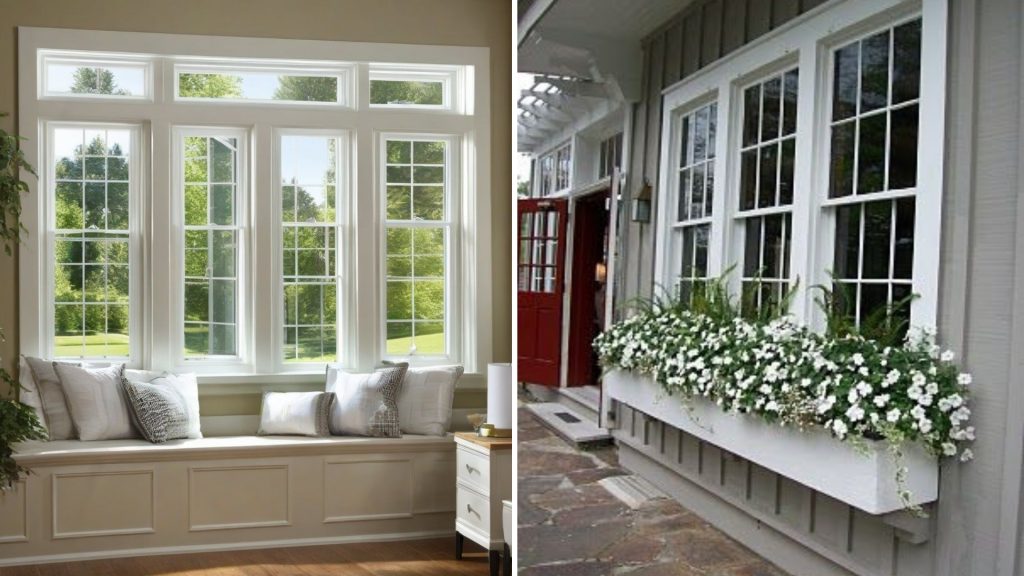
Casement windows are hinged on the side and open outwards like a door, using a crank handle. They offer excellent, unobstructed views and superb ventilation, as they can catch side breezes and funnel them into the home.
2. Sliding Window Design
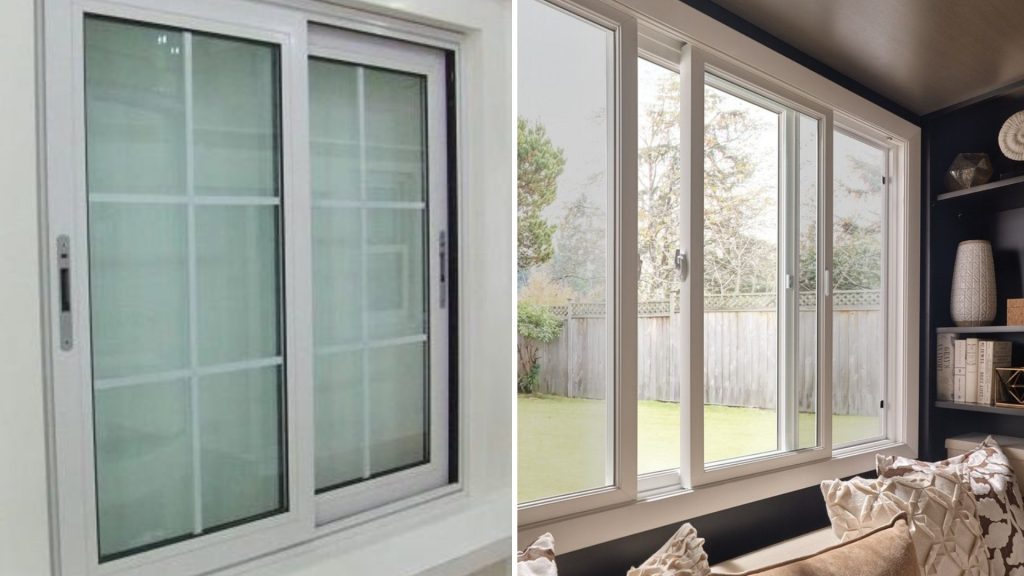
A classic and space-saving option, sliding windows have sashes that glide horizontally along a track. Sliding window glass design often features large panes, making them ideal for Space-Saving Living Room in modern homes and capturing panoramic views.
3. Double-Hung Window Design
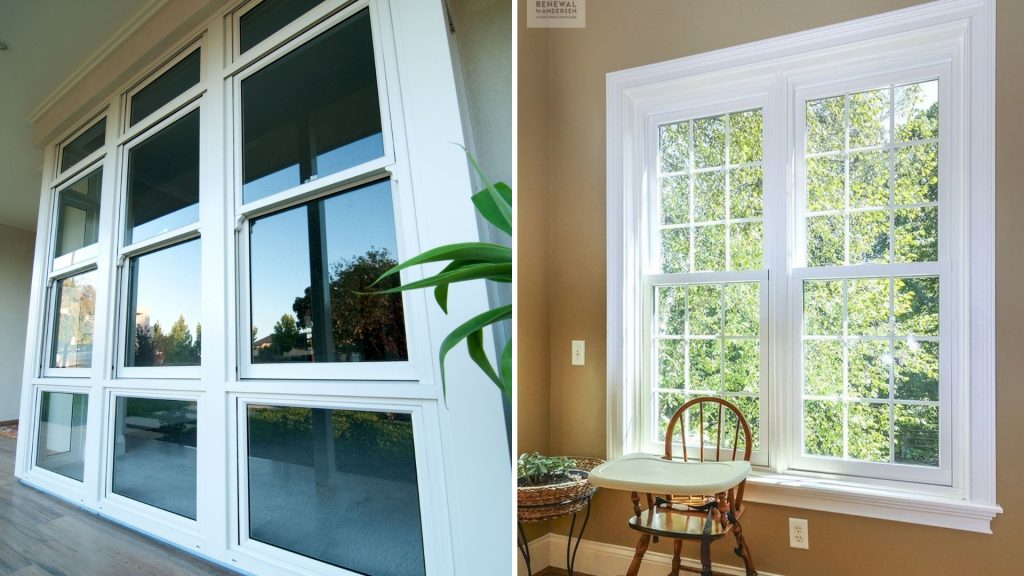
Traditional and versatile, double-hung windows feature two sashes that move vertically up and down within the frame. This allows for flexible ventilation from both the top and bottom.
4. Awning Window Design
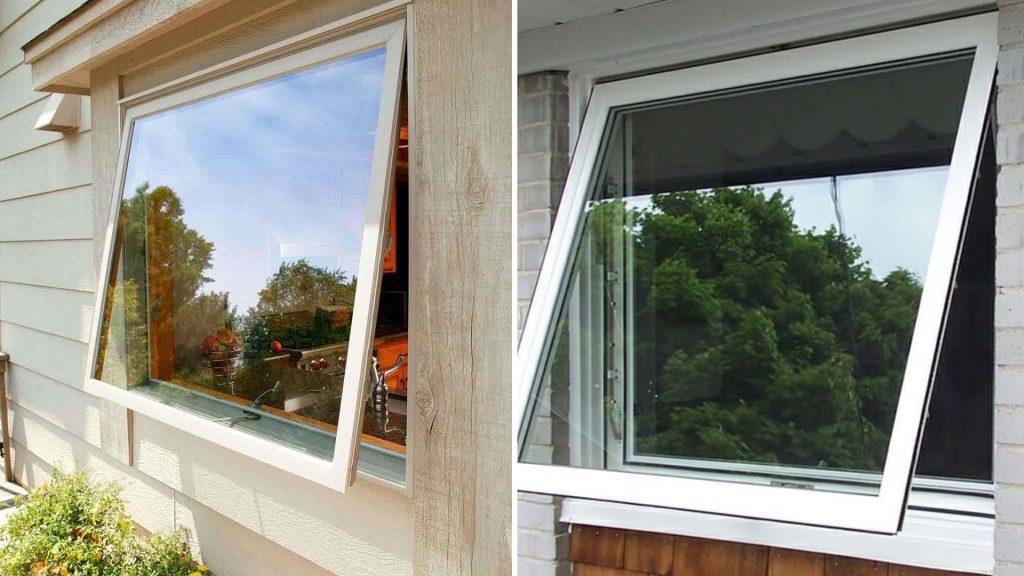
Hinged at top and opening outward, awning windows are perfect for letting in air even during a light rain. They are often placed high on walls or in basements.
5. Bay Window Design
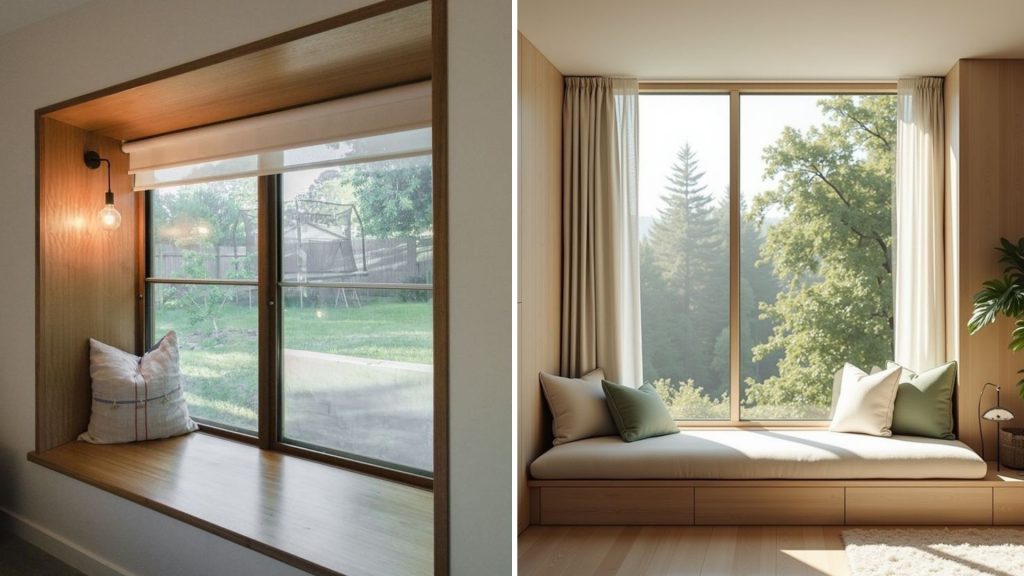
A bay window extends outwards from the main walls of a home, creating a small shelf or nook inside. It typically consists of a central picture window flanked by two angled windows.
6. Bow Window Design
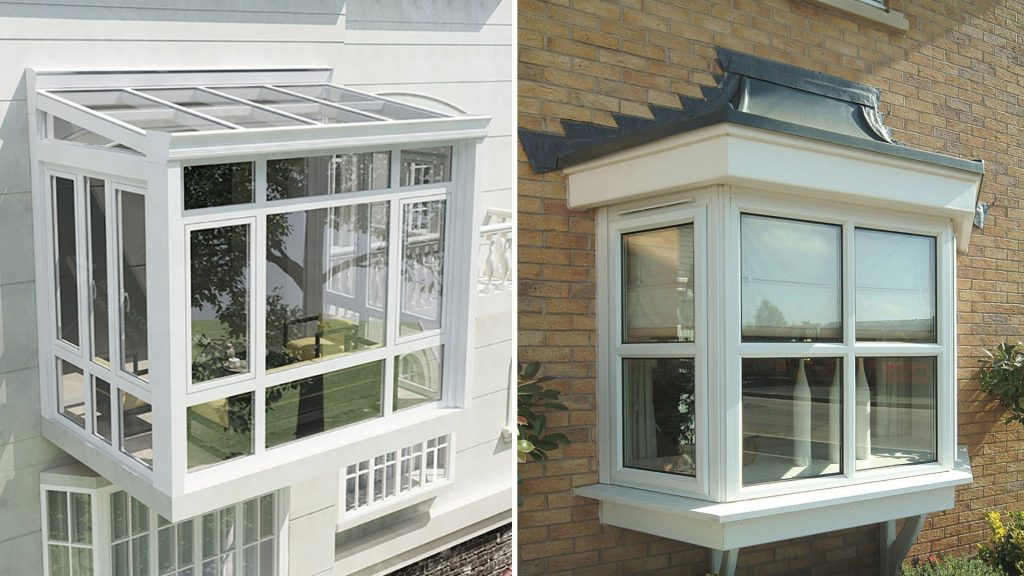
Similar to a bay window but with more graceful, curved projection, a bow window is made up of four or more equal-sized windows.
7. Arched Window Design
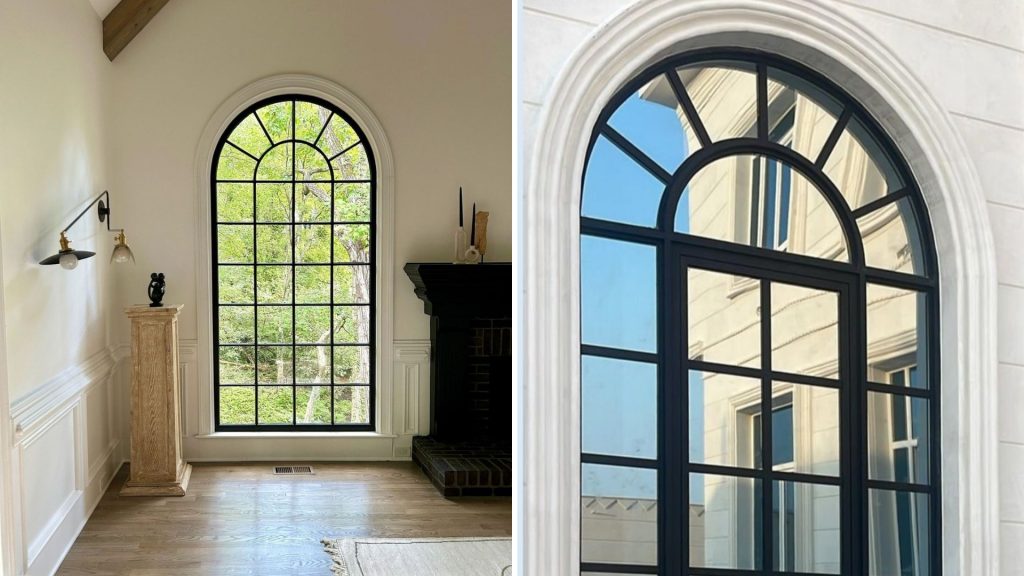
Adding a touch of elegance and architectural interest, arched windows have a curved top. They are often fixed and used above other windows or doors.
8. Skylight Window Design
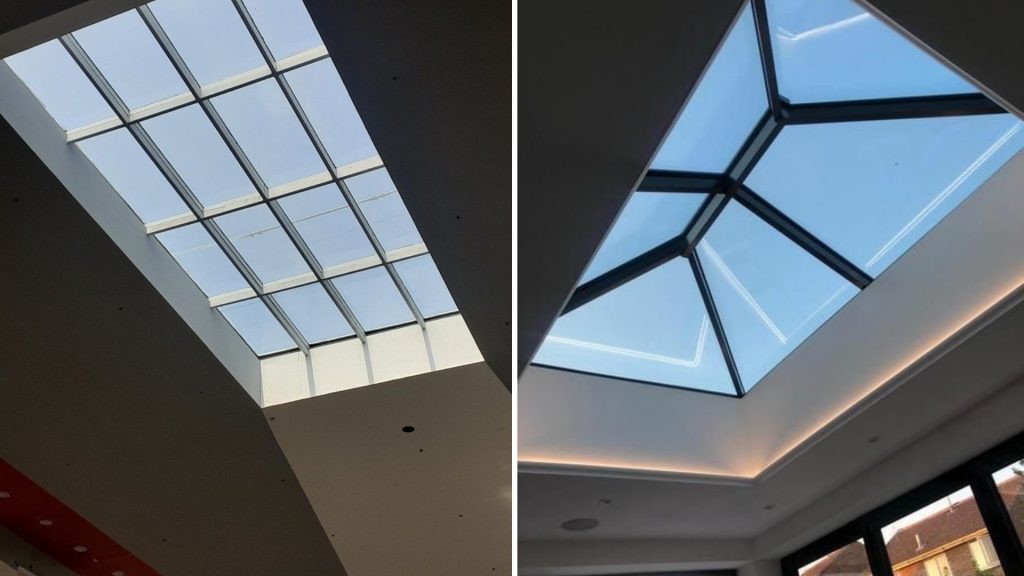
Installed on the roof, skylights are champions of bringing natural light into dark hallways, bathrooms, and attics, transforming the feel of a space from above.
9. Porthole Window Design
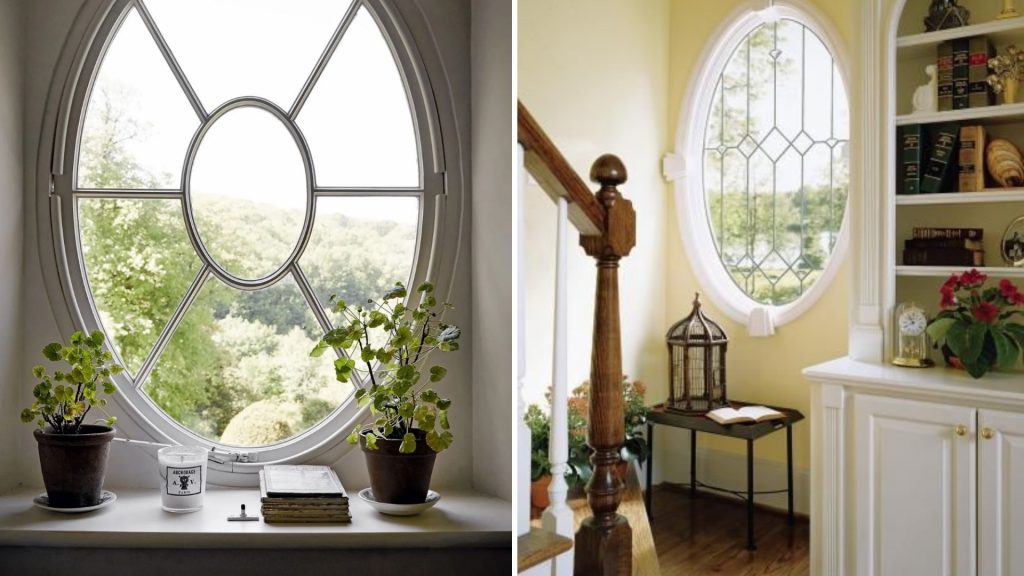
Inspired by ships, these circular windows offer a unique, nautical aesthetic and are often used in bathrooms or as a decorative accent.
10. Jalousie Window Design
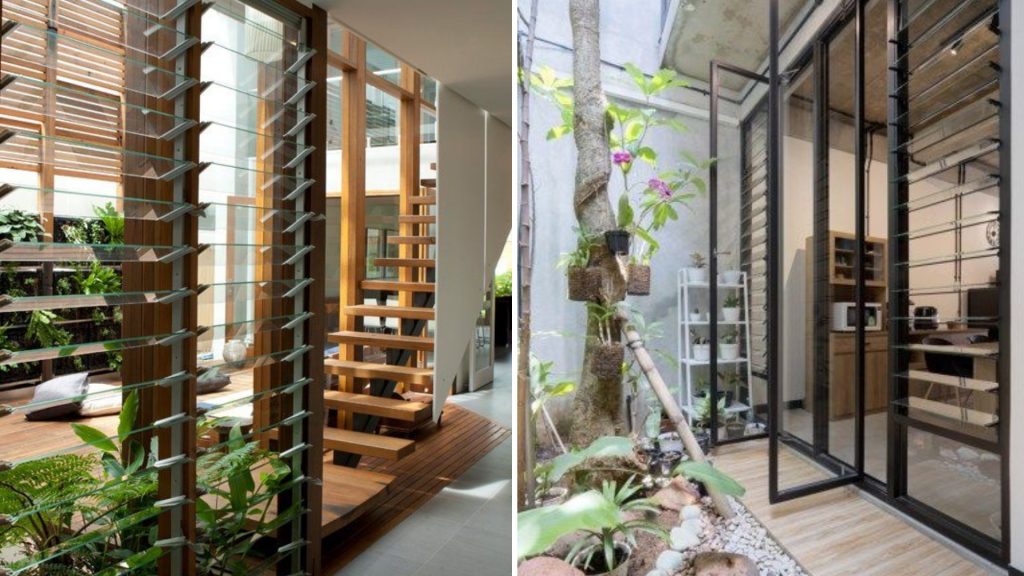
Consisting of parallel glass, acrylic, or wooden louvers set in a frame, jalousie windows are operated by a crank that pivots all the louvers simultaneously. They are great for maximum ventilation but are less energy-efficient.
Choosing the Right Material for Your Window
1. Wooden Window
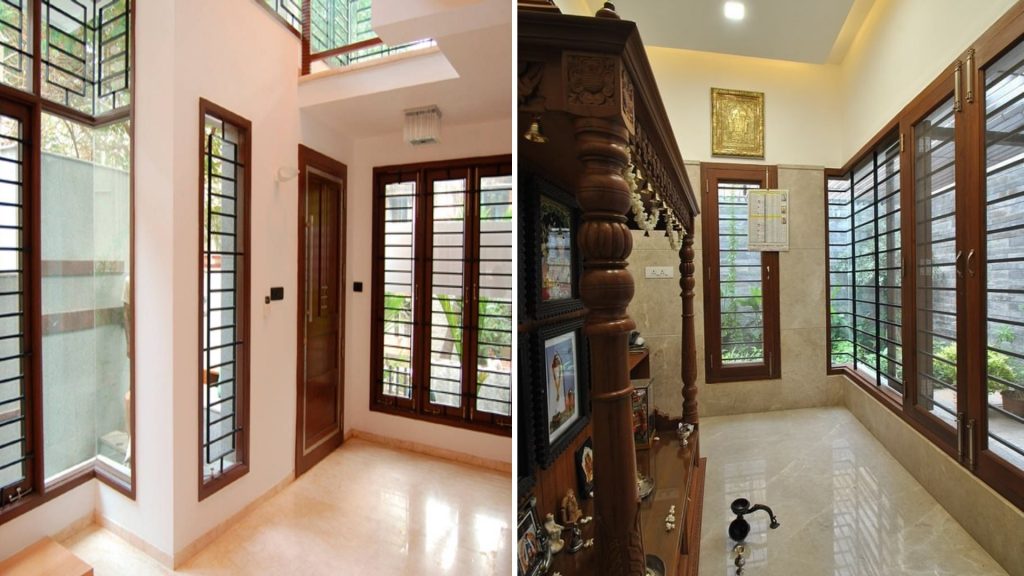
Wooden windows deliver timeless beauty and great natural insulation, making them a perfect fit for traditional or rustic homes where looks are key, just be prepared for the regular maintenance of painting or staining to protect them from the weather.
2. UPVC Window
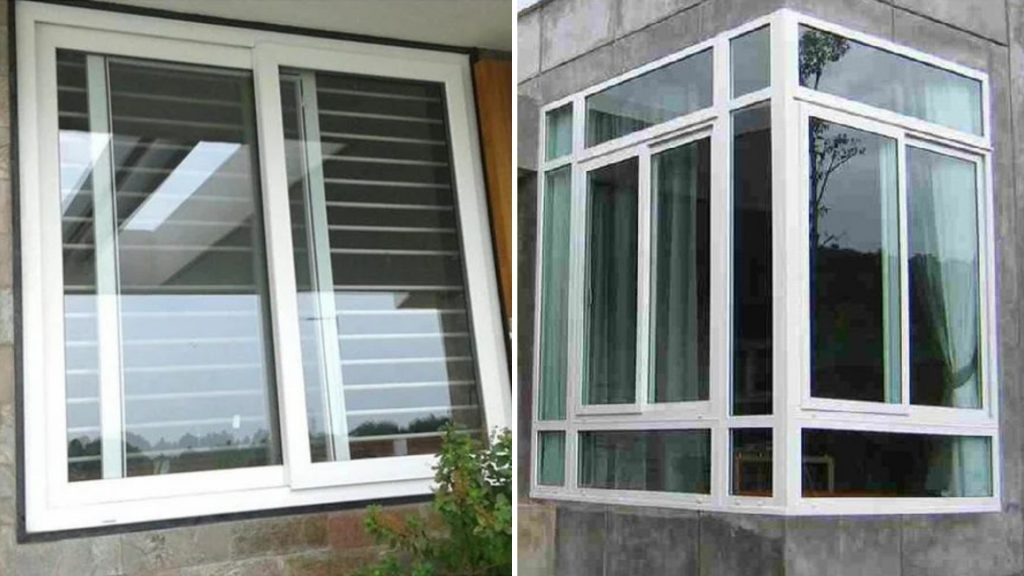
UPVC windows are tough, affordable, and need virtually no maintenance while offering top-notch thermal and acoustic insulation. They are the ideal choice for an efficient and cost-effective home.
3. Aluminum Windows
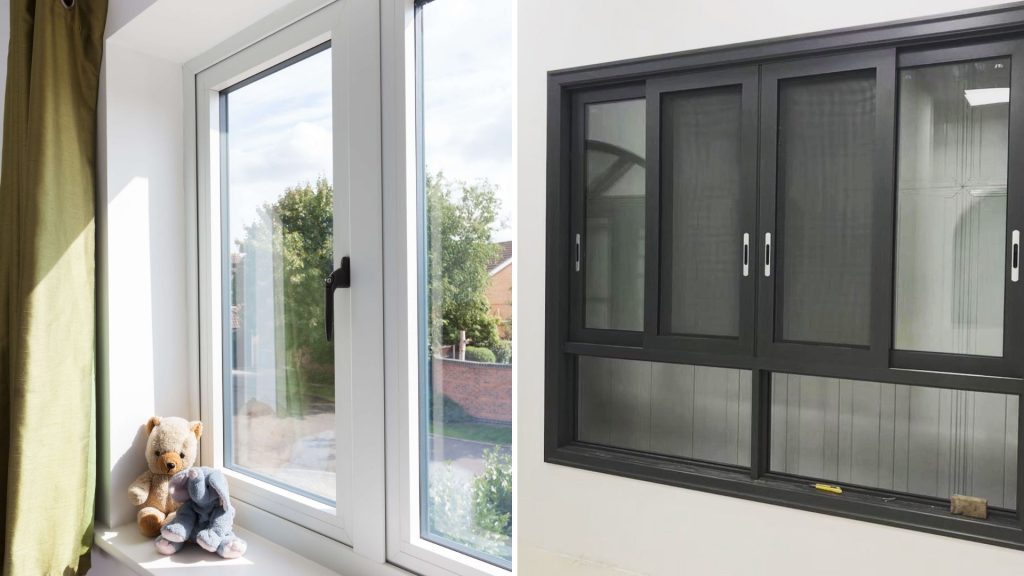
Aluminum windows are all about strength and style, offering sleek, slim profiles that maximize your view and create a modern feel. They are incredibly durable and won’t rust or wrap.
4. Steel Window
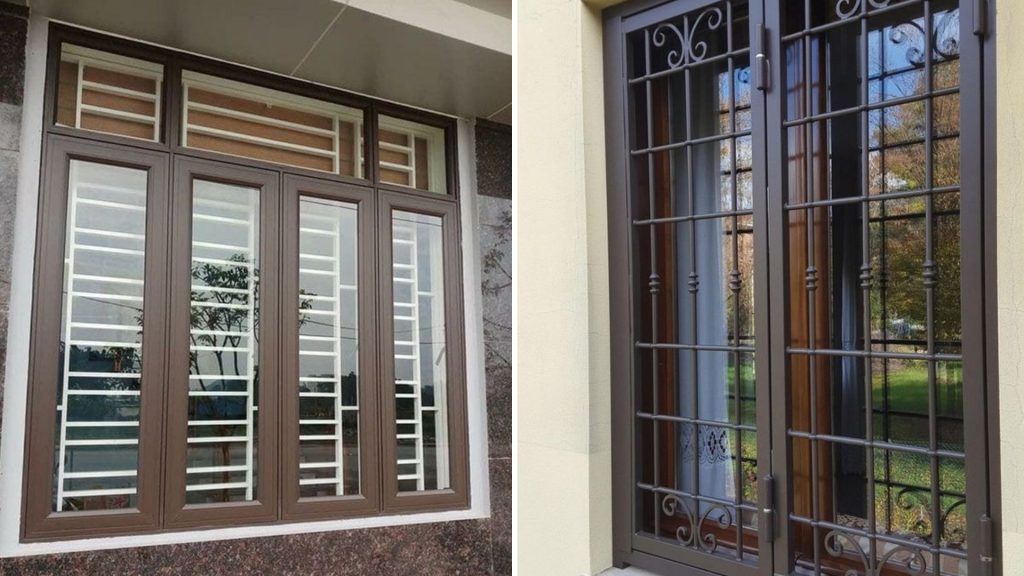
Steel windows are the ultimate choice for a sharp, industrial look, offering incredible strength with those beautifully slim frames. They’re perfect for making a bold statement in lofts or modern-industrial spaces.
5. Iron Window
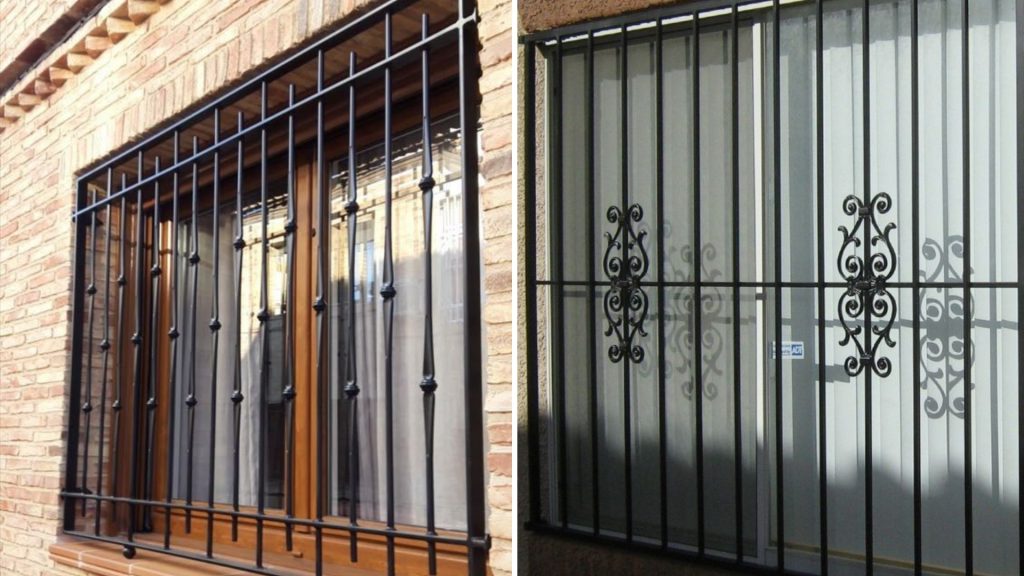
Iron windows offer gorgeous, ornate details and historic authenticity, often seen in beautiful wrought-iron patterns. They’re ideally suited for restoration projects or as stunning decorative accents in traditional properties.
Window Design by Aesthetic
1. Modern Window Design
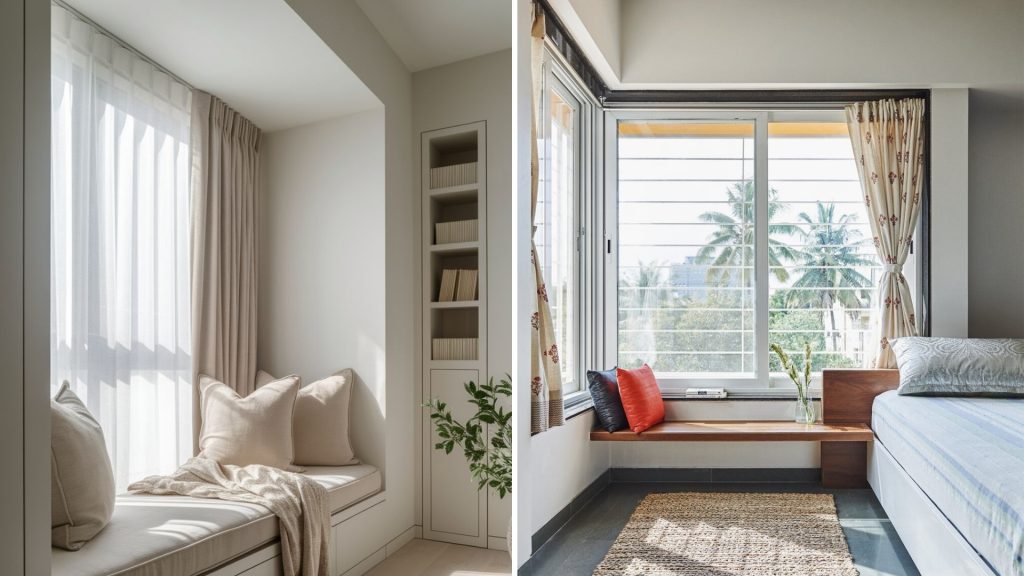
Think expansive, uninterrupted views. Modern window design prioritizes clean lines, minimal frames, and large glass panels. Big window design, corner window design, and ceiling-to-floor window design are hallmarks of this style.
2. Simple Window Design
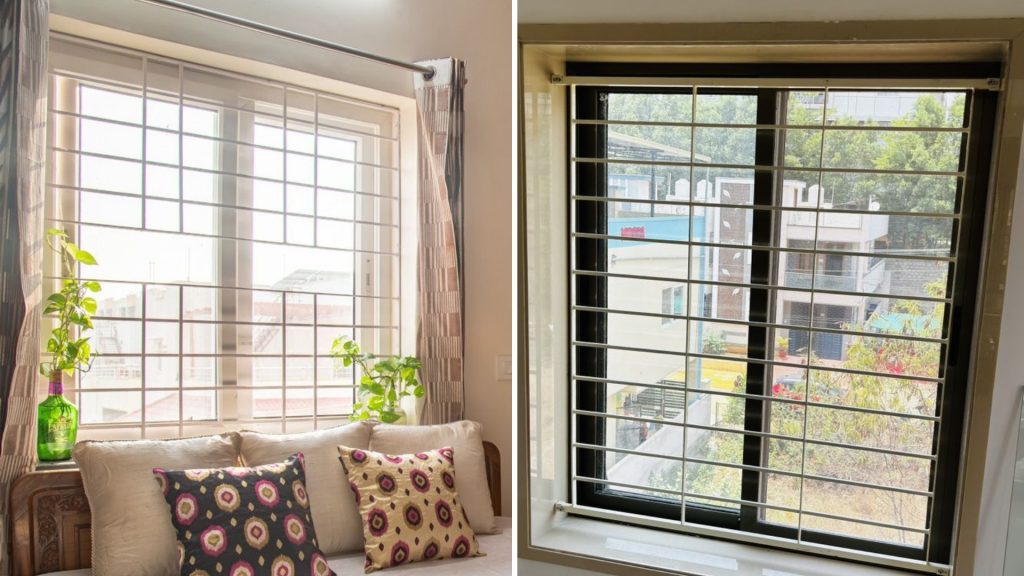
Focuses on functionality and clean aesthetics without ornate details. Standard casement, double-hung, or sliding windows in white or neutral tones fit this in on-budget interior category perfectly.
3. Village Window Design
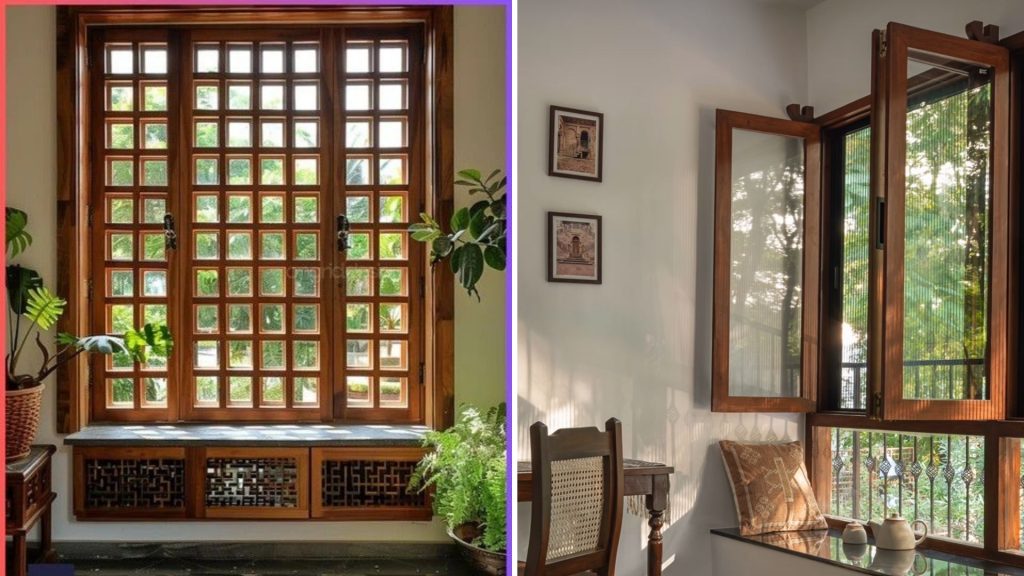
Evokes rustic charm and nostalgia. This often features wooden window design with divided lites, sometimes with shutters, creating a cozy and traditional feel.
Room-by-Room Window Design Inspiration
1. Kitchen Window Design
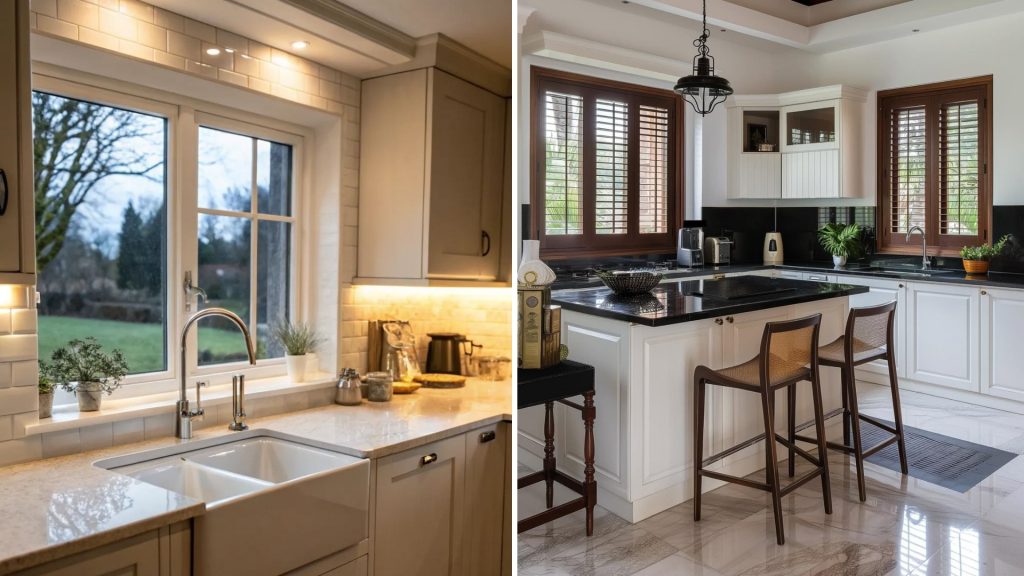
The kitchen window is often above the sink. An awning window is a great hands-free option, while a casement window provides a full, clear view. Think about easy-to-clean surfaces and good ventilation to remove steam and odors.
2. Bathroom Window Design
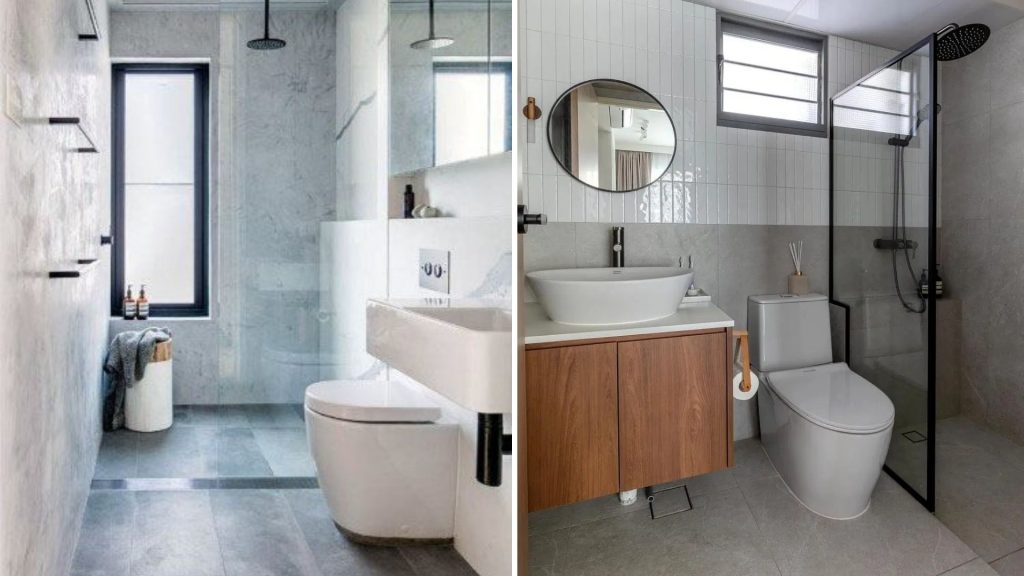
Privacy and moisture resistance are key. Frosted glass, jalousie windows, or small, high-placed double-hung windows are excellent choices. Materials like UPVC or aluminum resist humidity-induced warping and rot.
3. Room Window Design (Living/Bedroom)
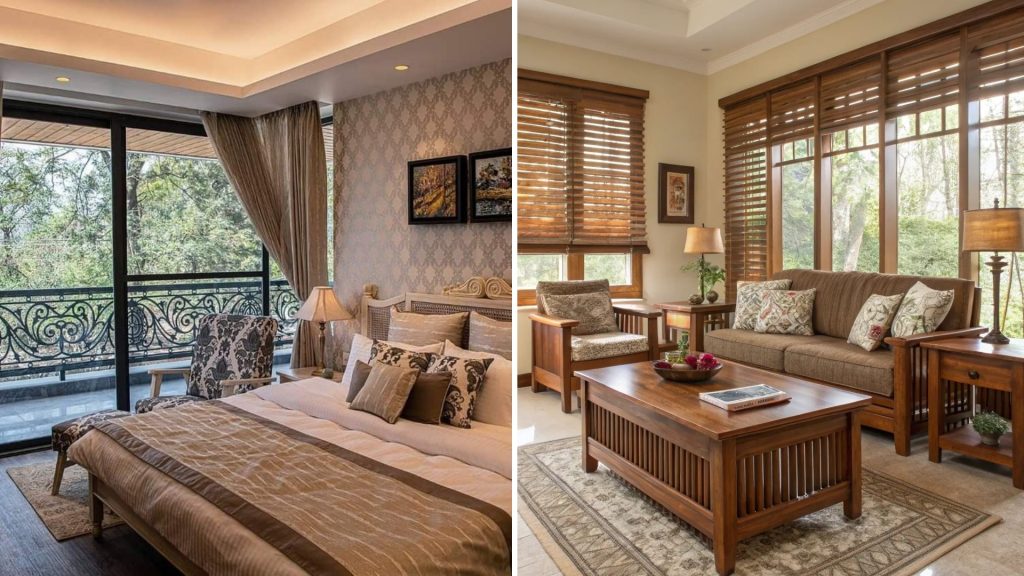
These are your view and light-gathering powerhouses. A bay window design can create a cozy reading nook. A picture window offers an uninterrupted vista. For a dramatic effect, nothing beats a ceiling-to-floor window design or a corner window that opens up the room to the outdoors.
Architectural Window Design Statements
1. Big Window Design & Corner Window Design
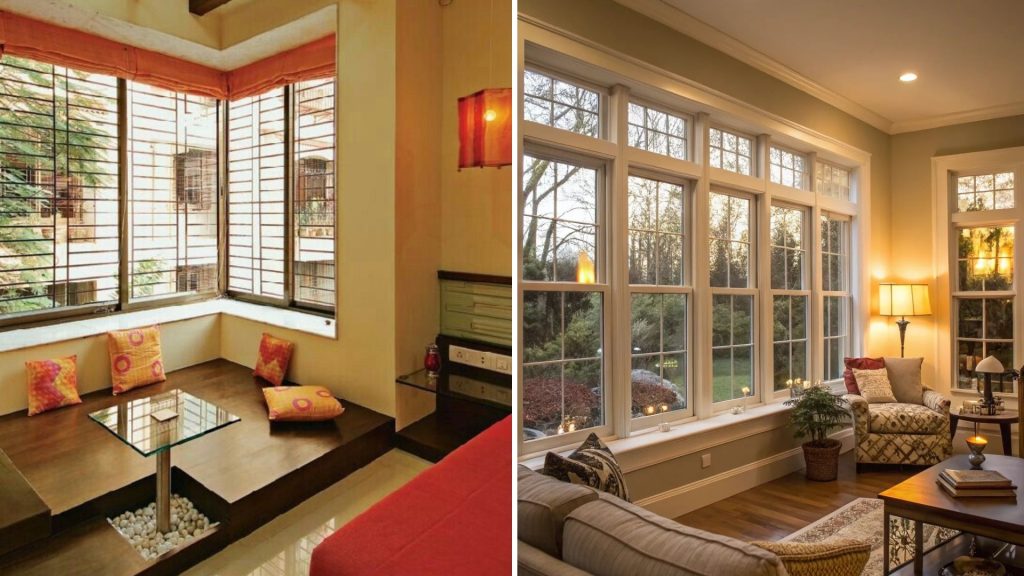
These erase the boundary between inside and outside, flooding the interior with light and providing stunning, panoramic views.
2. Bay Window Design vs. Box Window Design
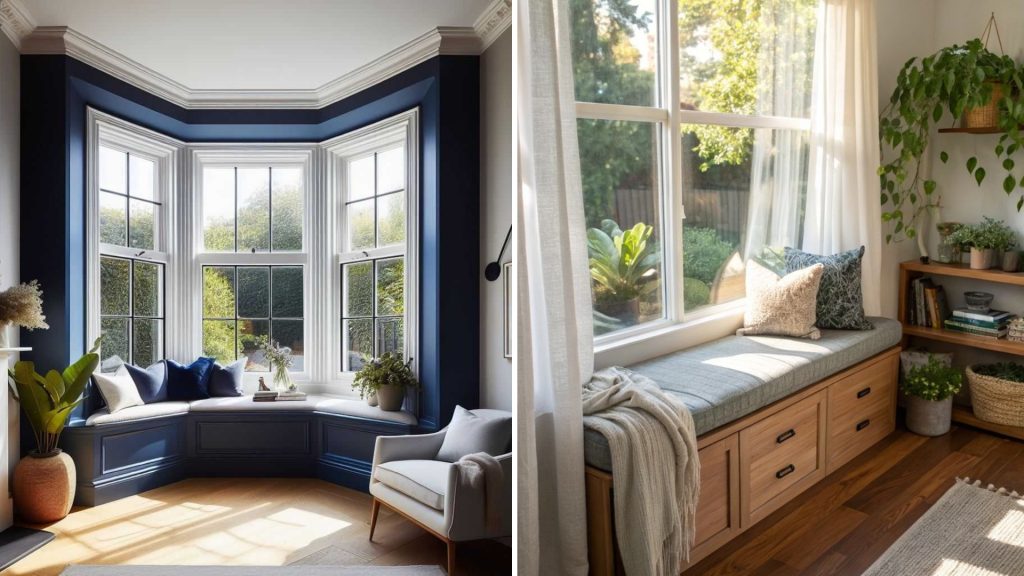
A bay window has angled sides, while a box window has a square projection. Both add interior space and a sense of openness.
3. French Window Design
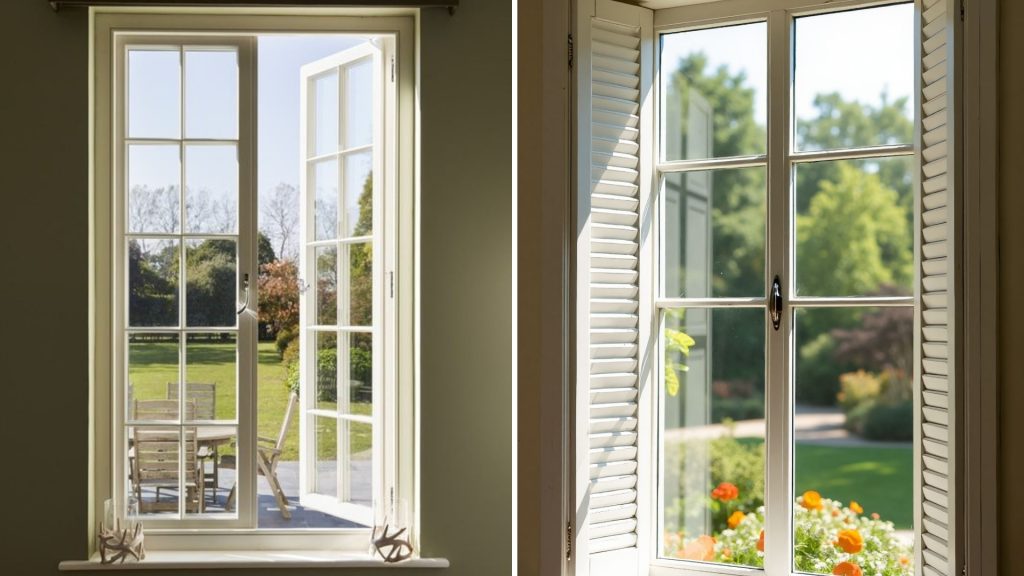
These elegant, door-like windows typically open inwards or outwards on side hinges and are perfect for accessing a patio or garden, combining the function of a window and a door.
4. Ceiling-to-Floor Window Design
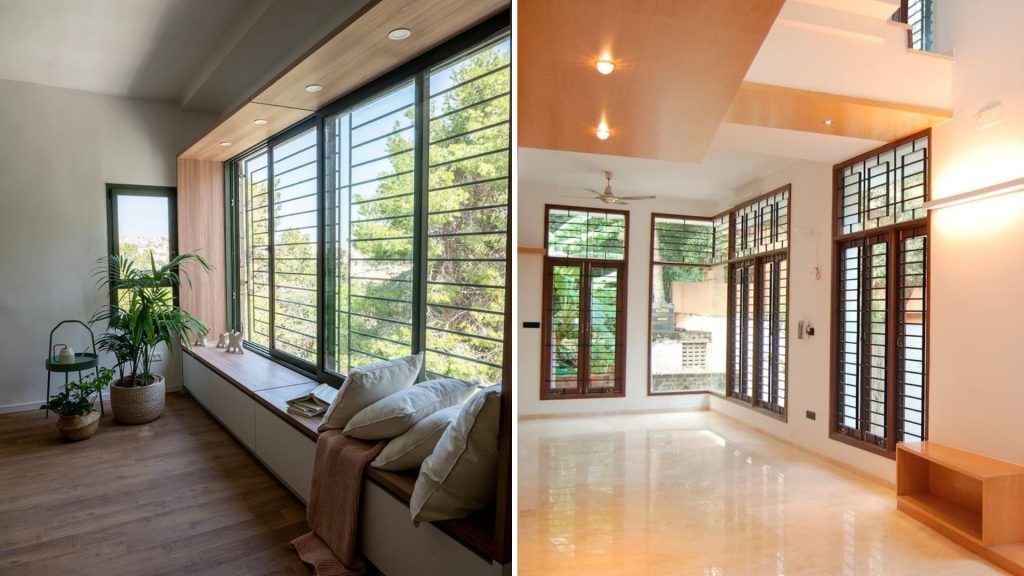
The ultimate in modern luxury, these windows make a powerful architectural statement and maximize light intake.
Things to Consider While Designing Home Windows
- South-facing windows get more sun, so low-E glass is wise. In windy areas, sturdy casement or awning window designs are better than double-hung.
- Is the primary goal a beautiful view, cross-ventilation, or simply adding light? A fixed picture window is great for a view, while casement windows are best for airflow.
- Consider the window’s placement relative to neighbors and the street. Frosted glass, top-down blinds, or higher still heights can provide privacy without sacrificing light. Ensure all operating windows have secure locking mechanisms.
- Your windows should complement both the inside and outside of your home. A sleek aluminum window design might look out of place on a rustic cottage, just as a wooden window design might not suit an ultra-modern façade.
- UPVC window design is low-cost and low-maintenance. Wooden window design is beautiful but requires a higher upfront investment and ongoing upkeep. Balance your initial budget with long-term maintenance desires.
- Look for energy star ratings, U-values (measure of heat loss), and SHGC (Solar Heat Gain Coefficient) ratings. Investing in high-performance windows pays off in lower utility bills.
- Always check with your local building authority. There may be restrictions on the size, style, or placement of windows, especially in historic districts.
How Can Opalspace Help You?
Choosing the perfect window design is a transformative decision for your home, where every style from timeless wood to sleek aluminum, and space-saving sliders to dramatic floor-to-ceiling glass adds its own unique character and benefit. At Opalspace, we see windows as the eyes of your home, crucial for framing your world while enhancing comfort and efficiency, but our vision extends far beyond the pane.
As full-service interior design specialists, we expertly weave your windows into a complete, harmonious environment. We ensure every element, from wall colors and furniture to flooring, works in seamless unity, creating a space that is not only beautiful but authentically and wonderfully yours.
As full-service interior design specialists, we expertly weave your windows into a complete, harmonious environment. We ensure every element, from wall colors and furniture to flooring, works in seamless unity, creating a space that is not only beautiful but authentically and wonderfully yours.
FAQs
1. What's the most energy-efficient window design?
Double or triple-glazed casement or awning windows with uPVC or thermally-broken aluminum frames are typically most efficient. Look for low-E glass and proper installation to maximize energy savings.
2. Which window material requires the least maintenance?
UPVC windows need virtually no maintenance - they don't require painting or staining and simply need occasional cleaning to stay looking new.
3. What window style is best for small spaces?
Sliding windows or casement windows are ideal for small spaces as they don't require extra room to open inward or outward, making them space-efficient.
4. How do I choose between wooden and aluminum windows?
Choose wooden windows for traditional charm and natural insulation, but be prepared for regular maintenance. Opt for aluminum if you want slim profiles, modern aesthetics, and minimal upkeep.
5. What's the difference between bay and bow windows?
Bay windows typically have three panels with angled sides, while bow windows have four or more equal-sized panels creating a gentler curve. Both add space and light but offer different aesthetic effects.