Skip to content
Opalspace-logo.png

Latest Wall Light Designs for Living Room

Wall Light Designs for Living Room

Latest Wall Light Designs for Living Room

Table of Contents

To start with, lighting is an indispensable part of a home’s interior design process. Modern designer wall lights provide focused light right where it’s needed, eliminates dark corners and most importantly, reduces eye strain. As an interior designer, my focus on designer wall lights stems from their ability to influence the perceived shape and boundaries of a room. While furniture and paint define style, light defines atmosphere. Wall lights help in carving out intimate seating areas or guiding the flow of a room.

Furthermore, a wall light is a dual-natured element. It is a decorative object, a sculptural piece that contributes to the visual narrative of a room even when unlit. But when illuminated, it casts a human-scaled, flattering glow that makes a room feel deeply welcoming. This combination of aesthetic permanence and emotional influence is unparalleled. Ultimately, I specify wall lights to illuminate a room, but to compose it as well.

Sculptural & Artistic Statements
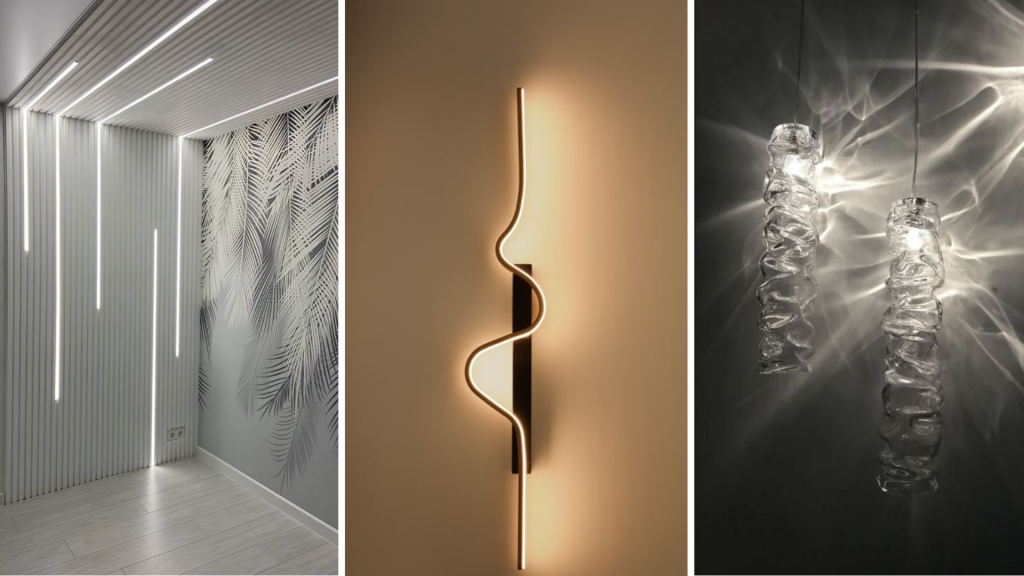
Sculptural & Artistic wall Light Designs

Asymmetric Bronze Sculptures: Move beyond symmetrical sconces. Single, abstract forms in patinated bronze or blackened steel act as a standalone gallery piece, embodying the essence of designer wall lights that cast dramatic, directional shadows.

Organic, Fluid Glass Sconces: Inspired by liquid forms, these blown glass pieces appear to drip or flow down the wall. They provide a soft, organic glow and are a perfect contrast to minimalist or brutalist interiors.

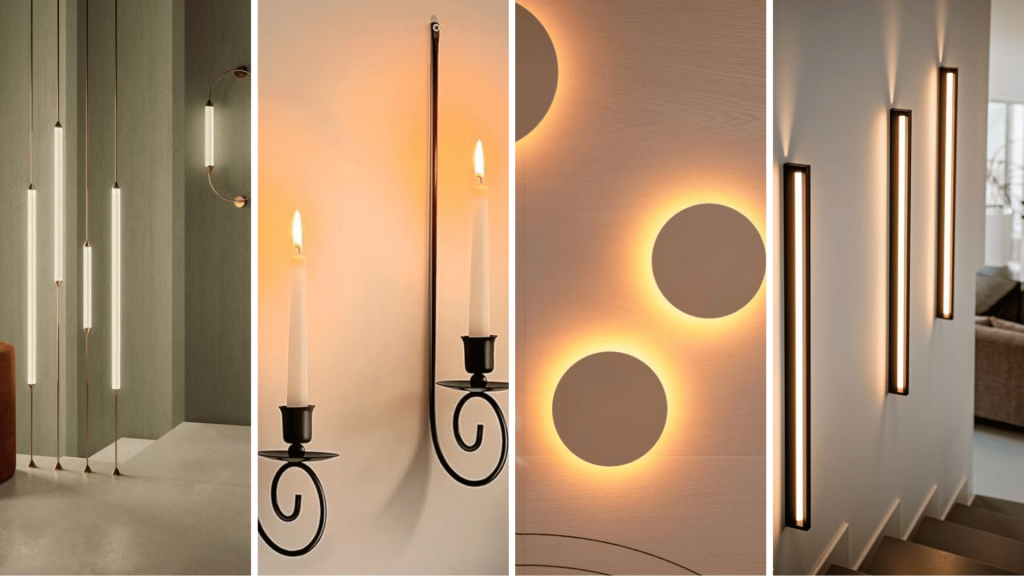
Linear LED Art Installations: Here, the light design for the wall itself becomes the art. Think of a thin, frameless LED line that travels vertically or in a geometric pattern, integrated directly into the wall surface. It’s pure, architectural ambiance. It’s pure architectural ambience, one of the best ceiling light design ideas for your living room.

.

Integrated & Architectural
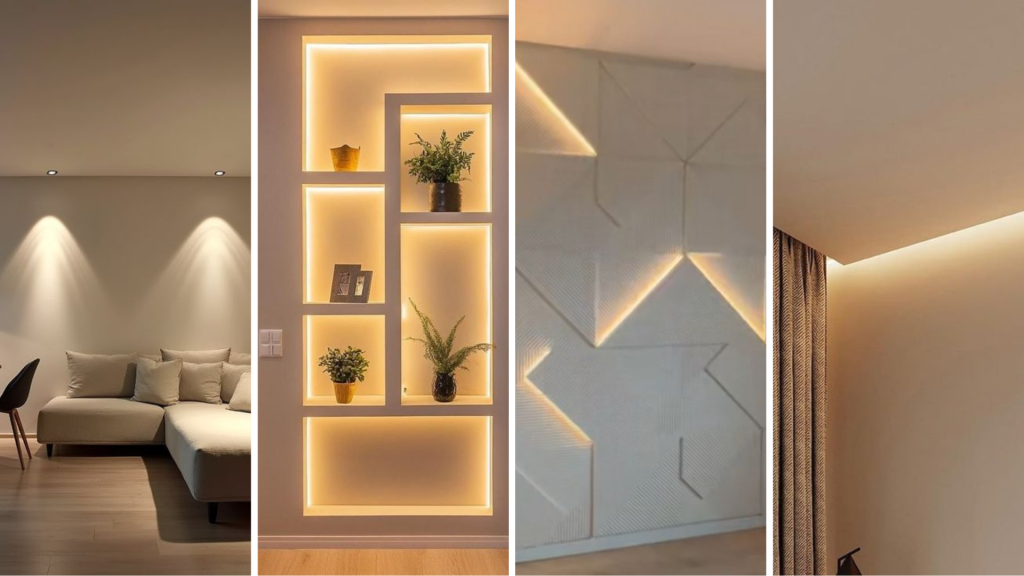
Integrated & Architectural Wall Light Designs
    • Recessed Wall Washers: These are the ultimate tool for creating atmosphere. Tucked discreetly into the ceiling or a bulkhead, they graze light down a textured wall (like stone or shiplap), emphasizing texture and adding immense visual height to the room. 


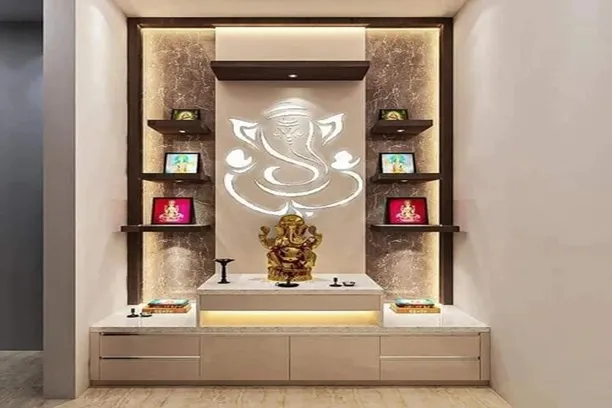
    • Wall-Grazing Niche Lights: Illuminate display niches or open shelving from within. Integrated LED strips at the top or bottom of a recess create a pool of light that makes collected objects look curated and dramatic. 


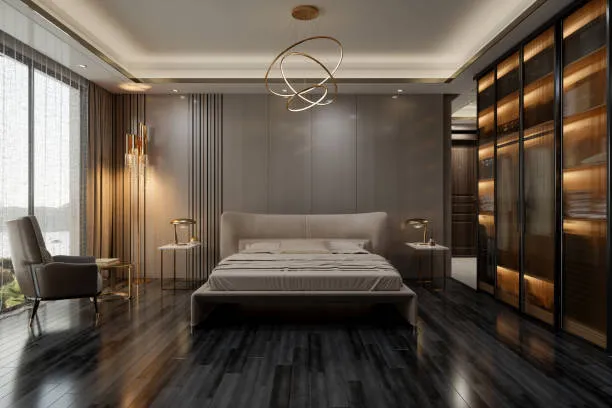
    • Perimeter Cove Lighting: A modern take on the wall ceiling light design. Hidden LED channels at the junction of the wall and ceiling wash light upwards, creating a floating ceiling effect and a soft, ambient glow that defines the entire room’s perimeter. 


  • Sculptural Backlit Panels: A large panel of onyx, translucent resin, or even textured glass is wall-mounted with hidden LEDs behind it. This creates a large, luminous canvas that serves as a breathtaking focal point.

Functional & Ambient
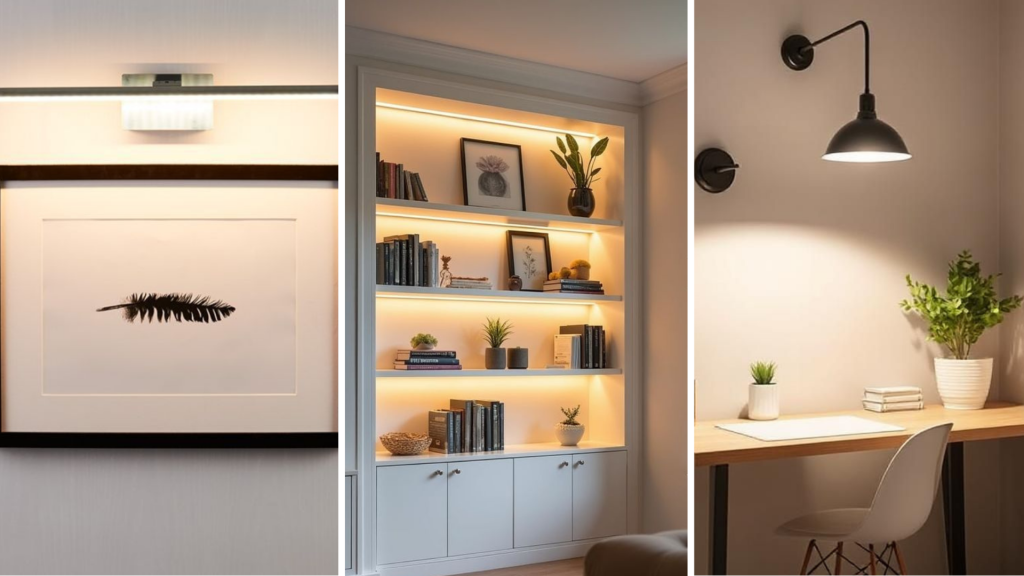
Functional & Ambient Wall Light Designs
  • Articulating Swing-Arm Sconces: The perfect blend of form and function. Mounted on either side of a sofa or reading chair, these adjustable arms provide focused task light for reading and can be folded back when not in use, serving as a sculptural element.
  • Plug-In Picture Lights as Art Highlights: Use classic, brass picture lights not just for paintings, but to illuminate a textured wall hanging, a collection of plates, or a large-scale photograph. It adds a gallery-like sophistication.
  • Integrated Shelf Sconces: A sconce is built directly into the end of a floating shelf. This is a brilliant light design for wall areas with shelving, providing perfect downlight for the items below and acting as a sleek, built-in detail.

Material-Led & Textural
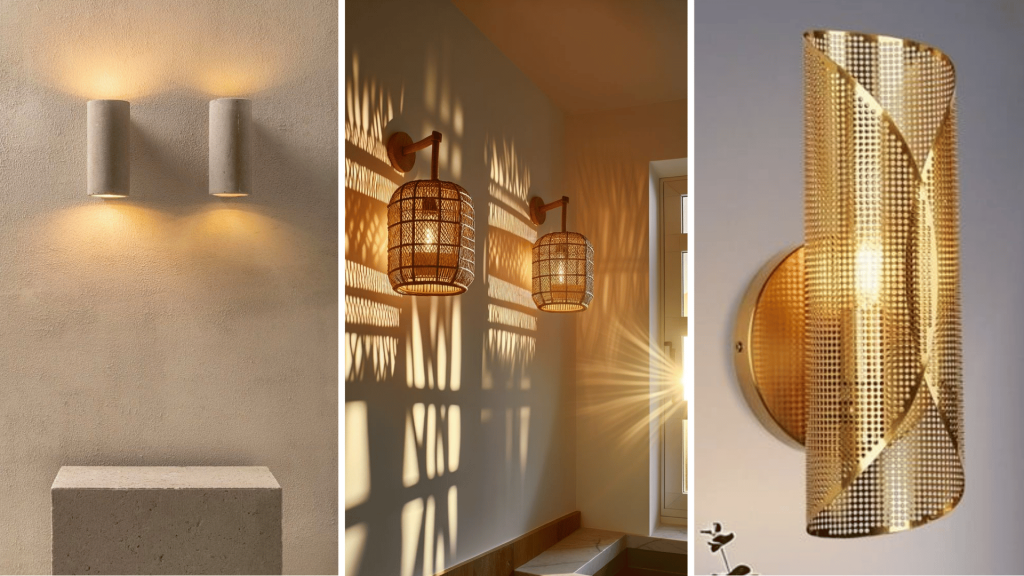
Material-Led & Textural Wall Light Designs
  • Textured Concrete Cylinders: Monolithic sconces in cast concrete offer a raw, tactile quality. They provide a soft, diffused light and work beautifully to ground a room with organic, earthy tones.

  • Rattan & Cane Wrapped Globes: Bringing biophilic design to the walls. These sconces cast beautiful, dappled light patterns across the room, creating a warm, inviting, and resort-like feel.

  • Perforated Metal Sconces: Light filters through intricate patterns cut into powder-coated steel or brass, projecting captivating shadow patterns onto the wall, effectively creating two layers of art.

The Minimalist's Muse: Invisible & Disappearing Fixtures
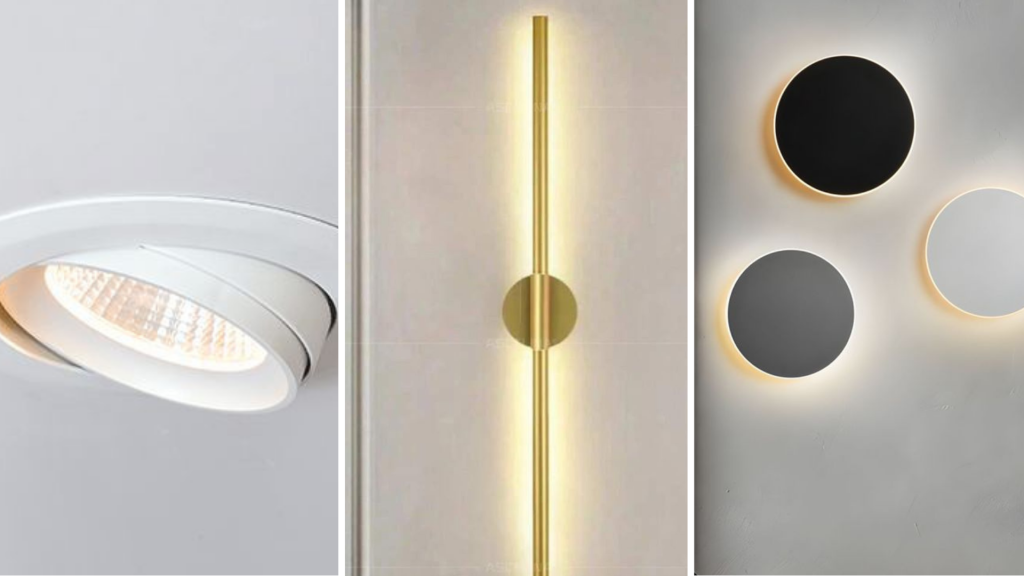
Invisible & Disappearing Fixtures Wall Light Designs
In minimalist and contemporary interior design, the goal is to reduce visual noise and celebrate pure form. Lighting in this context should serve its function without introducing clutter. This philosophy has given rise to a category of fixtures designed to recede, where the light itself is the protagonist, not the fixture housing it.
  • Flush-Mounted Discs: The Discreet Spotlight
The primary characteristic of these lights is their integration with the architectural plane. Flush-mounted disc lights are a prime example, sitting almost seamlessly against the wall surface to project a crisp, contained pool of light. They provide essential illumination while maintaining a clean, uncluttered aesthetic.
  • Recessed Aperture Lighting: A Glow from Within
A more advanced application involves recessing the fixture entirely, creating a narrow aperture in the drywall from which light emerges. The effect is a clean, intentional glow that feels intrinsic to the wall’s construction. This method eliminates any protrusion, achieving the ultimate seamless integration.
  • Integrated Linear LEDs: Architectural Seamlessness

The ultimate expression of this trend is the use of integrated linear LEDs. These are installed within discreet drywall channels or coves, resulting in a razor-thin line of light with no visible hardware or bezel. This technique transforms the light into a pure, architectural element. It can be used to define a room’s perimeter, outline a specific feature, or create geometric patterns on a wall. The result is ambient illumination that feels both expansive and weightless, reinforcing the minimalist ethos of “less is more.” These solutions are not merely fixtures; they are functional details that prioritize atmosphere over objects.

Shadowplay: Designing with Darkness in Mind
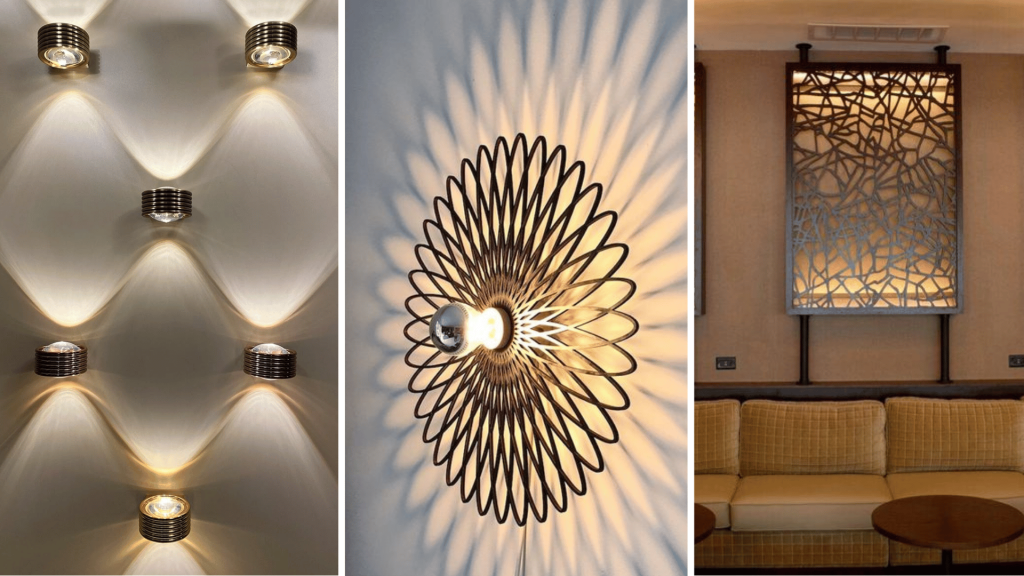
Shadowplay Wall Light Designs
Conventional lighting design often focuses solely on the quality of illumination. A more sophisticated approach, however, recognizes that shadow is an equally powerful design tool. Intentional shadowplay adds depth, drama, and a layer of dynamic artistry that flat, uniform lighting cannot achieve.
  • Directional Lighting for Dramatic Form
This effect is engineered primarily through the strategic use of directional lighting. A sharply focused sconce, such as an asymmetric bronze sculpture, will cast distinct, elongated shadows across a wall, turning a blank surface into a canvas of light and dark. This creates a sense of mystery and movement, making the wall appear more textured and spatially complex.
  • Perforated Screens as Pattern Projectors
Furthermore, the fixture itself can be designed to generate patterns. Sconces crafted from perforated metal or intricately cut wood act as stencils when illuminated. Light filters through their precise openings, projecting captivating shadow patterns onto the surrounding wall. This creates two layers of art: the sculptural form of the fixture itself and the ephemeral, animated pattern it casts.
  • The Strategic Impact of Shadow
This technique is particularly effective in monochromatic or minimalist spaces, where it introduces visual interest without relying on color or additional decor. Ultimately, mastering shadowplay allows a designer to manipulate perception and craft an environment that is both intellectually engaging and emotionally resonant.

For Specific Zones & Features

For Specific Zones & Features Wall Light Designs
  • Vertical Runway Lights for Staircases: A modern approach to staircase wall light design. A series of small, minimalist LED spots or vertical sconces are installed along the wall running parallel to the staircase, ensuring safety while creating a rhythmic, architectural light feature.

  • Flush-Mounted Disc Lights: Ultra-thin, disc-shaped sconces that sit almost flush with the wall. They are perfect for lighting narrow passages within the living room or for creating a clean, uncluttered look in a modern space.

  • Modern Candle Sconces: An update on a classic. Groups of electric, flame-tip LEDs in sleek black or brass holders create an irreplaceable, flickering ambiance for a fireplace wall or a cozy corner.

  • Floor-to-Ceiling Vertical Pendants: While technically a pendant, this style functions as a wall light design. A single, long cord with a light source descends from the ceiling to the floor, grazing the wall with light. It’s a dramatic and sculptural solution for blank, tall walls.


How Can Opalspace Help You?

In summary, contemporary designer wall lights are a critical element of home interior design, essential for defining atmosphere and enhancing spatial perception. Its successful implementation requires a strategic approach to fixture selection and placement. Opalspace provides expert guidance in integrating these lighting principles to achieve a cohesive and intentional interior environment. We offer comprehensive design services to realize the full potential of your space. Contact us to begin the process.

FAQs

1. What are designer wall lights?

Designer wall lights are lighting fixtures that are conceived as artistic or architectural elements first. They go beyond mere illumination to serve as focal points, contributing to a room's aesthetic narrative with their form, material, and the quality of light they emit. Unlike standard sconces, they are often unique pieces that reflect a specific design philosophy, making them integral to a curated interior design scheme.

2. Why should I use wall lights in my living room?

Wall lights are essential for creating a layered and inviting atmosphere in your living room. They provide targeted, human-scaled lighting that eliminates dark corners and reduces eye strain, making the space more comfortable. Strategically placed, they can define specific zones, such as a reading nook or a conversation area, and add depth and dimension to the room's overall design.

3. What is the latest trend in wall light design?

Current trends emphasize a blend of sculptural artistry and seamless integration. Asymmetric, organic forms in materials like bronze and fluid glass are popular as standalone art pieces. Simultaneously, there is a strong move towards invisible design, with flush-mounted discs, recessed apertures, and integrated linear LEDs that create light without a visible fixture, offering a clean, architectural look.

4. How do I choose a wall light design for a modern living room?

For a modern living room, prioritize clean lines, minimalist forms, and innovative materials. Look for designs that are either bold sculptural statements or discreetly integrated into the architecture. Consider linear LEDs, backlit panels, or geometric sconces in finishes like matte black, brushed brass, or raw concrete. The fixture should complement the room's aesthetic without creating visual clutter.

5. What is a good wall ceiling light design for ambient glow?

Perimeter cove lighting is an excellent wall ceiling light design for a soft, ambient glow. This involves installing a hidden LED channel at the junction where the wall meets the ceiling. The light washes upwards, creating a floating ceiling effect that provides uniform, indirect illumination throughout the room, eliminating harsh shadows and establishing a calm, welcoming ambiance.

Leave a Reply

Your email address will not be published. Required fields are marked *

Opalspace-logo.png
Looking for Interior Design
we are there for you..!!
Get in Touch
Your email address will not be published.
Opalspace-logo.png
We transform your dream homes into beautifully and intelligently designed realities.

Our Gallery

Contact Info