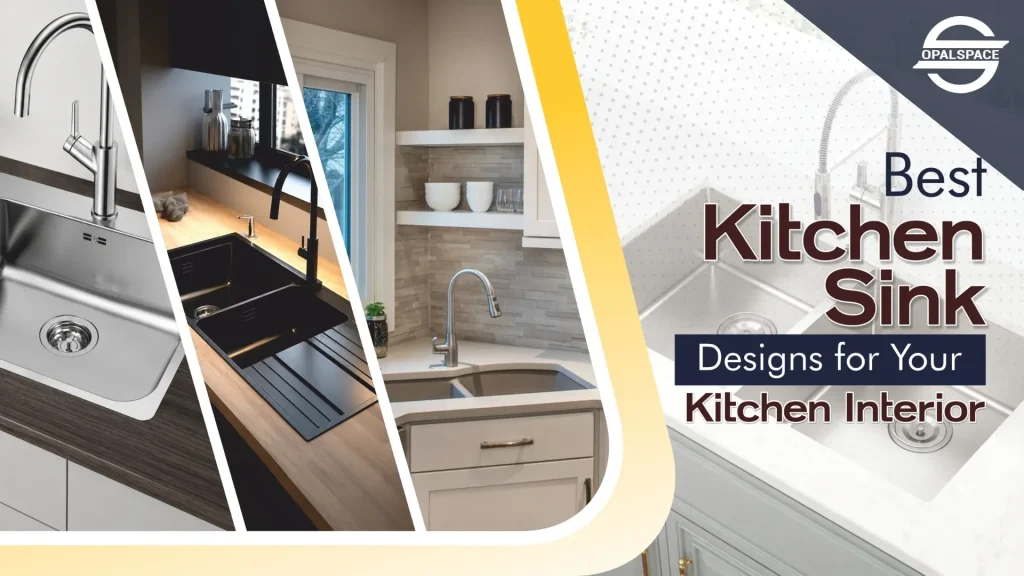
Kitchen sink designs are no longer an afterthought in your kitchen layout planning. The latest sinks come with fancy designs and strong materials. This blog gathers all the details about their types, materials, pricing, and trends. It is for sure going to help you pick the right kitchen sink for your kitchen layout.
Table of Contents
The kitchen sink has evolved into a modern utility statement piece inside our kitchen interior. It lies at the union of routine and sensible design. Early sinks were just portable pans, which were made from wood or metal. Indoor plumbing transformed them into permanent fixtures built into cabinetry. Materials shifted from cast iron to stainless steel, copper, brass, and natural stone. Designers now seriously consider how a kitchen sink design can draw attention beyond its utility.
What is Kitchen Sink Design?
Kitchen sink refers to the structure, placement, material, dimensions, and working pattern. A perfect kitchen sink design addresses all the details that affect daily kitchen chores. It no longer works only as a water point. Modern home interiors consider it an important part of kitchen planning.
Designers focus on its size, bowl type, corner fitting, faucet position, drainboard style, and installation pattern before finalising the layout. Some homeowners prefer a single deep bowl for large utensils. Others pick double sink kitchen designs for multitasking. Modular kitchens also use corner kitchen sink designs to save movement space.
Materials make all the difference in designing a kitchen sink. Stainless steel sinks suit daily heavy usage. Quartz and granite sinks match premium kitchen interiors.
Designers focus on its size, bowl type, corner fitting, faucet position, drainboard style, and installation pattern before finalising the layout. Some homeowners prefer a single deep bowl for large utensils. Others pick double sink kitchen designs for multitasking. Modular kitchens also use corner kitchen sink designs to save movement space.
Materials make all the difference in designing a kitchen sink. Stainless steel sinks suit daily heavy usage. Quartz and granite sinks match premium kitchen interiors.
How is Modern Kitchen Sink Design Advantageous?
Modern kitchen sink design progresses kitchen work through smart planning and practical features. Deep bowl sinks help you wash large utensils with less water spilling. Then again, double sink kitchen designs support multitasking.
Modern sinks also use stronger materials like stainless steel, quartz, and granite composites. These materials resist scratches, stains, rust, and heat better than older sink models. Many of these come with drainboards, pull-out faucets, chopping board sections, and built-in drying areas for speed.
This modular sink design optimizes space management as well. Corner sinks and undermount sinks help you use countertop space freely. This works in small kitchens. Modular kitchen layouts now place sinks with thought-out strategies. Either near cooking or storage areas for smooth navigation while preparing meals.
Hygiene is one of the biggest driving reasons, too. Advanced drainage systems stop stagnant water, and polished surfaces make cleaning quick.
Modern sinks also use stronger materials like stainless steel, quartz, and granite composites. These materials resist scratches, stains, rust, and heat better than older sink models. Many of these come with drainboards, pull-out faucets, chopping board sections, and built-in drying areas for speed.
This modular sink design optimizes space management as well. Corner sinks and undermount sinks help you use countertop space freely. This works in small kitchens. Modular kitchen layouts now place sinks with thought-out strategies. Either near cooking or storage areas for smooth navigation while preparing meals.
Hygiene is one of the biggest driving reasons, too. Advanced drainage systems stop stagnant water, and polished surfaces make cleaning quick.
Types of Kitchen Sink Design for Your Kitchen Interior
These kitchen sink designs address different space requirements, kitchen interiors, and daily needs.
1. Single Bowl Kitchen Sink Designs
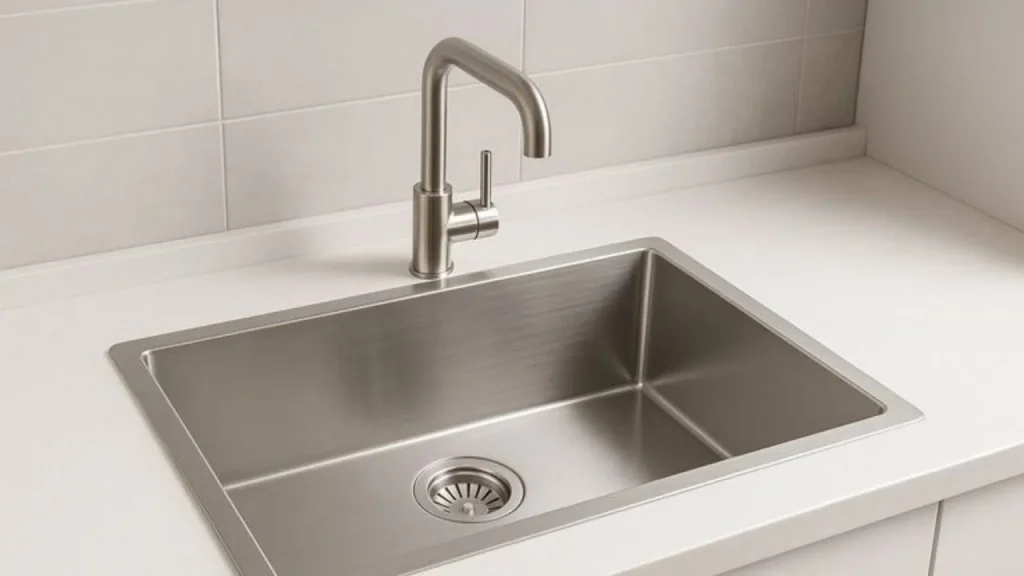
Single bowl kitchen sink design suits medium-sized and small kitchens. It’s a budget-friendly sink option. A large open bowl is meant to accommodate heavy utensils, baking trays, and large pans. Many homeowners pick this design for faster cleaning and simpler maintenance. Stainless steel single bowl sinks dominate modern modular kitchens. They support constant heavy use and fit into granite, marble, or quartz countertops.
2. Kitchen Sink Design with Drainboard
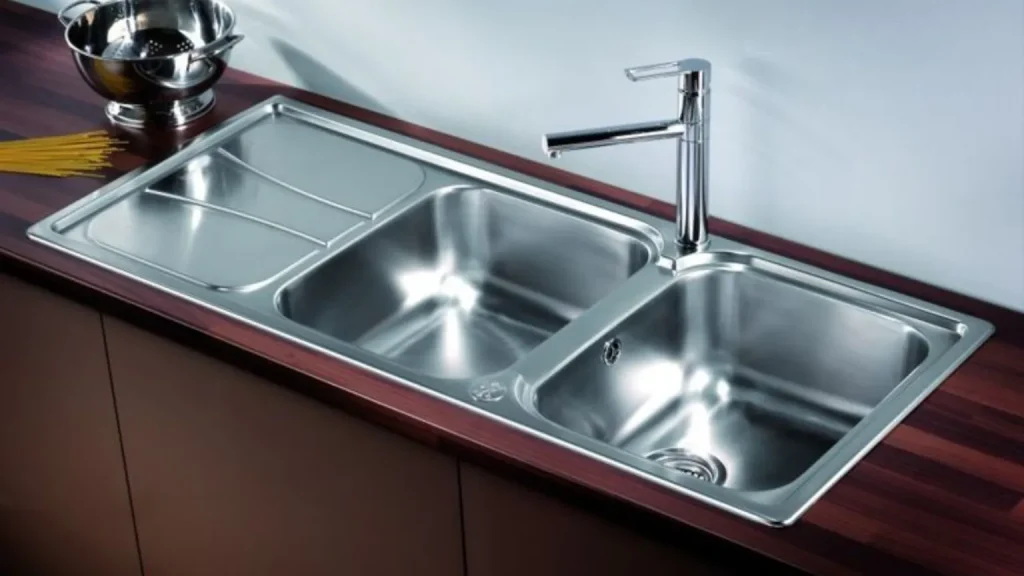
Kitchen sinks with drainboards have an attached drying section beside the sink bowl. You can place washed utensils, vegetables, or cookware in it. The sloped surface directs excess water back into the sink. Doing so keeps countertops drier during kitchen work. Drainboard sinks made of stainless steel account for most of the kitchen interiors. It happens due to its durability, low maintenance, and suitability for excess work.
3. Double Kitchen Sink
Double kitchen sink designs divide the sink area into two separate bowls. These designs ease multitasking. One section can hold dirty utensils, and the other can wash vegetables or rinse dishes. Large families and busy kitchens enjoy this layout as it boosts work organisation during cooking and cleaning hours. These kitchens use stainless steel or quartz double bowl sinks with pull-out faucets and drainboards to save space and speed up tasks.
3. Corner Kitchen Sink Design
Corner kitchen sink designs utilise unused corner sections in L-shaped and U-shaped kitchens. If you have a small apartment, corner sinks work best. They use dead corners and optimise difficult kitchen angles smartly. Professional designers prefer to pair these sinks with angular cabinets and wall-mounted storage units. They do so to maximise navigational space.
5. Kitchen Sink with Stand
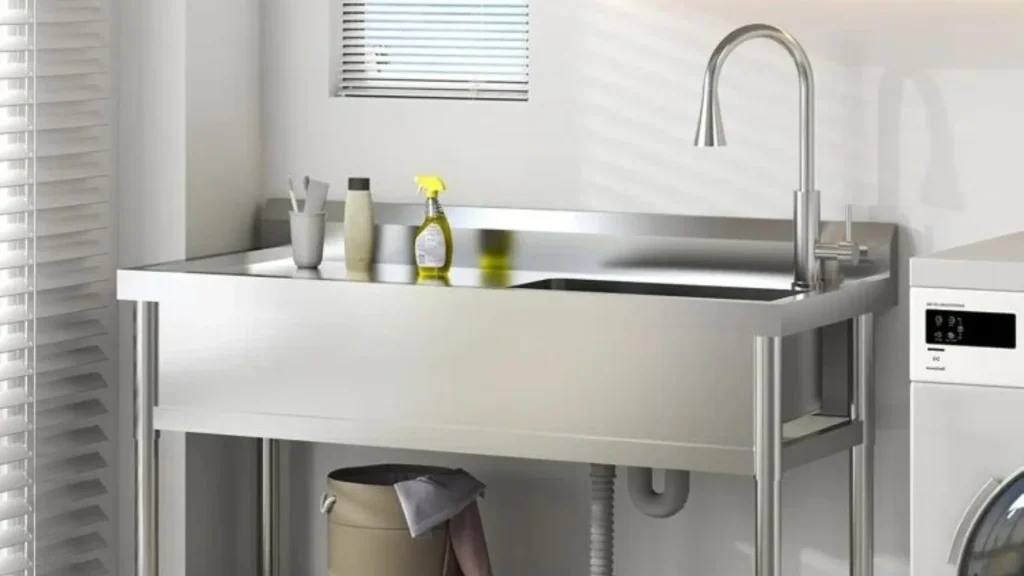
It’s a trending premium kitchen sink style. Kitchen sinks with stands has a freestanding frame structure. These are useful for semi-modular kitchens. Many homes, rental properties, and utility kitchens like this design because it gives way to quick installation. It is very easy to move it during renovations. The open lower section also provides quick access to plumbing lines and cleaning areas beneath the sink.
6. Apron Front Sink
Apron-front kitchen sinks are also called farmhouse sinks. They highlight an exposed front panel that extends slightly beyond the countertop edge. Since they are deep and wide in design, they give easier access during dishwashing. Ceramic, fireclay, and copper apron sinks take the lead in luxury kitchen interiors. Their strong structure and distinctive front-facing design make them a top choice.
7. Undermount Kitchen Sink and Top Mount Kitchen Sink Design
Undermount kitchen sinks attach beneath the countertop surface. It provides widespread counter space for wiping and directing water into the sink basin.
Topmount kitchen sinks rest on the countertop cutout. Its visible edges secure the sink in position.
Topmount kitchen sinks rest on the countertop cutout. Its visible edges secure the sink in position.
Undermount Kitchen Sink vs Top Mount Kitchen Sink Design
| Feature | Undermount Sink | Top Mount Sink |
|---|---|---|
| Installation | Under countertop | Above countertop |
| Cleaning | Easier | Moderate |
| Cost | Higher | Budget-friendly |
| Look | Premium | Traditional |
What are the Latest Kitchen Sink Design Trends in 2026?
New kitchen sink trends bring you smarter space use, tough materials, and advanced accessories.
1. Matte Finish Kitchen Sinks
Matte finish kitchen sinks top the 2026 kitchen trends. They are smart enough to hide water spots, fingerprints, and soap marks. Black, graphite, and gunmetal matte sinks now attract homeowners who want bold kitchen contrast with stone countertops and metallic kitchen fittings.
2. Black Granite Sink Designs
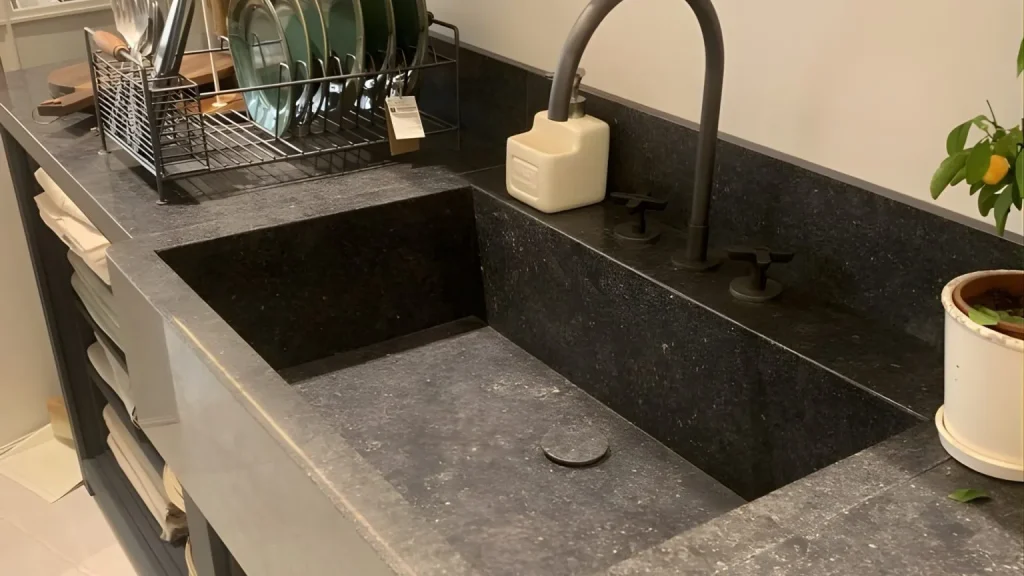
Black granite sink designs have gained immense popularity in 2026. It is due to their scratch-resistant surface and strong resistance against heat, stains, and impact damage.
3. Quartz Kitchen Sink Trends
Quartz kitchen sinks resist chipping, noise, and hard water marks better than many metal sink options. Manufacturers now launch quartz sinks in charcoal, ash grey, beige, and stone-inspired finishes. It is to match contemporary modern day kitchen palettes.
4. Smart Kitchen Sinks with Accessories
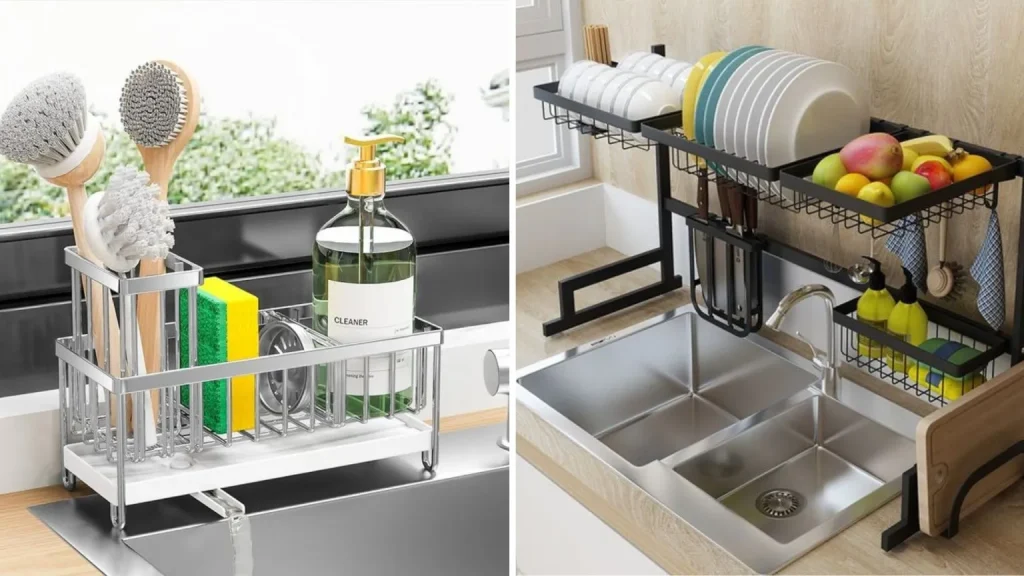
Smart kitchen sinks in 2026 feature built-in accessories. Like sliding chopping boards, drying racks, soap dispensers, cup washers, and pull-out faucets in a single sink setup. Homeowners go for these multitasking sink systems. They organise food preparation and cleaning activities in compact modular kitchens.
5. Hidden Drain and Noise Reduction Technology
Modern kitchen sinks now use concealed drainage systems. These keep food residue away from the main sink surface and give a cleaner sink layout. Professionals install sound-absorbing pads and insulated sink coatings that minimise metal noise.
6. Minimalist Stainless Steel Sink Design
Minimalist stainless steel sinks rank sharp edges, straight lines, and compact geometric structures. They suit contemporary modular kitchen layouts. Stainless steel resists rust, heat exposure, and daily utensil impact for long-term kitchen usage. Hence, it’s useful.
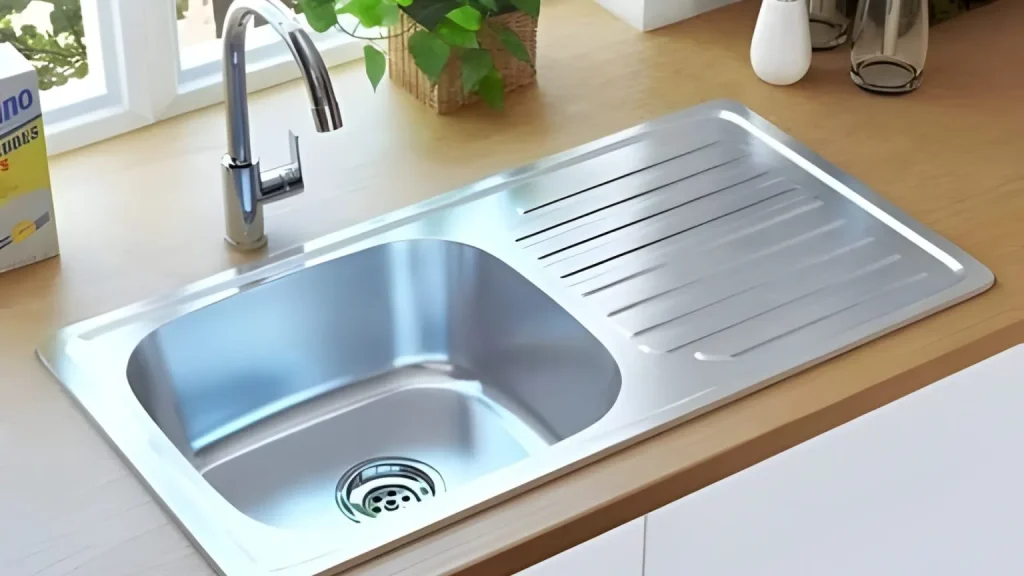
7. Deep Bowl Modern Kitchen Sink Design
Deep bowl modern kitchen sink designs attract homeowners who wash large cookware and mixer jars regularly. They have extra depth, which controls water splashing and holds stacked utensils during cooking sessions or family gatherings.
Cost of a Modern Kitchen Sink Design
Modern kitchen sink prices lean on material, size, bowl type, finish, and accessories. The average cost of a modular kitchen sink design normally lies between ₹2,000 to ₹30,000.
| Sink Type | Approx Price Range | Best For |
|---|---|---|
| Stainless Steel | ₹2,000 – ₹12,000 | Daily heavy use |
| Granite Sink | ₹6,000 – ₹25,000 | Modern modular kitchens |
| Ceramic Sink | ₹5,000 – ₹20,000 | Luxury aesthetics |
| Quartz Sink | ₹8,000 – ₹30,000 | Premium interiors |

Which Material is Best for a Kitchen Sink?
Material is the biggest driving reason of durability, maintenance, and long-term kitchen usage. Below is the list of some reliable sink materials to help you pick the befitting option for your kitchen.
1. Stainless Steel Kitchen Sink
Stainless steel kitchen sinks suit heavy use. Because they fight rust, heat exposure, dents, and moisture damage. This material is durable and affordable.
2. Granite Kitchen Sink
Homeowners who want strong scratch protection and stone-textured surfaces, they opt for Granite kitchen sinks. Above all, it looks premium.
Which Sink is better, granite or Steel?
| Feature | Granite Sink | Stainless Steel Sink |
|---|---|---|
| Durability | High | Very High |
| Appearance | Premium | Modern |
| Maintenance | Moderate | Easy |
| Price | Expensive | Affordable |
| Best For | Luxury kitchens | Indian cooking |
3. Ceramic Kitchen Sink
Ceramic kitchen sinks have a glossy finish and thick, durable structure. So, they are best for traditional and farmhouse kitchen layouts.
Which Sink is better, ceramic or Granite?
| Feature | Ceramic Sink | Granite Sink |
|---|---|---|
| Appearance | Classic | Contemporary |
| Scratch Resistance | Moderate | High |
| Impact Resistance | Lower | Better |
| Maintenance | Easy | Easy |
4. Quartz Kitchen Sink
Quartz kitchen sinks control stains, noise, and impact pressure in comparison to many standard metal sink materials. They provide a modern luxury look and a strong surface.
Kitchen Sink Tap Design Ideas
Kitchen sink tap designs have a bigger role to play. The tap designs below address changing cooking habits, layouts, and modern washing requirements.
1. Pull-Out Kitchen Sink Tap
Pull-out kitchen sink taps use an extendable spray head. It reaches large utensils, sink corners, and nearby countertop sections conveniently.
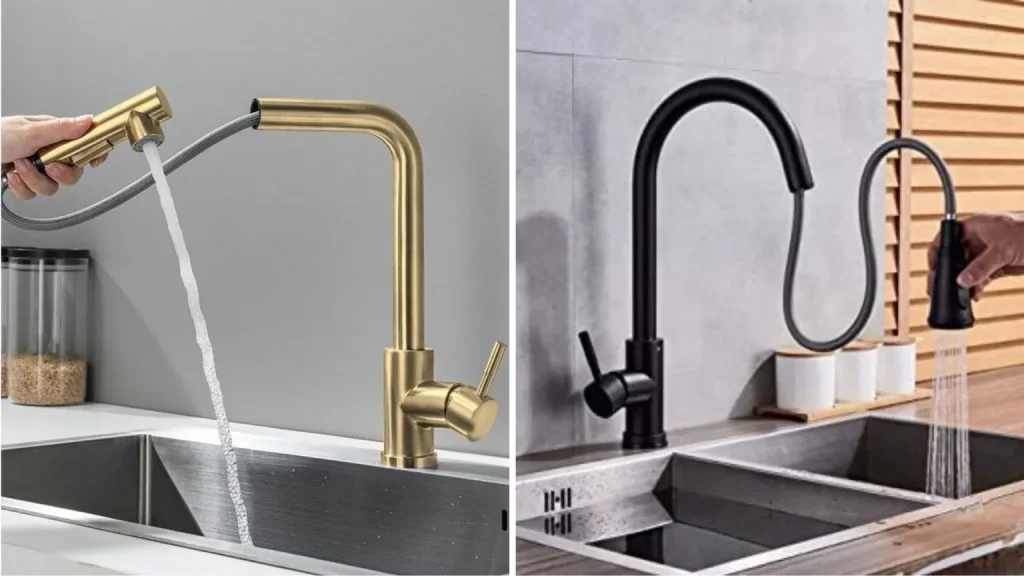
2. Flexible Neck Kitchen Sink Tap
Flexible neck kitchen sink taps use bendable spouts. They direct water flow during vegetable washing, utensil rinsing, and sink cleaning tasks.
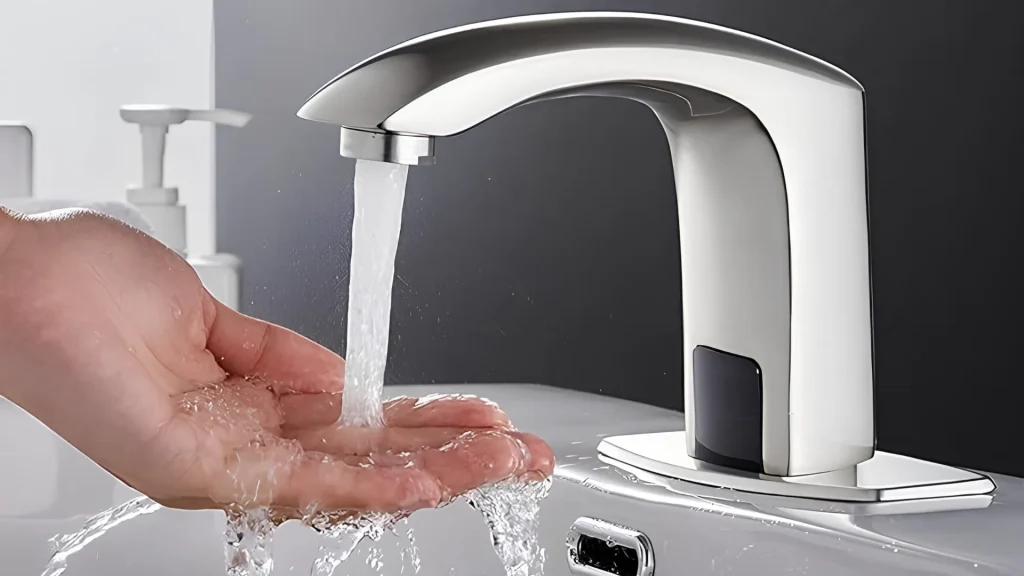
3. Sensor Kitchen Taps
Sensor kitchen taps activate water flow through motion detection technology. It helps maintain hygiene during cooking and dishwashing activities.
4. Wall Mounted Sink Taps
Wall mounted sink taps free up countertop space around the sink area. It simplifies cleaning near the backsplash section.
5. Dual Flow Kitchen Taps
Dual flow kitchen taps provide separate water streams for regular washing and high-pressure rinsing.
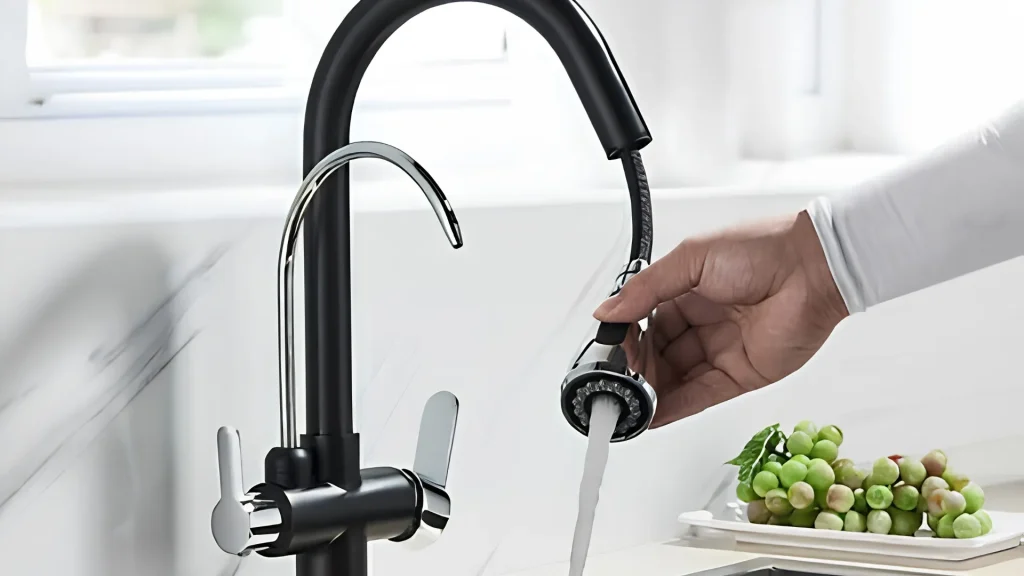
6. Matte Black Kitchen Sink Tap Design
Matte black kitchen sink tap designs are for those who prefer bold metallic finishes. They come in contemporary modular kitchen interiors.
How to Choose the Right Kitchen Sink Design?
Every kitchen follows different routines, patterns, and space needs. It makes sink selection an important planning decision. The right sink design simplifies daily work and sit naturally in your kitchen.
According to Kitchen Size
Compact kitchens work better with single-bowl, corner, or drainboard sink designs. It is so because that save counter space and simplifies movement.
According to Family Size
Large families benefit more through double bowl and deep sink designs. Daily utensil volume increases significantly during cooking hours.
According to Countertop Material
Granite and quartz countertops suit undermount sinks. Laminate and tiled countertops fit top mount sink installations for superior convenience.
According to the Budget
Stainless steel sinks can work well with budget-friendly kitchen projects. Whereas quartz, granite, and imported sink models target premium interior budgets.
According to Cleaning Habits
People who prepare meals many times, they should prefer scratch-resistant, stain-resistant, and deep bowl sink materials. These are for easier maintenance routines.
Based on Modular Kitchen Layout
L-shaped kitchens are efficient with corner sinks. Centrally placed workstation sink layouts perform better in island and parallel kitchens.
How Do You Maintain a Kitchen Sink?
Good maintenance habits keep the sink surface, drain area, and surrounding fittings in working condition for longer use.
1. How to Clean Stainless Steel Sinks
You should use mild dish soap, warm water, and a soft sponge daily to remove grease, food residue, and surface marks on stainless steel sinks.
2. How to Maintain Granite Sinks
You must clean granite sinks with pH-neutral cleaners only. And dry the surface after washing to prevent mineral deposits and surface dullness.
3. Preventing Sink Clogging
Dispose of food scraps, tea leaves, oil residue, and coffee grounds separately. These trashy materials block the kitchen’s drain pipes.
4. Removing Hard Water Stains
If you see a stain mark, you should apply vinegar or baking soda paste on it a few minutes. Then scrub gently with a non-abrasive cleaning pad.
5. Mistakes That Damage Kitchen Sinks
Metal scrubbers, harsh acids, boiling oil disposal, and heavy utensil impact can damage sink surfaces and weaken drainage components over time.
What are the Common Kitchen Sink Buying Mistakes?
Buying decisions go wrong when people ignore usage needs, space limits, material strength, and other details. Small oversights at this stage can lead to discomfort and extra repair costs later.
Ignoring Sink Depth
Shallow sinks splash water across nearby countertops. Small bowl sinks struggle to hold large cookware during daily kitchen work.
Choosing Style Over Practicality
Many homeowners prioritise trendy sink designs and later struggle with limited bowl space or incompatible layouts.
Wrong Tap Placement
Incorrect tap positioning restricts water reach and causes inconvenience during washing and cleaning.
Ignoring Countertop Compatibility
There are certain sink types that fail to fit right with laminate, marble, quartz, or granite countertops. This happens due to installation limitations.
Buying Low-Quality Steel Gauge
Thin stainless steel sinks dent faster and produce louder noise under heavy utensil impact.
Not Checking Drainage Slope
Poor drainage slope leaves standing water inside the sink basin. As a result, it increases stain formation near the drain sections.
Find the Right Kitchen Sink Design with Opalspace
Opalspace helps you select the most compatible kitchen sink design for your interior. Our interior designers guide you through every detail of your kitchen. We have been managing complete end-to-end interior design services for over 10 years. We carry that experience into every current and future renovation project to deliver the best to you.
FAQs
1. Which kitchen sink design gives the best value for money?
Single bowl stainless steel kitchen sinks deliver strong value for money because they combine durability, low maintenance, and affordable pricing. Homeowners also benefit from easier installation and long-term daily usage in compact and medium-sized kitchens.
2. Which type of sink is best for an Indian kitchen?How long do I get support?
Deep stainless steel sinks suit Indian kitchens more practically because Indian cooking involves large utensils, heavy washing, spices, oil residue, and frequent water usage. Double bowl models also work well for larger families with busy cooking schedules.
3. What’s the minimum price for a modular kitchen sink design?
Basic modular kitchen sink designs generally start at ₹1,500 to ₹3,000 for standard stainless steel single bowl models. Premium finishes, accessories, thicker steel gauges, and imported sink styles increase pricing significantly.
4. Which material is sturdy for my kitchen sink?
Stainless steel and quartz rank among the sturdiest kitchen sink materials due to strong impact resistance, moisture protection, and suitability for heavy daily kitchen usage. Granite composite sinks also perform well in busy modular kitchens.
5. Which are the kitchen sink accessories I must definitely add?
Pull-out faucets, sink strainers, soap dispensers, drying racks, chopping boards, and drain baskets make kitchen work more organised and practical. Many homeowners also install water-saving aerators and cup washers for faster cleaning routines.