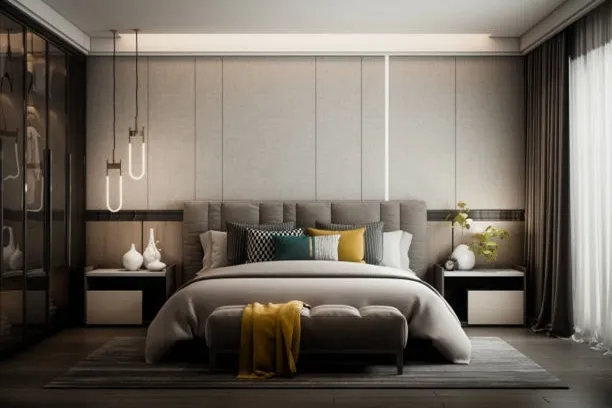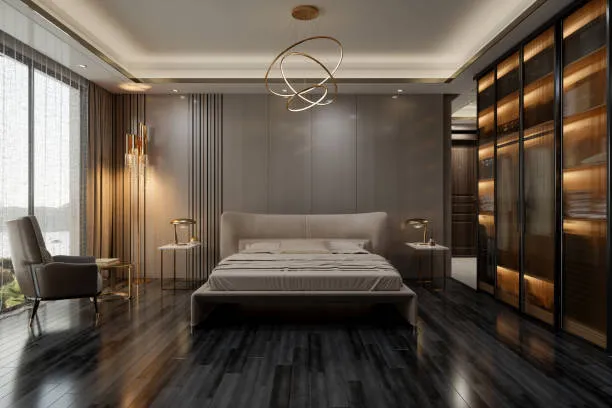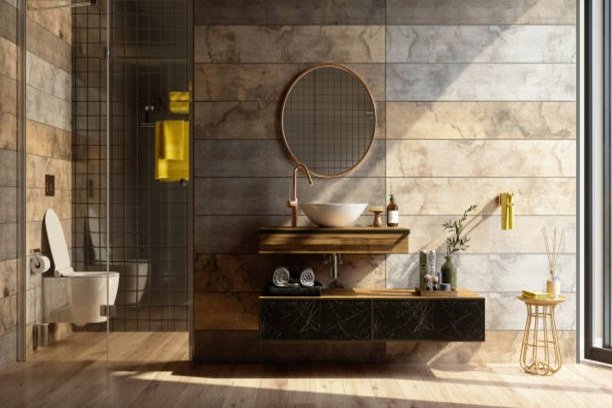
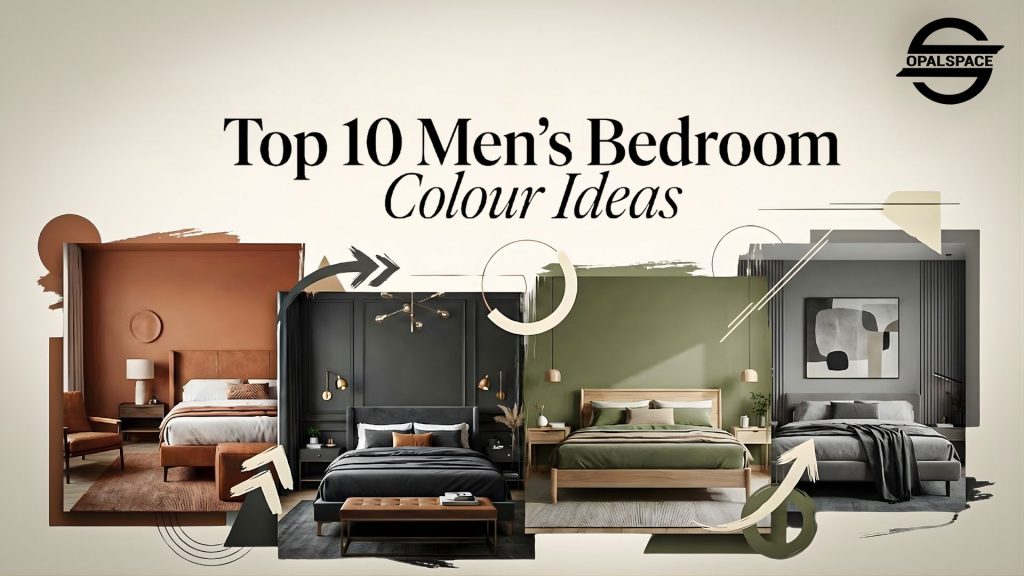
This blog argues there is no one best colour for a man’s bedroom. Instead, it presents 10 modern palettes, ranging from earthy neutrals to bold terracotta, as tools to create a personal sanctuary that reflects one’s identity and mood.
Table of Contents
They say a man does not carve his space all at once. He builds it in quiet layers of intent, gathering it all slowly, in fits and starts. His room is a reflection of his mind. It could be scattered or structured, serene or spirited, evergreen or experimental. In that sense, a bedroom becomes more than four walls, a bed, and a wardrobe. And in the same breath, bedroom colour becomes more than just a design choice. It becomes the atmosphere, the underlying, the unsaid, and the landscape of moods, habits and identities.
The walls, furniture finishes, and accents all play a role in shaping the overall mood of the room. Cool neutrals, bold monochromes, warm earthy tones, and subtle metallics are all part of this year’s trend-forward palettes. It’s also important to distinguish between colour elements like wall paint, modular wardrobe finishes, bedding tones, and accent decor, all of which contribute differently to the visual harmony of a room.
In this blog, we’ll refer to the full set of visual colour elements, across walls, furniture, and accessories, that work together to create a cohesive, stylish bedroom for men in 2026.
The walls, furniture finishes, and accents all play a role in shaping the overall mood of the room. Cool neutrals, bold monochromes, warm earthy tones, and subtle metallics are all part of this year’s trend-forward palettes. It’s also important to distinguish between colour elements like wall paint, modular wardrobe finishes, bedding tones, and accent decor, all of which contribute differently to the visual harmony of a room.
In this blog, we’ll refer to the full set of visual colour elements, across walls, furniture, and accessories, that work together to create a cohesive, stylish bedroom for men in 2026.
What is the best color for a men’s bedroom?
The question itself is flawed, because its answer cannot be universal. There is no single colour, or even a defined group of colours, that fits best for every man’s bedroom. That’s exactly the point. The idea of a one-size-fits-all masculine palette has shifted. Where once deep blues and greys were seen as defaults, 2026 design thinking leans into intentionality over tradition. The best colour isn’t the one that exhibits the gender, but the one that reflects his pace, purpose, and personal rhythm.
1. Earthy Neutrals Bedroom Color
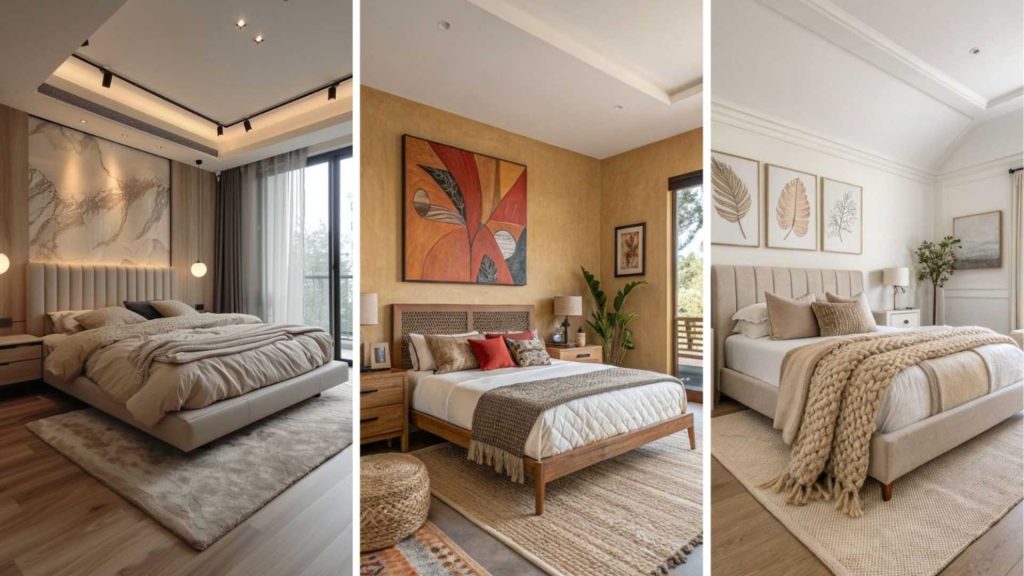
- Shades like beige, taupe, and greige are naturally restful. They mimic elements like sand, stone, and clay, which makes the space feel grounded and uncluttered. And it still doesn’t look bland.
- You can layer them with wood, metal, or even bolder accents like navy or charcoal. They neatly hold the room together.
- Unlike stark white or grey, these tones carry homeliness. They soften the space, especially when paired with natural light or warm LED bulbs.
- If you want to mix textures like linen, suede, rattan, or brushed metal, earthy neutrals support the layering that never clashes. It is great for a tactile and masculine setup.
- If you’re learning minimalist, Scandinavian, rustic, or boho, these tones adapt easily. They don’t need a complementary element to stand out. They simply show up reliably and with quiet confidence.
2. Vintage Rustic Bedroom Color
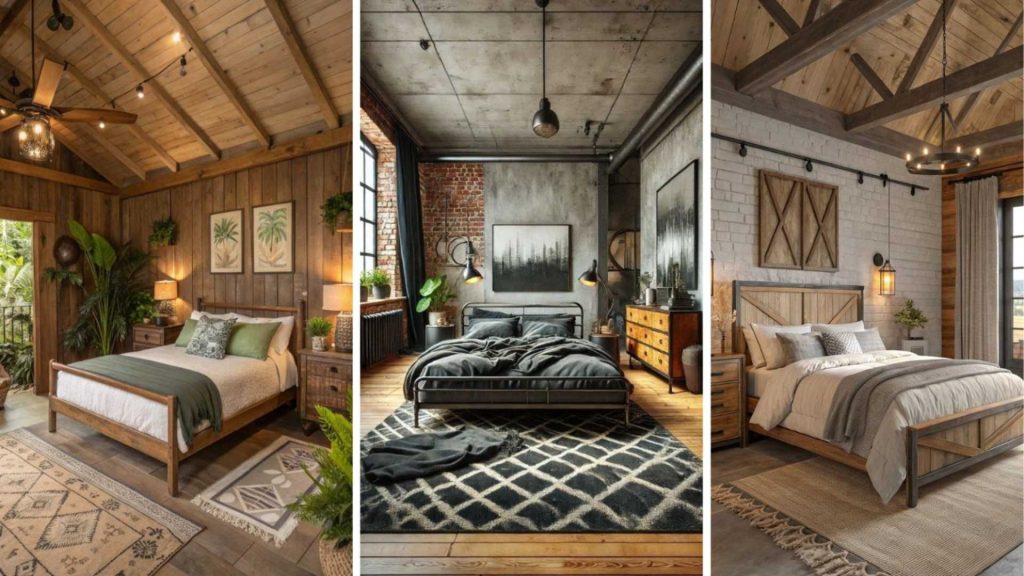
- Vintage rustic color palettes, like warm browns, olive green, and muted reds, form a room that displays richness, soul, and liveliness.
- There’s an organic ruggedness to this palette, but it’s never harsh. It feels handcrafted, with tones that resonate with aged wood, old leather, or sun-faded fabric.
- Rustic tones come alive when paired with materials like reclaimed wood, wrought iron, linen, and stone. They make the room feel visually aesthetic and tactile.
- These tones work well in layers, walls, bedding, rugs, and vintage accessories all in slightly different shades that give depth with composed balance.
- This is inspired by classic country homes or industrial lofts. This palette doesn’t follow trends, rather the trends adapt it happily. It holds up across seasons and years.
If your room has a TV unit, gaming setup, or gadgets, these rustic tones help ground the space and stop it from feeling overly digital. It means the gadgets immerse well enough into this palette. These colors evoke memories of old libraries, wooden desks, or heirloom pieces. It is completely perfect if you like your space to carry a bit of story.
3. Green Bedroom Color
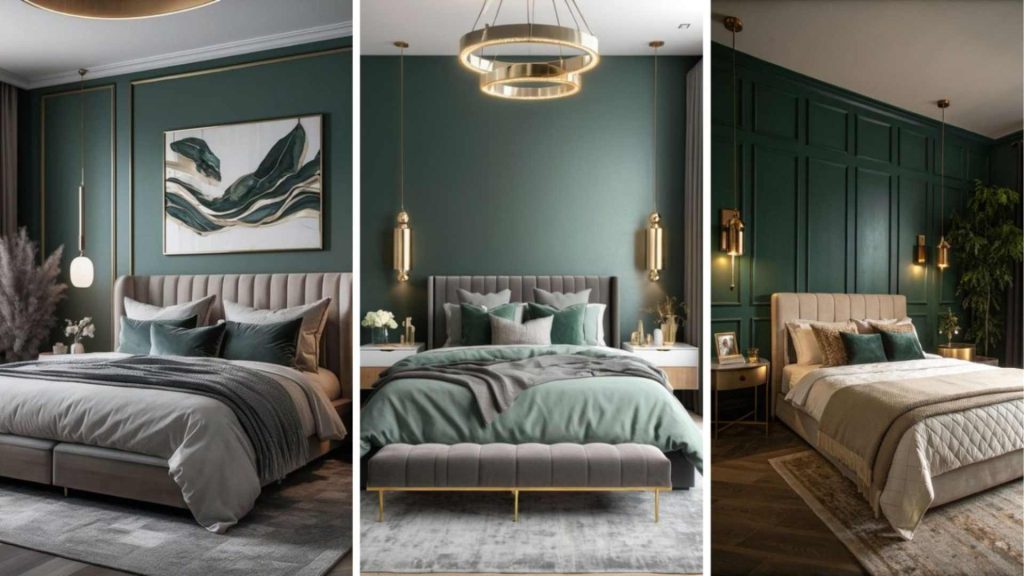
- Green connects instantly to the outdoors. In a bedroom, it brings in a sense of calm, balance, and mental clarity.
- No matter if you go for deep hunter green, olive, sage, or pistachio, every tone carries a different aura. It is bold and masculine and soft and restful.
- Psychologically, green is associated with renewal and stability. It is ideal for a room which is meant to restore energy and not drain it.
- Green walls or accents pop against walnut furniture, tan leather, or even rattan and brass finishes.
- Sage or dusty green brightens up small spaces. Darker tones have a tendency to assemble a moody, cocooned feel, though never feels overbearing.
- If you’re into biophilic design, pairing green walls with real plants can convert your room into a refreshing, immersive space.
- If your room has black fixtures or metallic lighting, green softens the contrast and brings an organic touch.
4. Grey Bedroom Color
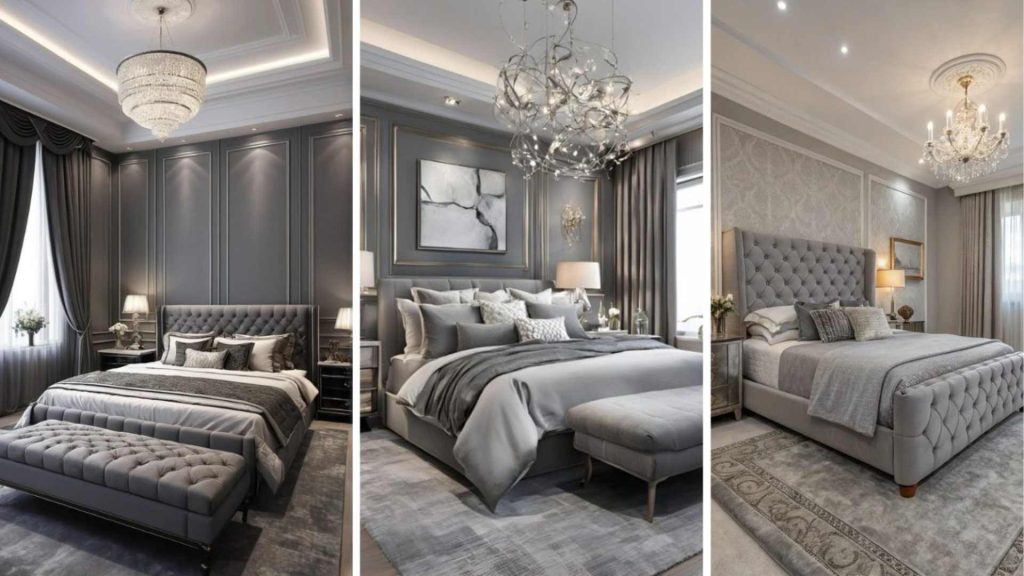
- Grey has long been considered a go-to for men. It is classy, quiet, and sharp. It lends structure and hardly competes for attention.
- Right from light silver to deep charcoal tones, grey fits into nearly every style, be it industrial, minimalist, luxe, or also rustic.
- If you’re planning to add navy, mustard, rust, or burgundy and do not want the room to appear loud, grey balances them all smoothly.
- Depending on undertones, grey can feel snug and warm (with hints of brown or taupe) or modern and clean (with blue or silver notes).
- Grey walls allow linen bedding, concrete, wool throws, or metal finishes to stand out subtly. It makes the room feel layered and accessorised with elements.
5. Black Bedroom Color
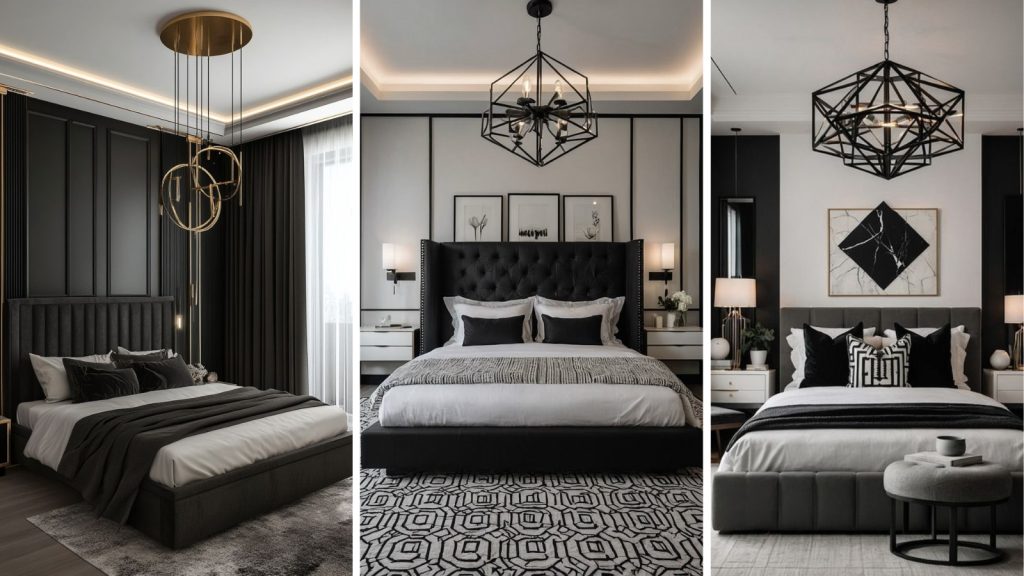
Black is powerful in a bedroom. It introduces depth and confidence. Not everyone dares to use it, and that’s what makes it compelling. this color absorbs light and that is why it makes the space feel nestled and private. It’s ideal if you want a room that helps you disconnect and wind down.
- Black makes colors pop. It has a dramatic effect. It highlights contrast beautifully.
- While it feels contemporary, black never really goes out of style. When you use it well, it always feels curated and intentional.
- A fully black room can feel oppressive if not done thoughtfully. You can pair it with warm lights, natural textures, and open space.
- If black walls feel too much, go for black frames, fixtures, headboards, or side tables. It still adds definition and strength.
- If you love clean lines but want a sense of boldness, black gently offers the clutter-free visual space.
6. Terracotta Bedroom Color
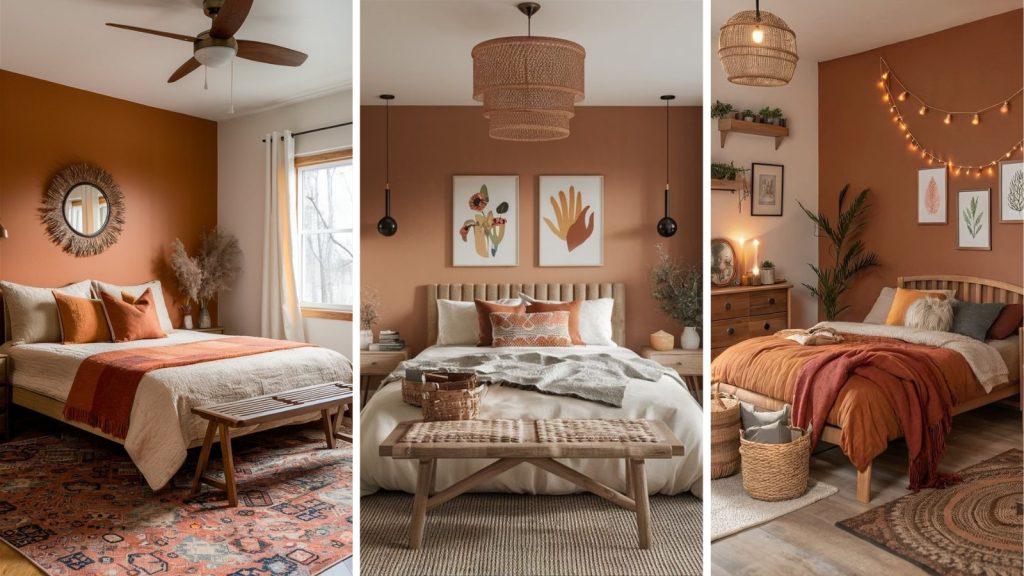
Terracotta sits between earthy red and burnt orange. It infuses the room with earthy warmth. While many masculine palettes lean cool, terracotta carries emotional depth while staying grounded and unfussy. It’s confident, not cold. Terracotta carries an old-world richness, taking inspiration from sunbaked clay walls and aged pottery.
- Jute rugs, wood beams, textured bedding, or ceramic accessories, this color loves texture and imperfection simultaneously.
- A muted, dusty terracotta works as a wall color or even as bed linen. A deeper shade can become an accent wall or a standout piece of furniture.
- If your room has a lot of screens or metal elements, terracotta brings in a human touch and softens the sharpness of gadgets.
- It shifts beautifully across the day, glowing warmly in daylight and turning warm and rich at night under warm lights.

7. Moderate Yellow Bedroom Color
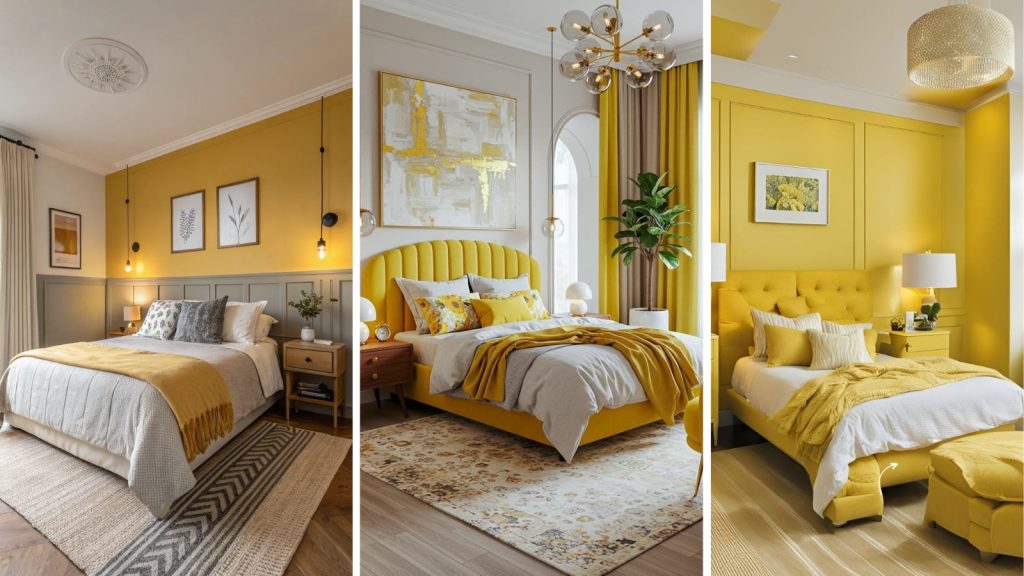
Mustard, ochre, or muted golden yellows are the tones which offer energy without being overwhelming or flashy.
- When used right, yellows bring a rugged, sun-warmed confidence to the room. Especially when they are paired with greys, woods, or navy.
- Yellow is psychologically linked to optimism and alertness. Also, in moderation, it can brighten a room’s emotional temperature.
- A yellow reading chair, rug, lamp, or throw pillow can bring spirit and peace together.
- You can combine mustard with charcoal grey, deep blue, or walnut brown for a well-balanced, masculine look.
- If your room is mostly monochrome or neutral, a touch of yellow prevents it from feeling too sterile or cold.
- Moderate yellows stimulate thought and focus, which make them ideal for bedrooms that double as studios or thinking spaces.
8. Blue Bedroom Color
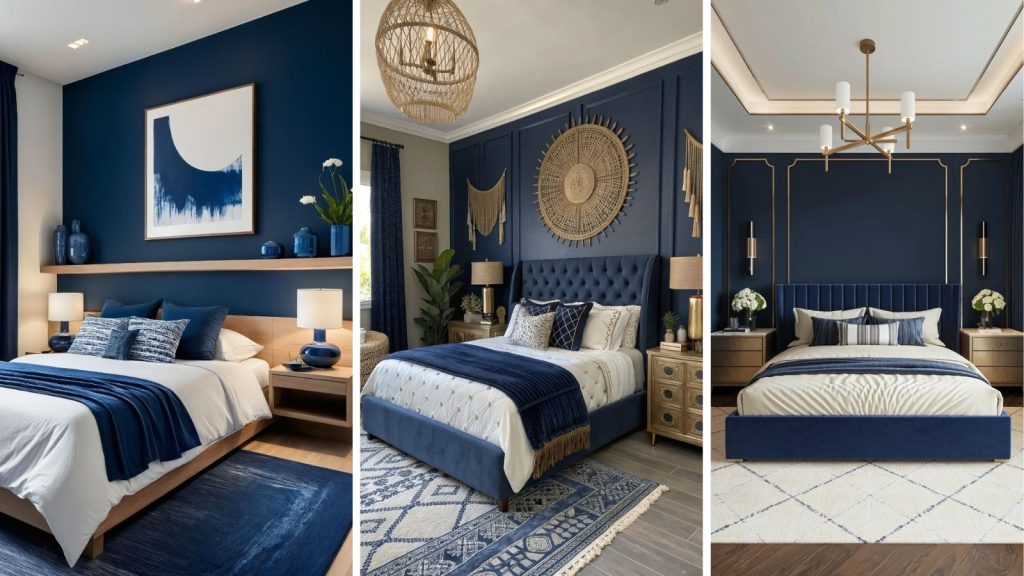
- Blue has long been a go-to for men’s bedrooms, and for good reason. It evokes calm, trust, and quiet strength.
- Ranging from deep navy to dusty denim to icy steel, each shade carries its own essence that is suitable for different moods and design goals.
- With wood, white, grey, or also brass accents, blue blends beautifully and easily. It never demands, it only complements.
- Lighter blues can open up a room, while darker tones make larger rooms feel intimate and elegant.
- Nautical, industrial, minimalist, or classic, blue can adapt in a snap. It can be coastal with creams, bold with black, or refined with silver.
9. Brown Bedroom Color
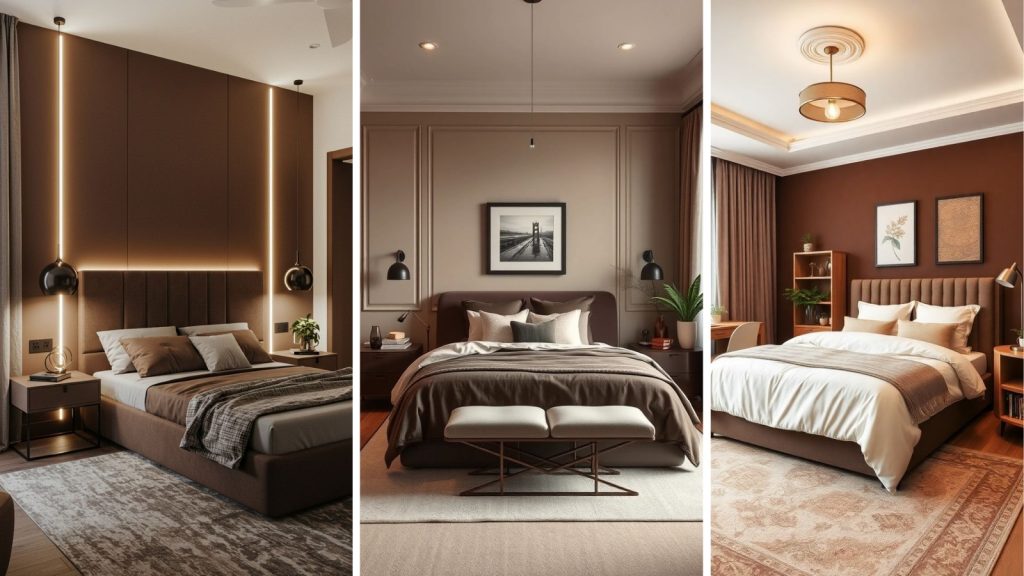
- Brown carries a natural, grounded energy like solid wood, worn leather, or rich soil. It adds quiet strength and warmth to any space.
- Unlike black or grey, brown feels warm and approachable while still holding a sense of seriousness and maturity.
- Suede cushions, wool throws, walnut furniture, or rattan lights, brown can make every texture feel richer and more tactile.
- Brown never goes out of style. It’s been used in masculine spaces for decades, and still feels current when paired with modern lighting or clean lines.
- You can paint the walls a warm mocha, or just bring in dark wood tones through headboards, flooring, or storage.
10.Theme-Based Bedroom Color
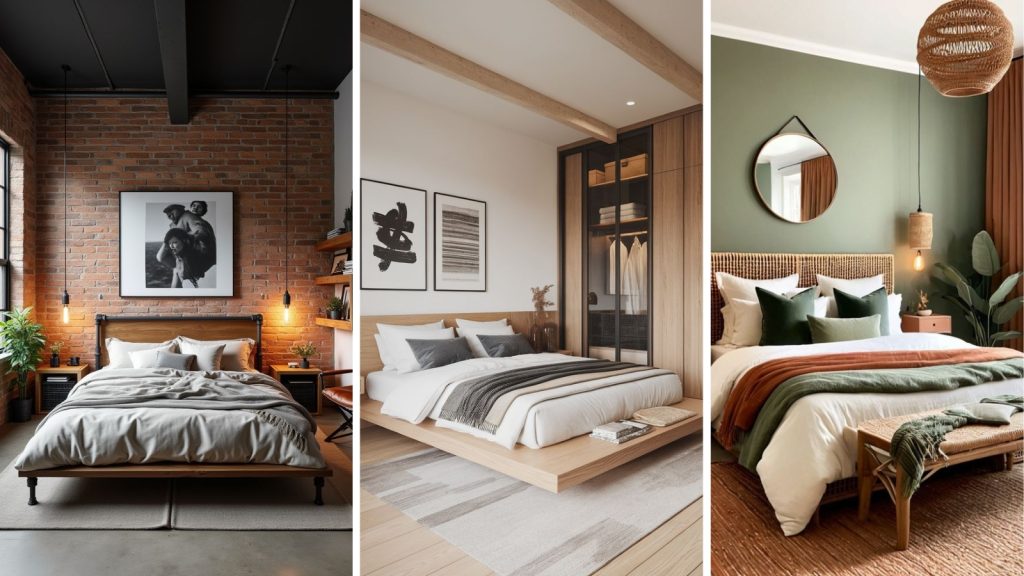
When you choose color based on lifestyle, and not trend, you’re less likely to tire of it. The room evolves with you, not apart from you. Instead of choosing a color and forcing a pre-defined atmosphere, theme-based design starts with a narrative itself. Then let the color serve the rest. Industrial, coastal, vintage, minimalist, each comes with its own palette.
- When your room reflects a concept (let’s say, “old Bombay loft” or “Japanese minimalism”), color brings the emotional content with the visual content.
- You can blend multiple colors, like olive green with terracotta in a vintage setup. And still keep harmony through the theme.
- Your hobbies, memories, and inspirations guide your choices. Maybe you’re into biking, film noir, or nature, the room subtly reflects that.
- Lighting to linens, the theme-based designs help you choose details that align with your own aura, your personality and brings out what you yourself may not be able to figure out. This way, you feel more connected and closer to your bedroom.
- If you live in a themed space, you can feel like stepping into your own fictional world. That emotional engagement makes colors feel more you.
Best Color for Bachelor Bedroom (Other Popular and Relevant Choices)
- Taupe: This one is a versatile choice for men’s bedrooms. The psychology behind this color is that it reflects steadiness, maturity, and depth marked by liveliness.
- Navy Blue: This color carries the hint of discipline in it. At the same time, it is unlike any other common color. It holds a dramatic feel within. When it is paired with wood, brass, or matte black, it forms a mood that’s composed and confidently masculine.
- White: White, in a men’s bedroom, speaks of clarity, restraint, and quiet confidence. It strips the space down to its essentials, such as clean lines, calm moods, and purposeful design. It becomes a whole blank sheet for texture, contrast, and deeply personal style.
Considerations for Accents:
- Leather: Leather has a pre-set tone for a manly energy. Rich brown or tan leather works beautifully with navy, charcoal, or olive-green walls. For example, leather headboards, lounge chairs, or bench seats to ground the space with classic ruggedness.
- Metal: In bachelor bedrooms with grey or black tones, matte black or brushed brass metal fixtures (like wall sconces, side tables, or curtain rods) give an industrial contrast. These accents help sharpen the look without overpowering it.
- Wood: Dark walnut or reclaimed wood complements deep greens, terracotta, or taupe walls by adding organic weight and texture. You can use it in bed frames, flooring, or open shelving to create a warm, grounded feel with architectural depth.
- Bold Artwork: Oversized monochrome prints, abstract canvases, or edgy photographic pieces pop beautifully against neutral or moody palettes. For example, a bold black-and-white print on a deep navy wall instantly becomes the room’s visual anchor.
Paint vs Wallpaper vs Wall Panels (What to Use Where!)
Paint, wallpaper, and wall panel designs each have their strengths, and where you can use them can give the entire bedroom a lift and its own unique identity.
- Paint: Paint is the go-to option. It is flexible too. It adapts easily and is budget-friendly too.
Use it: It can be applied on main bedroom walls, especially if you like switching things up every few years. Matte finishes work well for a comfort-driven, modern feel, while satin or eggshell offers durability. - Wallpaper: It’s great when you want to add visual interest refraining from physical bulk. Multiple textures, patterns, and personality are the best factors brought by wallpapers with them.
Use it: You can use it as a feature wall behind the bed or in a reading corner. Try textured wallpapers like linen weave or faux concrete for a masculine yet refined touch.
- Wall Panels: They help with insulation and sound absorption. Since they have architectural elegance, they are ideal for shared apartments or city bedrooms.
Use it: Install it behind the bed for a built-in headboard effect or on one wall to ground the room. Wood tones work well with earthy neutrals, while matte black or dark green panels offer bold, moody impact.
How Can Opalspace Help with the Perfect Bedroom Color Scheme?
A well-designed bedroom and its colour begin with who you are, how you live and what your space reflects. And since the colour is at once visual, it becomes emotional, functional, and deeply personal. The right shade can ground you after a long day, inspire your mornings, or simply let you be.
Opalspace believes your home should be a true reflection of you. We blend lighting, textures, and accents with your personal style to create a space that’s unmistakably yours. Our complete home interior design service begins with a complimentary consultation and site visit.
Opalspace believes your home should be a true reflection of you. We blend lighting, textures, and accents with your personal style to create a space that’s unmistakably yours. Our complete home interior design service begins with a complimentary consultation and site visit.
FAQs
1. What are the best colour palettes for a masculine bedroom design?
Recommended palettes for a masculine bedroom often include neutral and grounded tones. Consider charcoal grey, navy blue, deep olive green, or warm taupe, which create a strong, restful atmosphere. These colours can be effectively layered with textures like wood, leather, and metal for added depth and interest without appearing overly stark or monotonous.
2. Are dark colours suitable for a small bedroom?
Dark colours can work in a small bedroom if used thoughtfully. Painting a single wall or the ceiling in a dark shade can add depth and sophistication without closing the space in. Ensure adequate, layered lighting from multiple sources to reflect light and prevent the room from feeling cave-like, pairing dark walls with lighter furnishings.
3. What are appropriate colour schemes for a teenage boy's bedroom?
For a teenage boy's room, versatile and age-appropriate schemes are ideal. Muted shades of blue, grey, or green offer a mature foundation that can evolve with his tastes. Incorporate his personal interests through easily changeable elements like posters, bedding, and accessories, allowing for individual expression without a full repaint.
4. How do lighting conditions affect bedroom colour choice?
Natural and artificial lighting significantly alters how paint colour appears. North-facing rooms with cooler light benefit from warm tones like beige or soft tan to add cosiness. South-facing rooms with abundant light can handle cooler greys and deeper blues, while artificial lighting at night should be tested with paint samples to ensure the desired effect.
5. Can I use bright colours in a masculine bedroom design?
Bright colours can be used in moderation to inject energy and personality. Opt for saturated accents rather than dominant wall colours; consider a bright mustard yellow pillow, a vibrant artwork frame, or a single piece of furniture. This approach maintains a masculine, grounded base while allowing for dynamic highlights that reflect personal style.