This guide presents a variety of outdoor lighting ideas that are in the trend currently. You can now light up your entryway, your lawn, patio or grill station as you like it, and foster safety and style simultaneously.
Table of Contents
We all know the importance of lighting in our home interiors. While the basics of light have been around since Edison, its correct use and placement allows us to experience a space and its silhouettes neatly. Now, talking of outdoor lighting, its use is completely non-negotiable for obvious reasons. However, it has become popular as people want to get more use and enjoyment from their homes, especially for relaxing or entertaining outside. For this reason, it is now considered part of interior design. This guide walks you through practical and stylish outdoor lighting ideas to easily extend your living space.
What type of outdoor lighting is best?
The most successful outdoor lighting ideas depend completely on your existing interior design. By matching and mirroring the materials, finishes, and overall aesthetic, you can easily get a natural harmony between inside and out.
Outdoor Lighting Ideas By Function & Placement
1. Ambient Lighting
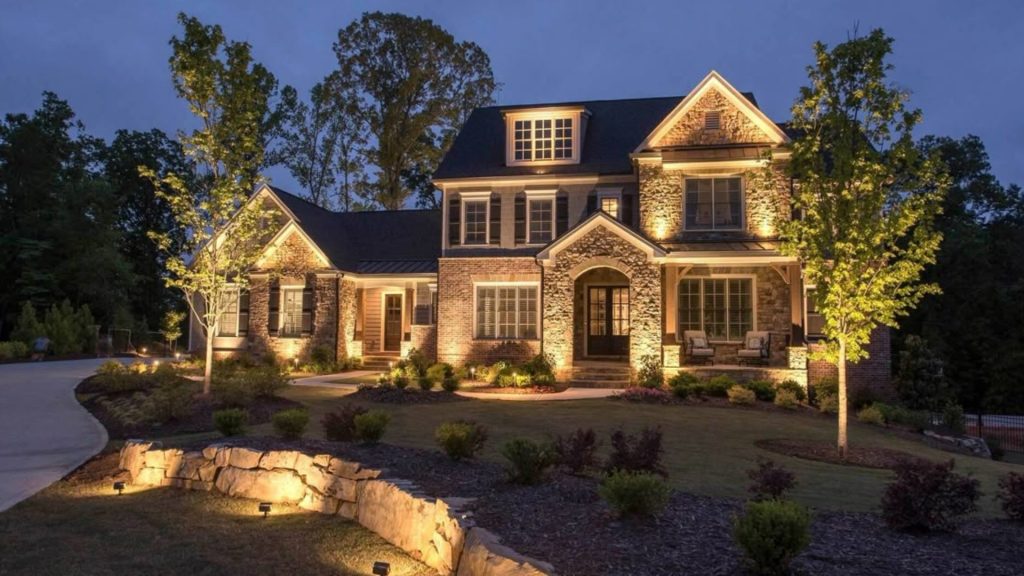
- It sure provides safe navigation, but the primary design goal of ambient lighting is to create a uniform layer of light. It minimizes harsh shadows and stark contrasts, and makes an outdoor space visually comfortable and easy on the eyes after dark.
- Professional designers follow a key principle where the brightest area should be no more than four times brighter than the darkest within view. Ambient lighting maintains this balance and prevents the space from feeling harsh or overly focused.
- To minimize glare and light pollution, modern ambient outdoor lighting relies on fully shielded, downward-facing fixtures, as uplighting is reserved for specific accent purposes rather than general illumination.
- The optimal colour temperature for comfort and a natural feel falls within the warm 2700K to 3000K range, which is inviting and less disruptive to nocturnal wildlife in comparison to cooler, bluer tones.
- The current trend favours the blend of lighting into the home architecture itself, instead of adding separate light fixtures. For example, lights are placed inside eaves or built into stair steps instead of using visible lamps or fittings.
- Advanced systems prioritise dimmability, allowing the light level to be adjusted from full brightness for gatherings to a soft glow for late-night ambiance. Hence, it is essential for adapting to different occasions.
2. Task Lighting
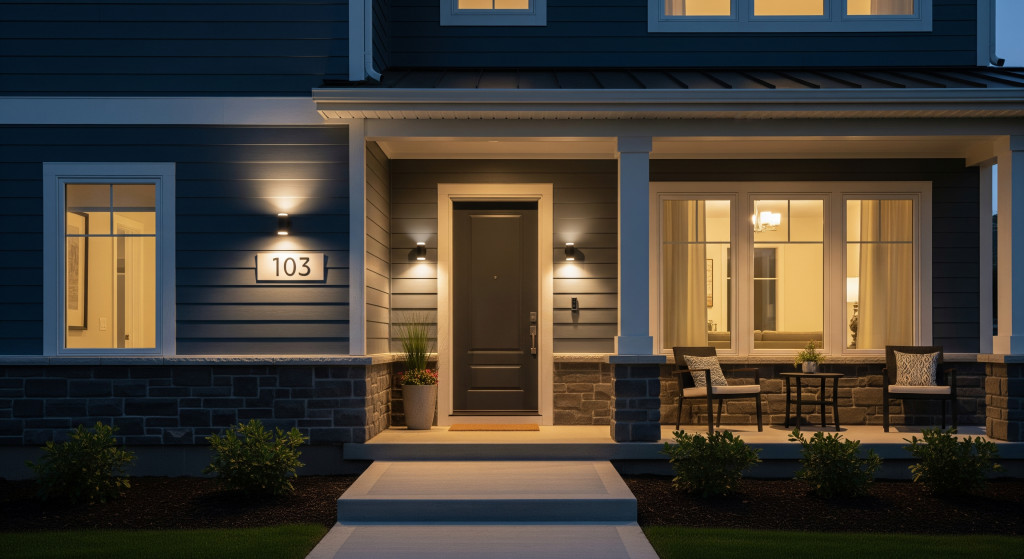
- Task lighting is defined by its specific, localised purpose. It is required for three times the illuminance (measured in lumens) of the surrounding ambient light to effectively reduce eye strain. Also, it is safe for activities like cooking, grilling, or reading.
- To avoid shadows and glare, it is important to place the outdoor task lights with precision. For example, an outdoor kitchen requires lighting installed under cabinets or pergola beams, directed onto countertops, rather than overhead, which would cast shadows from the user’s body.
- The fixture must be selected for its IP (Ingress Protection) rating, with IP65 or higher being standard for areas exposed to direct weather, food splatter, or cleaning, ensuring durability against water and dust ingress.
- Unlike ambient lighting, cooler colour temperatures in the 3000K to 4000K range are generally preferred for task areas. Because this whiter light improves visual clarity and contrast, making details easier to see.
- For tasks involving movement, such as at a grill station or in a lawn or courtyard, lighting should be vertically layered to combine overhead, under-counter, and side lighting, helping eliminate shadows from tools, hands, and body movements from all angles.
- Task lights can be set to turn on automatically, either when movement is detected or using smart switches, instead of being switched on manually.
3. Accent Lighting
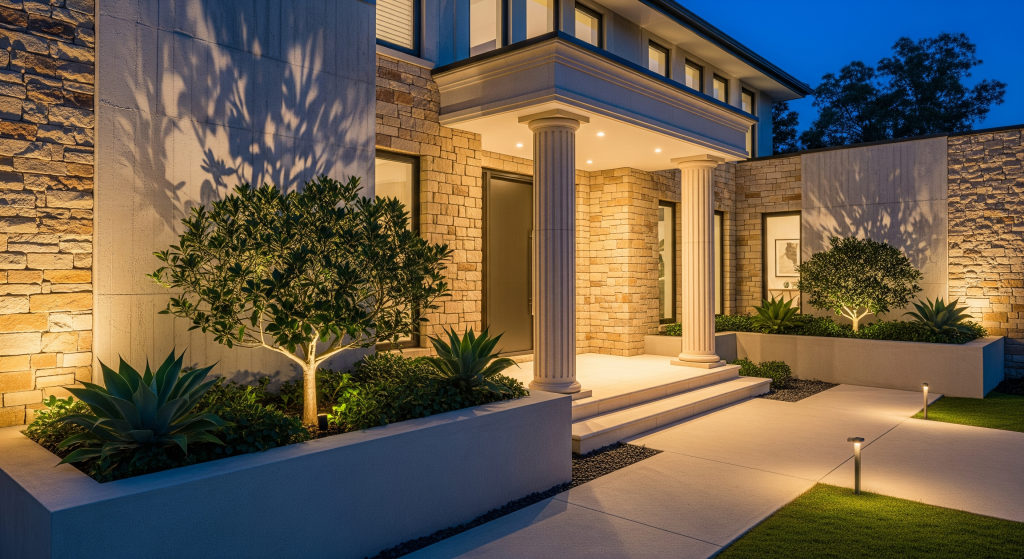
- The core principle of effective accent lighting is focus and contrast. Here, a featured element is illuminated at a brightness level at least three times greater than its immediate surroundings. This way, it successfully draws the eye and provides visual interest.
- For architectural features like textured walls or pillars, grazing light, placing a fixture within 6 to 12 inches of the surface, is the professional technique used to dramatically emphasize texture, depth, and materiality, which is lost with direct floodlighting.
- When uplighting trees, where you put the light makes all the difference. Try placing it right near the trunk and aiming up into the heart of the branches. This makes the light look more like natural moonlight, gives the tree depth and shadow, and keeps it from looking like a flat, bright lollipop with only the outer leaves lit up.
- To achieve a natural and sophisticated look, the beam spread and angle must be meticulously matched to the subject. A narrow spot (10-15 degrees) is for a statue or small element, while a wide flood (45+ degrees) is needed to wash a broad wall surface uniformly.
- A key idea in modern outdoor accent lighting is to hide the actual light fixture. You choose lights like in-ground well lights or small spotlights and install them so they are out of sight. The point is for people to notice the beautiful effect on the wall or tree, not the light source itself.
- It’s important to keep the ‘white’ colour of your accent lights consistent across everything you’re highlighting. If your wall light is a warm yellow-white but your tree is lit with a cool blue-white, the whole scene will look mismatched. For a well-coordinated and graceful look, you should be using the same shade of white, typically a warm, soft white, for all the accent lights you can see at once.
4. Path & Guidance Lighting
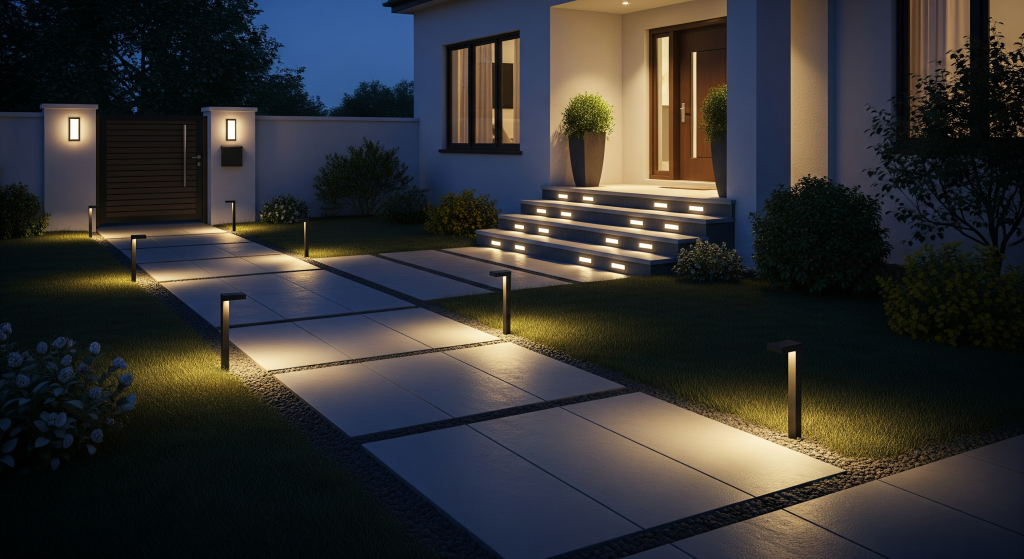
- The core function of path and guidance lighting is safe navigation. The light should be a soft, low-level glow to define the edge of a path or the surface of a step clearly. This allows you to walk confidently.
- For a more natural and visually appealing look, modern designs use asymmetric spacing. The lights are placed on alternating sides of the path or in a staggered pattern. This is more effective and attractive than lining them up in two perfect, rigid rows.
- Glare control is non-negotiable for comfort. It is recommended to always choose path lights that are fully shielded or have deeply recessed LEDs so you see the light on the ground. A common mistake is installing fixtures where the bright source is directly visible at eye level.
- For the highest safety on steps, the best practice is to install the light source vertically into the side of the step (the riser) or use recessed tread lights. This placement lights the stepping surface directly and eliminates dangerous shadows cast by overhead lights.
- Given the local climate, make sure all fixtures have a high IP (Ingress Protection) rating of at least IP65 to reliably withstand monsoon rains, summer dust (loo), and humidity, which will prevent frequent failures and maintenance issues.
Outdoor Lighting Ideas By Design Approach
1. Minimalist Outdoor Lighting
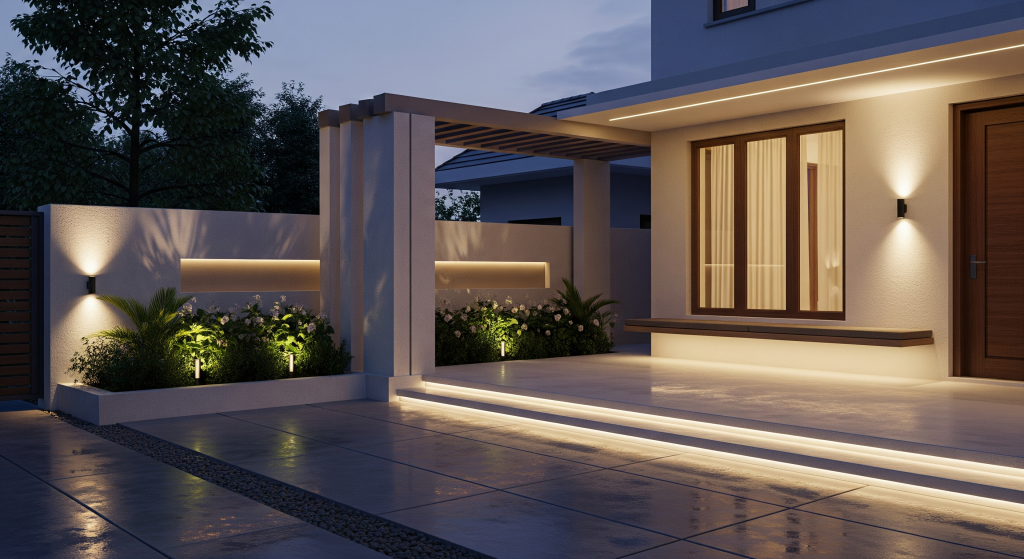
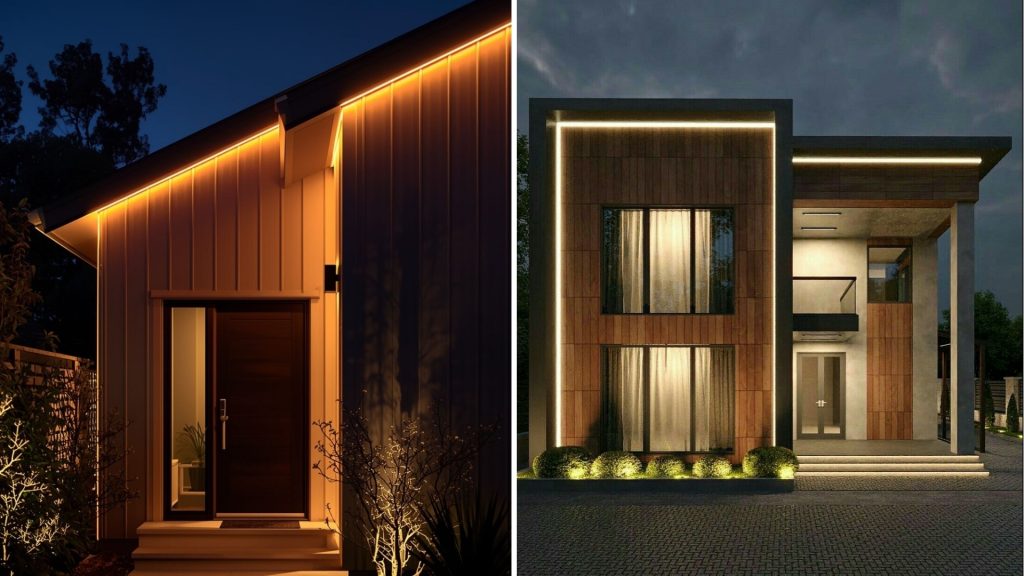
- The main goal of this lighting style is to hide the light source itself. You notice the beautiful glow on a wall, step, or railing, but nobody can see where the light is coming from, which creates a clean and sophisticated look.
- It works by using tools like recessed LED strips hidden in a groove, small bullet lights tucked behind plants, or ultra-thin fixtures mounted discreetly under an overhang or bench seat.
- This approach is highly functional for Indian homes, as it provides essential safety lighting for steps and pathways. And it highlights architectural features like a compound wall or pergola columns with a subtle, luxurious wash of light.
- Given our dust and monsoon climate, the IP (Ingress Protection) rating is critical. For recessed or in-ground fixtures, a rating of IP67 or higher is recommended to verify they are completely sealed against water and dust ingress for long-term reliability.
- This lighting is perfectly suited for smart home integration. These hidden LED strips and fixtures can be easily connected to a system allowing you to dim them or set automated schedules from your phone.
2. Biophilic Design
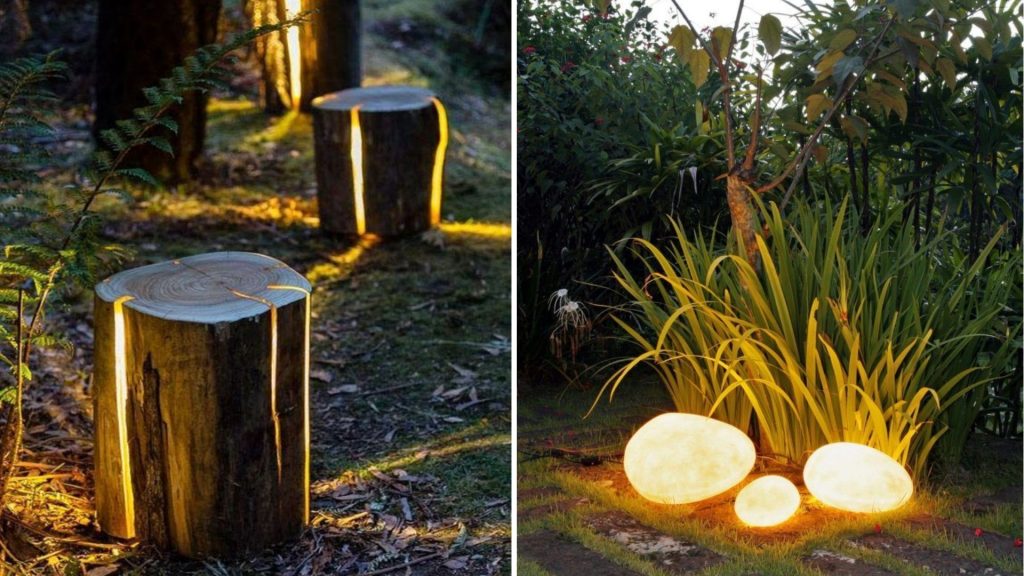
- Biophilic outdoor lighting is designed to connect you with nature after it gets dark. It uses light to enhance the natural shapes, textures, and rhythm of your garden. Ultimately, it makes the space feel more serene and alive, rather than artificially lit.
- It prioritizes warm light (typically 2700K or lower) similar to moonlight or firelight. This softer glow is comforting to the eye, attracts fewer insects, and is less disruptive to the natural sleep cycles of birds and animals in your garden than harsh, cool-white light.
- The fixtures themselves are made from or designed to look like natural materials such as stone, woven rattan, bamboo, or textured ceramics. The idea is for them to look like a natural part of the landscape during the day, not an industrial object.
- This approach is inherently dark-sky friendly. It uses carefully shielded, downward-facing lights at low intensity to minimize glare and light pollution, which helps preserve the natural night-time environment and allows you to actually see the stars.
3. Sculptural Lighting
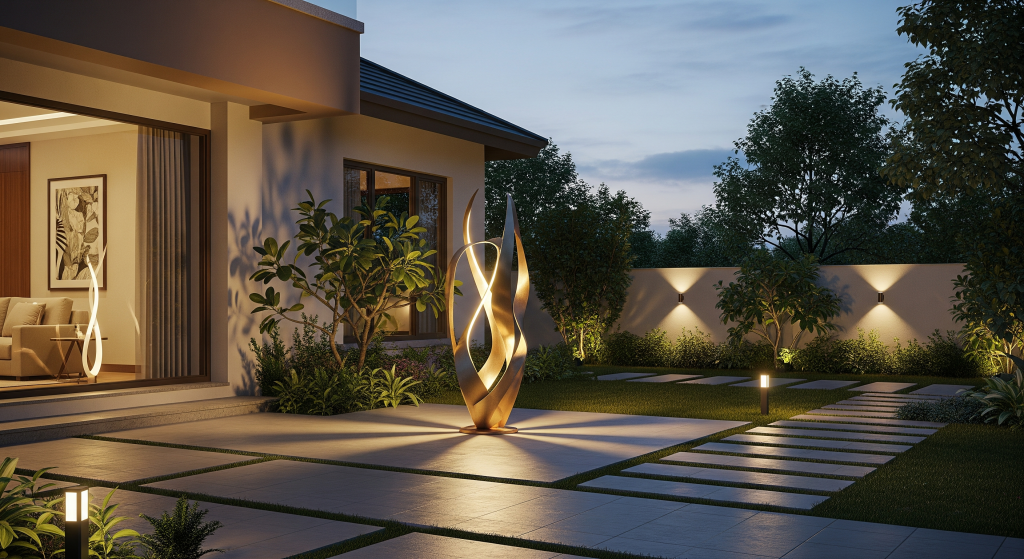
- Sculptural lighting serves a dual purpose, that is, it provides illumination after dark and functions as a standalone art piece or focal point in your garden or patio during the day as well, much like a sculpture would.
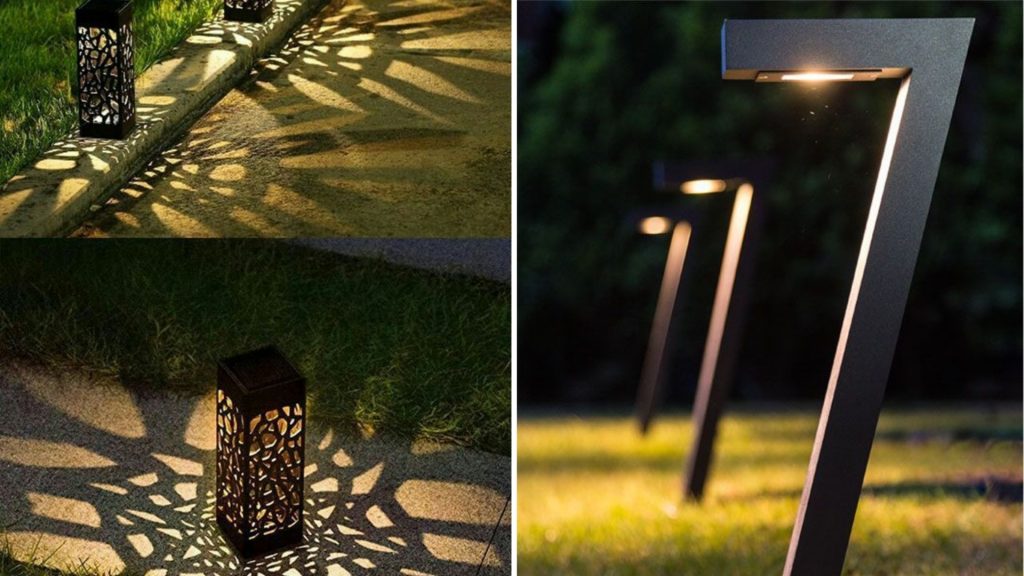
- These fixtures come in a wide variety of artistic forms, including geometric metal structures, abstract shapes, lanterns with intricate patterns, and organic designs that can resemble natural elements like branches or stones.
- Placement is crucial for maximum impact. A single, well-chosen outdoor sculptural light is generally more effective than several smaller ones. It should be positioned where it can be appreciated from key indoor viewing points, such as your living room window, or at the end of a garden path to draw the eye.
- The materials need to be chosen taking into account aesthetics and durability. In the Indian climate, look for high-quality, weather-resistant materials like powder-coated metals, treated copper, brass, or UV-stable composites that can withstand sun, rain, and dust without corroding or fading quickly.
- While they create a strong visual statement, it is important to check if they also provide functional light. In general scenario, they work best as part of a layered lighting plan, where their light is complemented by more discreet task and ambient lighting to create a balanced and usable outdoor space.
4. Architectural Lighting
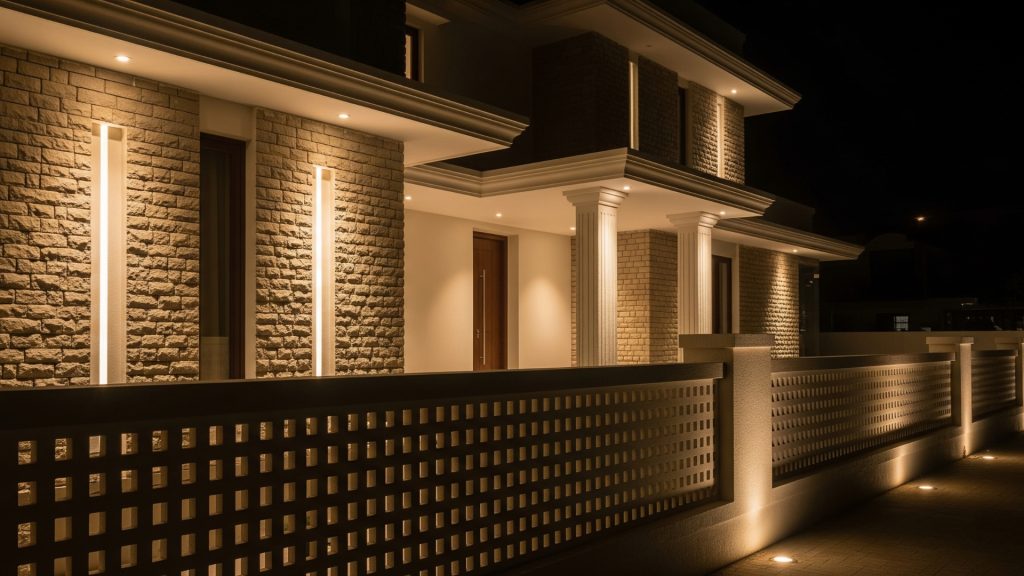
- Architectural outdoor lighting is about using light itself to highlight the design and structure of your home. It focuses on elements like textured walls, pillars, archways, and eaves to intensify the building’s character after dark.
- Grazing is a technique used where a light is placed very close (about 15-30 cm) to a textured surface, like a stone or brick wall. This creates dramatic shadows that emphasize the material’s roughness and depth, which would be lost with a light shining directly from the front.
- This approach is highly effective for contemporary Indian homes with features like exposed concrete (brutalist style), jali (perforated screen) walls, or compound walls with interesting patterns, turning these structures into visual highlights at night.
- It requires careful planning during the construction or renovation phase. The best results come from integrating light placements, such as recessing strips into grooves or planning for in-ground uplights, into the architectural drawings, as retrofitting can be more challenging and costly.
- Your goal should be to get a balanced and dignified look. This means you’re avoiding overly bright or colourful lights that can make a building look commercial. Instead, it uses controlled, warm white light to reveal the architecture’s form in a subtle and classy way.
Outdoor Lighting Ideas By Technology & Sustainability
1. Advanced Solar Lighting
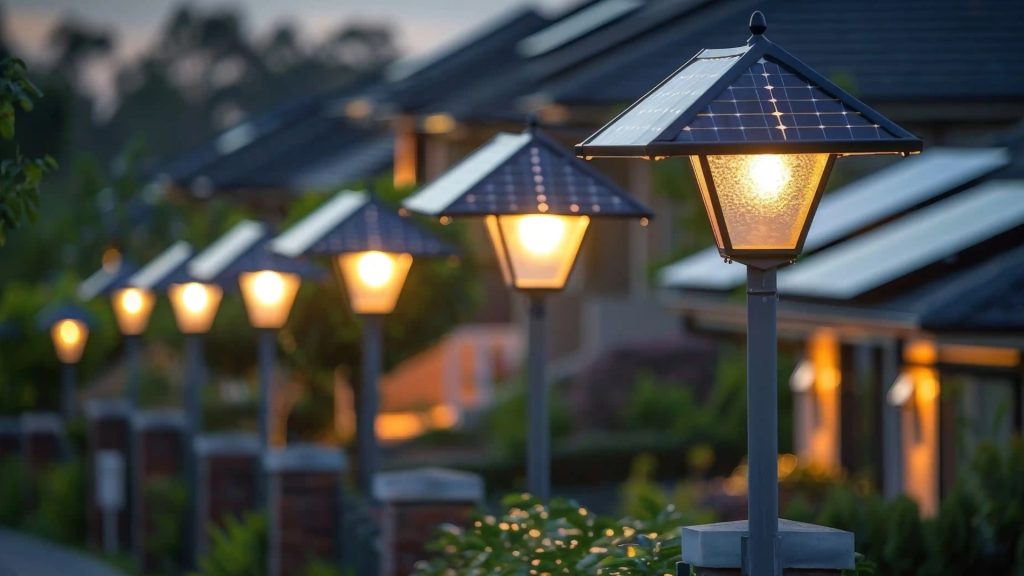
- Modern solar lights are a significant upgrade from those basic pathway sticks. They now feature high-efficiency solar panels and larger, integrated batteries that can store enough power to provide consistent, bright illumination throughout the night, even after cloudy days.
- The latest designs align the solar panel easily into the fixture itself, such as on top of a lantern-style light or as a flat panel on a wall-mounted unit. This makes them more aesthetically pleasing and durable than older models with separate, bulky panels connected by a wire.
- For reliable performance in the Indian climate, especially in dusty and monsoon-prone areas like Delhi NCR, look for lights with a high Ingress Protection (IP) rating of at least IP65. This ensures the electrical components are properly sealed against dust and heavy rain. The battery should also be rated for high-temperature operation.
- You can find advanced solar systems for security floodlights, string lights for pergolas, and even accent lights for trees and walls, delivering greater flexibility for your overall garden lighting plan.
- The major advantage is long-term savings and independence. Once installed, they have virtually no running electricity costs, require minimal maintenance (mainly keeping the panels clean), and are unaffected by common power cuts, making them a practical and sustainable choice.
2. Smart & Connected Lighting
- Smart outdoor lighting connects your garden lights to your home Wi-Fi network or a dedicated hub. It enables you to control them all from a single app on your smartphone or tablet, no matter where you are.
- The most practical benefit is automation. You can set schedules for your lights to turn on at sunset and off at bedtime, or create scenes like an ‘Entertaining’ mode that brightens the patio/lawn and dims the pathway lights. You do not have to touch a switch.
- These systems intensify home security effectively. You can program lights to turn on randomly when you are away, or link them to motion sensors so that pathways and entrances illuminate automatically when someone approaches, which acts as a strong deterrent.
- A key feature is the ability to adjust the color temperature of many smart lights. You can set a bright, cool white for a security alert or a task, and then switch to a warm, amber glow for a relaxing evening on the verandah, all from your phone.
- It is important to verify the smart devices you choose are rated for outdoor use (look for IP65 or higher) to withstand dust and monsoon rains. Also, consider that a stable home Wi-Fi network reaching your garden is essential for reliable operation.
3. Dark Sky Compliant
- Dark sky compliant lighting is designed to minimize light pollution. This means it directs light downward onto the ground where it is needed, rather than allowing it to spill upward into the sky where it washes out the stars and disrupts the natural environment.
- The key feature of these fixtures is that they are fully shielded. This means the bulb or LED is not visible from the side. The design guarantees all light is cast below the horizontal plane, eliminating glare that is harsh on the eyes and wasteful.
- This approach is not about having better-directed and more thoughtful light. It increases safety and comfort by reducing harsh glare that can actually form shadows and blind spots, which makes it easier to see in your own garden.
- If you use dark sky friendly outdoor lighting, it is said to be considerate to your neighbourhood. Because it prevents your garden lights from shining into neighbouring windows. It is also beneficial for local wildlife, particularly birds and insects, whose natural behaviours and navigation are disrupted by excessive artificial sky glow.
- Adopting this practice is a simple, yet meaningful step towards environmental responsibility from your own home. It allows you, your family, and your community to better enjoy the natural night-time sky while using energy more efficiently.
4. Low-Voltage & High Efficiency
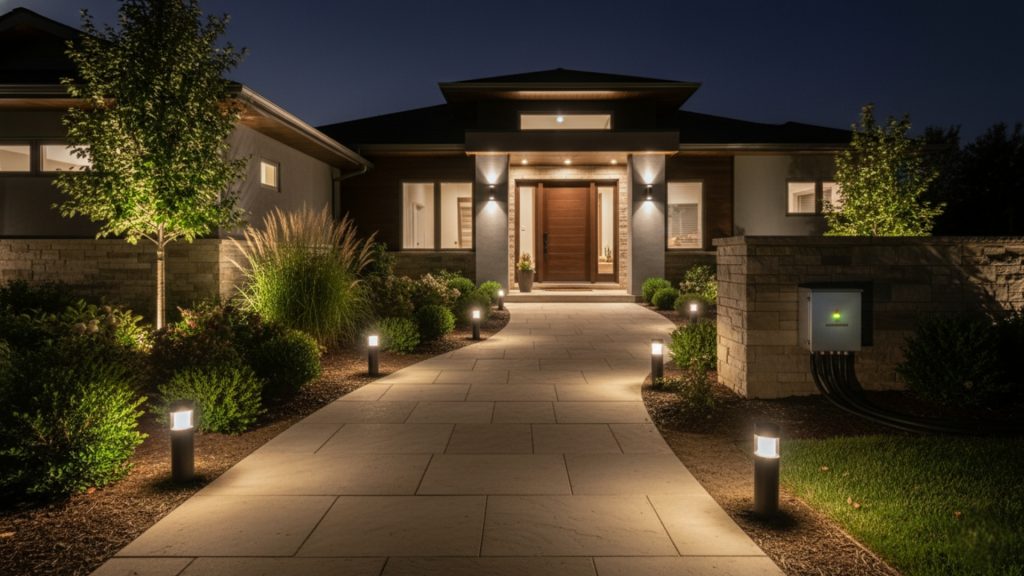
- Low-voltage outdoor lighting typically uses a safe 12 or 24-volt system, which is transformed down from your main 230V household supply by a weatherproof transformer. This makes the wiring in your garden much safer to handle and install, especially in damp conditions.
- These systems are inherently more energy-efficient and are almost always paired with modern LED fixtures. Together, they consume significantly less electricity than traditional halogen or incandescent garden lights, leading to noticeable savings on your monthly power bill.
- A major advantage is the enhanced control it provides. The transformer usually enables you to dim all connected lights from a single point, and these systems are perfectly suited for unifying with smart timers and controllers, allowing for automated schedules.
- For a reliable system in the local climate, it is important to use thick, double insulated cables designed for direct burial in the ground. This prevents voltage drop over longer distances (which causes lights at the end of the run to be dimmer) and protects against damage from moisture and pests.
- While the upfront investment can be higher than simply plugging in a few lights, a properly installed low-voltage LED system is a long-term investment. It is far safer, more economical to run, and offers greater flexibility and durability for a permanent garden lighting setup.
Outdoor Lighting Ideas By Material & Finish
1. Natural Textures
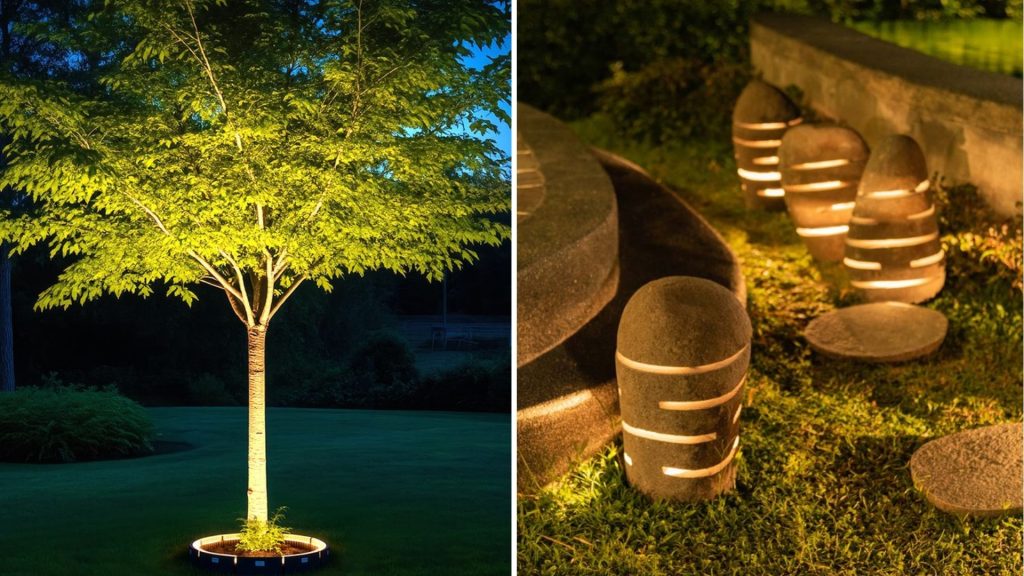
- When you use materials with natural textures, like stone, aged wood, or woven rattan, they help lighting fixtures blend into your garden during the day. They look like part of the landscape, and then provide a warm, organic glow when lit at night.
- In the Indian climate, it’s crucial that these materials are properly treated or sealed. For instance, wood needs to be weatherproofed to prevent rot, and stone should be sealed to avoid water stains and algae growth, ensuring the fixtures last for years.
- Beyond common materials, look for fixtures made from textured ceramics, slate, or even hammered metals. These bring in visual interest and can complement specific architectural styles, ranging from rustic farmhouse to modern earthy designs.
- A limestone lantern near a limestone wall, or a teak post light next to a wooden pergola, for a bind effect. The texture of the light fixture should feel like a natural extension of your home’s exterior materials and garden elements.
- Although it delivers great beauty, natural materials usually require a bit more maintenance than plain metal or plastic. Periodic cleaning and reapplication of a protective sealant may be needed to preserve their appearance and durability against sun and rain.
2. Weather-Resistant Metals
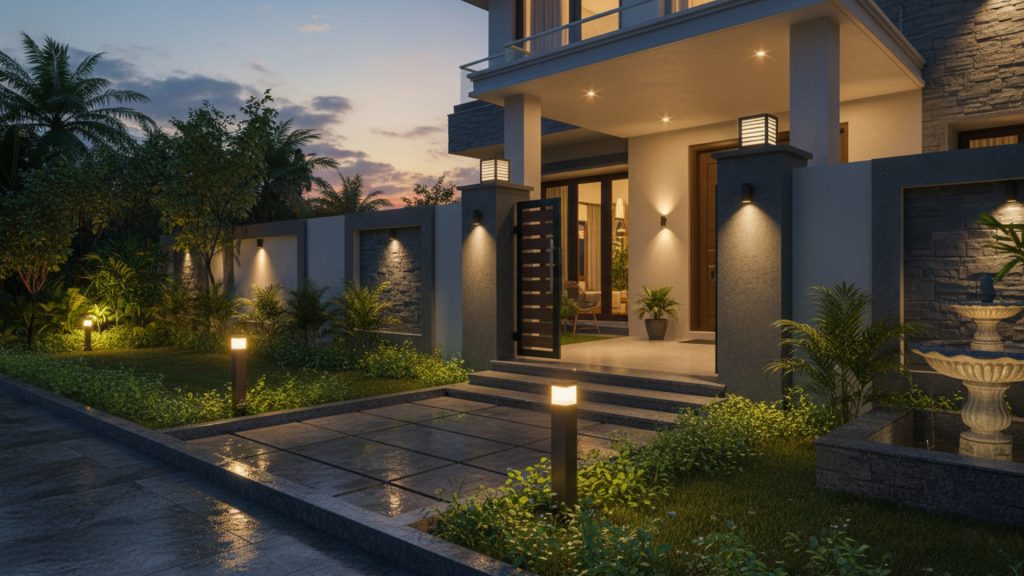
- Weather-resistant metals are essential for outdoor lighting, because they can withstand monsoon rain, summer heat, and dust without corroding or losing their appearance quickly. The right metal confirms your fixtures last for many years.
- The most reliable and popular choice is powder-coated aluminium. It is naturally rust-proof, lightweight, and the powder-coating provides a durable, coloured finish that resists chipping and fading from UV rays. It is widely used for all types of fixtures.
- For a classic, premium look, stainless steel (Grade 304 or 316) is excellent. Grade 316 is more resistant to salty or polluted air and is a superior choice for long-term performance, though it comes at a higher cost than aluminium.
- Brass and copper are also highly weather-resistant, developing a natural, attractive patina over time. Many people appreciate this aged, greenish-brown finish, but if you prefer the original shine, you will need to look for lacquered or coated versions that require maintenance.
- Always check the product specifications for the type of metal and its finish. A high-quality powder coat on aluminium or a marine-grade stainless steel will offer the best value and longevity, eventually saving you from frequent replacements due to rust or deterioration.
3. Composite & Recycled Materials
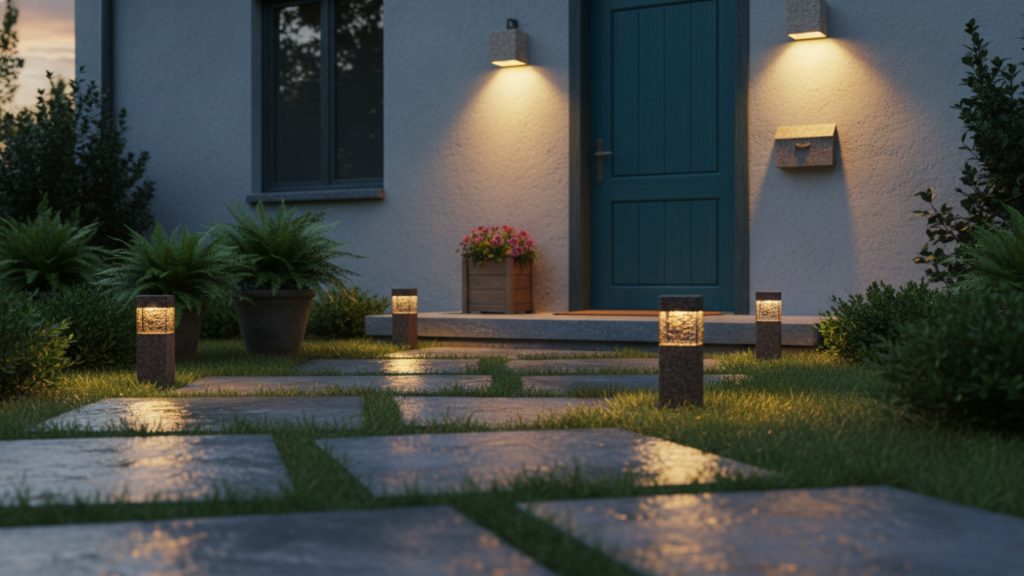
- Composite and recycled materials are engineered to combine durability with environmental benefits. They are usually made from a mix of materials like recycled plastics, wood fibres, and resins. It results in a product that is strong, weather-resistant, and avoids using virgin natural resources.
- They are designed to be highly resistant to moisture, rot, insect damage, and UV radiation from the sun, which means they won’t warp, crack, or fade as quickly as some untreated natural materials might.
- A common example is recycled plastic lumber or composites that convincingly mimic the look of wood or stone. This allows you to get the aesthetic of a natural material with much lower maintenance and a longer lifespan, as it doesn’t require sealing or staining.
- It’s a conscious decision to reduce waste when you choose lighting made from recycled content. It supports a circular economy by giving materials a second life, which can be an important factor for homeowners looking to make environmentally responsible choices for their homes.
- When considering these fixtures, it is still important to verify their weatherproof ratings (look for IP65 or similar) and the quality of the construction.
What is the cost of Outdoor Lighting Ideas?
Basic Fixture Cost:
- In the Delhi NCR and Noida area, a reliable set of weather-resistant, low-voltage LED path lights can start from ₹ 1,500 to ₹ 3,000 per fixture for good quality, with professional installation adding to the overall cost. Integrated solar options are popular for running cost savings but require a higher initial investment.
- Well-made powder-coated aluminium fixtures are the most common and cost-effective, with prices for good quality path lights or wall sconces typically starting from ₹ 1,500 to ₹ 4,000. Stainless steel or high-end coated brass fixtures represent a more significant investment, roughly starting from ₹ 5,000 per piece and upwards.
- In the Delhi NCR and Noida area, you can find compliant fixtures like shielded wall sconces, downward-facing path lights, and flat-lens garden lights. Although specialized brands may carry a premium, many standard quality outdoor fixtures now offer shielded designs, with prices for individual pieces typically starting from ₹ 1,500 to ₹ 4,000 and upwards.
Material-Based Pricing:
- Lighting fixtures made from these sustainable composites are often positioned in the mid-range price category. You can expect prices for such pieces, like path lights or post lights, to typically start from ₹ 2,500 to ₹ 7,000, depending on the design and brand.
- Stainless steel or high-end coated brass fixtures represent a more significant investment, roughly starting from ₹ 5,000 per piece and upwards.
- Mass-produced fixtures using composites that mimic stone or ceramic are widely available, starting from ₹ 2,000 to ₹ 6,000.
- Handcrafted pieces in real granite, sandstone, or solid teak from local artisans are a premium choice, with prices often beginning from ₹ 8,000 to ₹ 15,000 per piece.
- Sourcing authentic natural material fixtures (like hand-finished stone lanterns) can be a premium option. A simpler and usually more affordable approach is to choose lights with organic shapes and warm tones.
Technology Add-ons (Solar, Smart, Architectural):
- Integrated solar options are popular for running cost savings but require a higher initial investment.
- While basic solar lights start from a few hundred rupees, advanced, well-designed fixtures with better batteries and brightness begin around ₹ 2,000 to ₹ 4,000 per piece. A complete, good-quality solar lighting setup for a garden can be a notable investment, often starting from ₹ 15,000 to ₹ 40,000.
- Converting a standard outdoor lighting setup to a smart one involves additional costs. However, it doesn’t need to cost a fortune. You will need smart LED bulbs or switches, which typically start at ₹1,500 per point, plus a central bridge or hub, if required, which can cost between ₹5,000 and ₹10,000.
- Due to the need for precise placement, professional-grade fixtures, and custom installation, architectural lighting is an investment. In the Delhi NCR and Noida region, a professionally designed and installed scheme for key features of a home’s exterior can start from approximately ₹ 50,000 to several lakhs. It depends on the scale and technology used.
- Sculptural lights are a premium category. In the Delhi NCR and Noida market, prices can range significantly, from around ₹ 8,000 for a well-designed, mass-produced piece to over ₹ 50,000 or more for a large, custom-made, or imported designer fixture.
Installation & Labour Expenses:
- The primary initial cost is for the transformer and the specialised outdoor-rated cables. In the Delhi NCR and Noida region, a good quality transformer for a medium-sized garden can cost between ₹ 3,000 to ₹ 8,000, with professional installation adding to the overall project cost.
- A significant part of the cost is in the precise installation work. The installation work includes creating channels, concealing wires, and double-checking waterproof connections. In the Delhi NCR and Noida region, the expense for a quality minimalist lighting project is usually in the professional labour and design, with materials for a key area (like a porch and pathway) starting from ₹ 25,000 onwards.
- You can find a range of options in the Delhi NCR and Noida market. Mass-produced fixtures using composites that mimic stone or ceramic are widely available, starting from ₹ 2,000 to ₹ 6,000. Handcrafted pieces in real granite, sandstone, or solid teak from local artisans are a premium choice, with prices often beginning from ₹ 8,000 to ₹ 15,000 per piece.
How Can Opalspace Help You?
Opalspace helps you navigate these outdoor lighting ideas by designing a cohesive lighting plan that matches your home’s interior style and your practical needs. We handle the selection of fixtures, from smart systems to sustainable materials, ensuring quality and proper installation. This approach is part of our comprehensive interior design service, where we consider your home, inside and out, as one complete project. By integrating your outdoor areas seamlessly, we create a unified, functional, and beautiful living environment that truly reflects a finished and thoughtful home.
FAQs
1. How big should my outdoor lights be for the house?
A good rule is to select a wall light or lantern that is roughly one-quarter to one-third the height of your door or gate. For general area lighting by a garage or on a large wall, the fixture should be in proportion to the wall itself, neither so small it gets lost, nor so large it looks overwhelming. The goal for outdoor lights for the house is to complement your home's scale and provide adequate illumination without appearing clumsy. Rest, you can go through the outdoor lighting ideas that are discussed above.
2. Are wall lamps and sconces the best outdoor lights for the front of the house?
Yes, wall lamps and sconces are often considered the best outdoor lights for the front of the house. They provide focused, welcoming light exactly where you need it, beside the door, on porches, or along garage walls. When chosen to match your home's architectural style, they enhance curb appeal instantly. For a clean, classic look, white outdoor lights for the house in a sconce style are a popular and timeless choice that suits most exteriors.
3. What is the best material for outdoor wall lights?
For long-lasting performance, especially in India’s climate, the best materials are weather-resistant metals. Look for fixtures made from powder-coated aluminium, stainless steel (Grade 304/316), or coated brass. These materials resist rust, monsoon humidity, and sun exposure. Ensure the fixture has a high IP (Ingress Protection) rating, like IP65, to guarantee it’s truly weatherproof. This makes them the most durable choice for outdoor lights for house walls.
4. What are the best types of boundary wall lights for outdoor security and aesthetics?
The best boundary wall lights combine function and form. For security, choose shielded downward-facing sconces or bulkheads that cast a wide pool of light to deter intruders and illuminate pathways. For aesthetics, consider low-profile, dark-sky friendly designs that highlight the wall's texture without causing glare. Integrating motion sensors adds a smart security layer while saving energy, making them a practical and stylish part of your overall outdoor lighting plan.
5. How important are waterproof outdoor wall lights, and what should I look for?
It is absolutely critical. Any outdoor wall light must be waterproof to survive rain, dust, and humidity. Always check the IP (Ingress Protection) rating on the product. A rating of IP65 or higher is the standard for Indian conditions, as it certifies the fixture is dust-tight and protected against water jets. Never install an indoor-rated fixture outside. A proper waterproof outdoor wall light ensures safety, longevity, and consistent performance through all seasons.