In this blog, we will get to know how a breakfast counter turns your modular kitchen into a stylish and functional social hub. We’ll talk about integrated designs, space-saving solutions, and expert tips on materials and lighting.
Table of Contents
A breakfast counter is an extension of the kitchen area, usually placed between the kitchen and the living room. In the past, the kitchen counter was solely used for cooking. However, we still need to have a breakfast counter in the kitchen because it fits the way families actually live in a modern setup. Quick meals, coffee breaks, catching up on work, or helping kids with their school work, all such tasks are possible here at a single spot. All-in-all, a modular kitchen with breakfast counter combines efficiency, comfort, and connection.
What is the best countertop for a breakfast counter?
1. Open Kitchen with Breakfast Counter Design
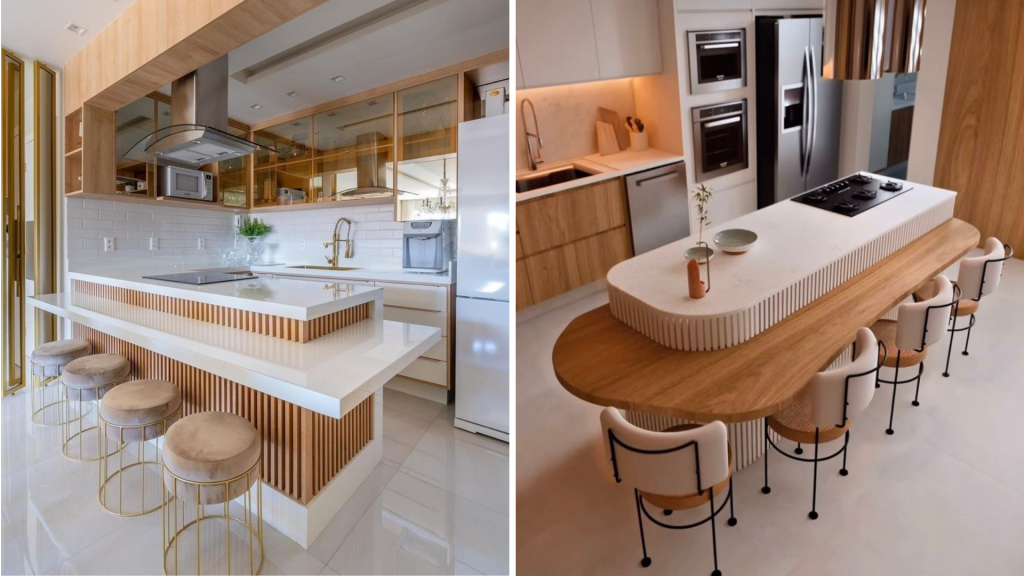
An open kitchen, with a breakfast counter in it, makes it easy for the user to move between the kitchen and the living or dining space. You can multitask by keeping an eye on the stove along with your office work.
2. Breakfast Counter with Storage
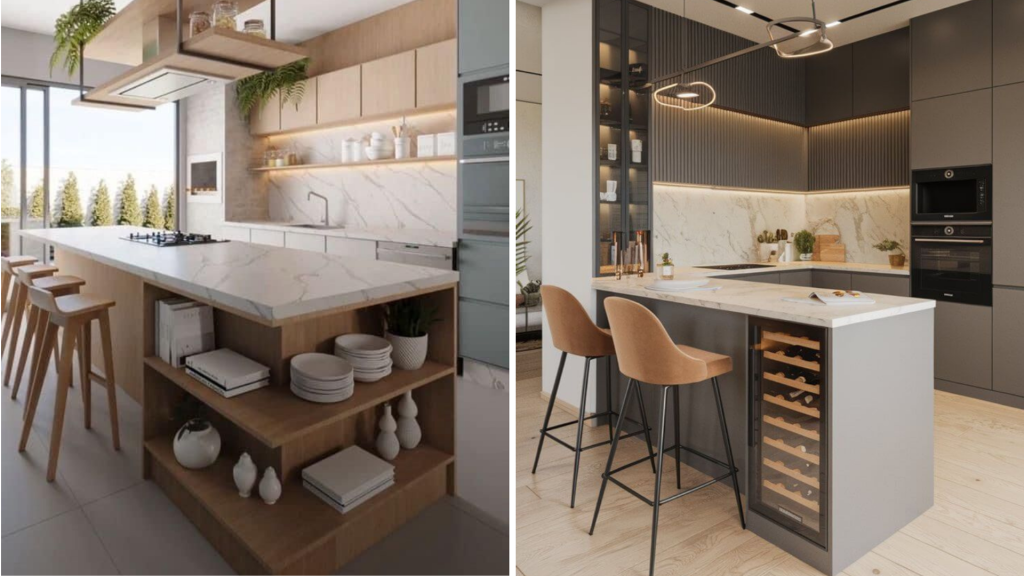
Have you considered including built-in charging stations and drawers to store silverware? If you haven’t so far, you can now make sure your everyday necessities, such as coffee pods and cereal bowls, are conveniently located but neatly hidden. For example, by choosing a breakfast counter design with smart storage.
3. Foldable Breakfast Counter
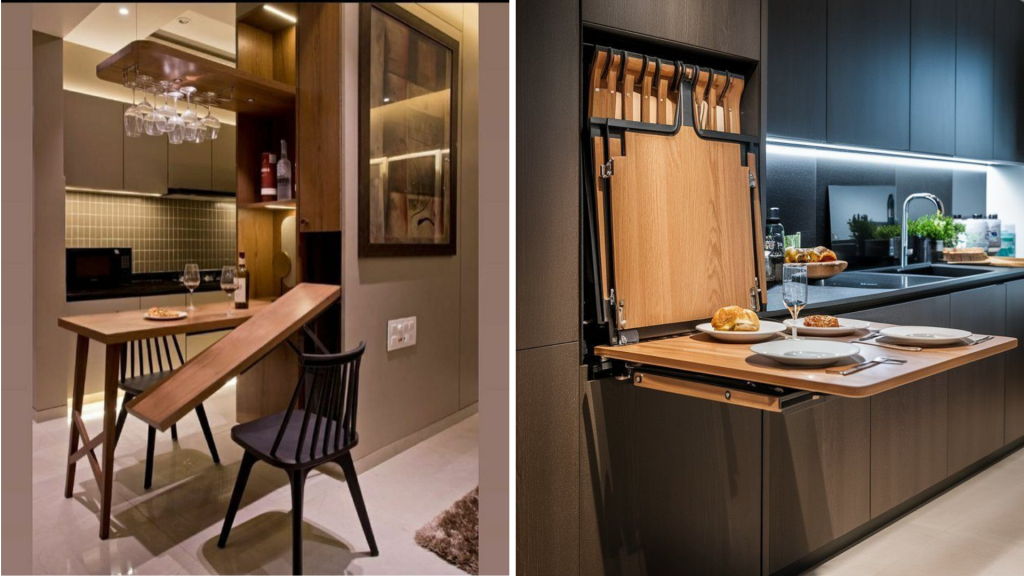
A foldable breakfast counter is perfect if you have a small kitchen. Because these counters are built with sturdy hinges and reliable support brackets or legs. These legs provide a hard surface for dining or working. These breakfast counters can be expanded for meals and folded back to save space, as per your need.
4. Partition Design with Breakfast Counter
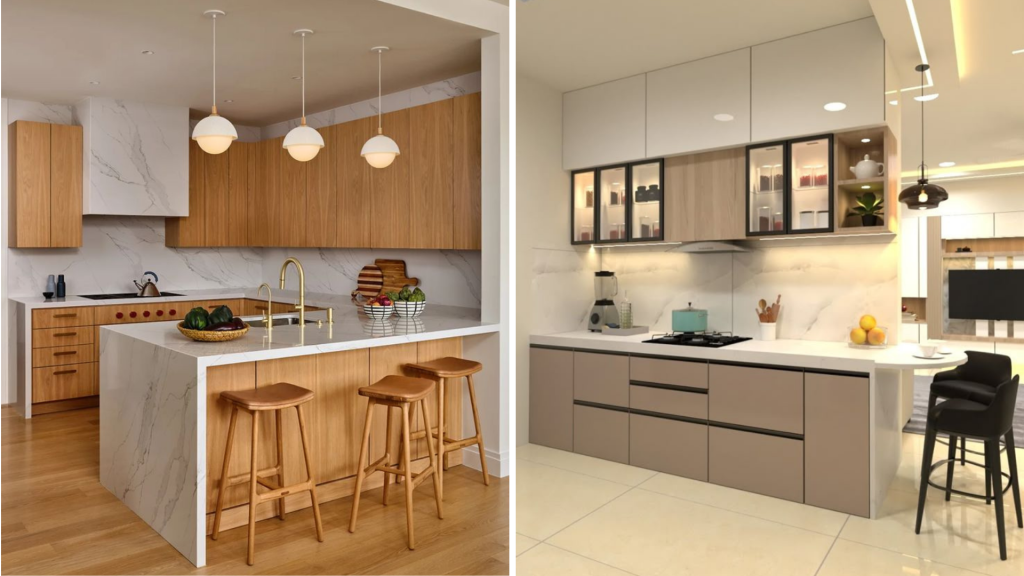
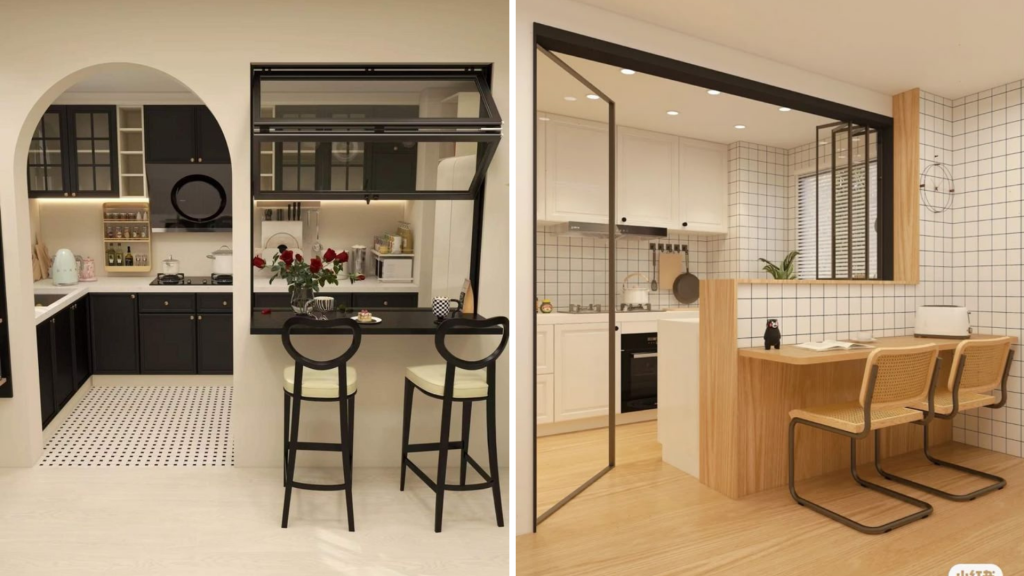
For open-plan homes, the breakfast counter with partition design comes with a graceful peninsula. It subtly separates the kitchen from the living area. You get a visual boundary, seating on one side, and storage or workspace on the other.
5. Semi-Open Kitchen Breakfast Counter Design
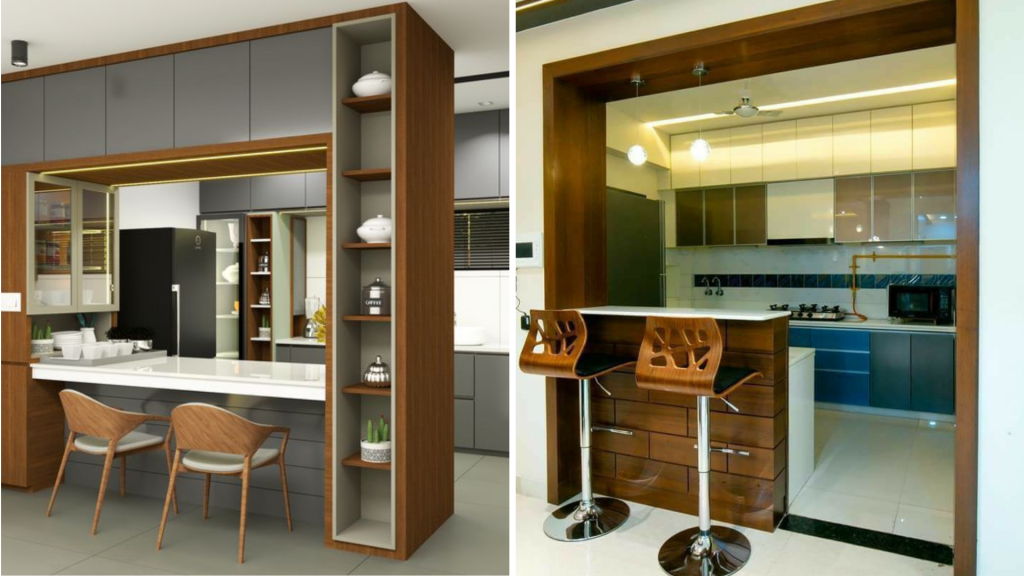
About an open kitchen breakfast counter, we need to understand that it’s a freestanding island that neatly gels with the living area. Talking about a semi-open version of the kitchen breakfast counter, this one has a partial wall, bar-height partition, or see-through shelving to apparently separate the spaces without fully enclosing them. It lets you interact with your family or guests while cooking.
6. Extension Breakfast Table
The primary function of this breakfast counter is designed to increase the usable tabletop area when needed. Typically by pulling out or unfolding a hidden section. This breakfast table is suitable for areas where a permanent small table exists. But occasional extra seating or workspace is needed.
7. Floating Breakfast Counter
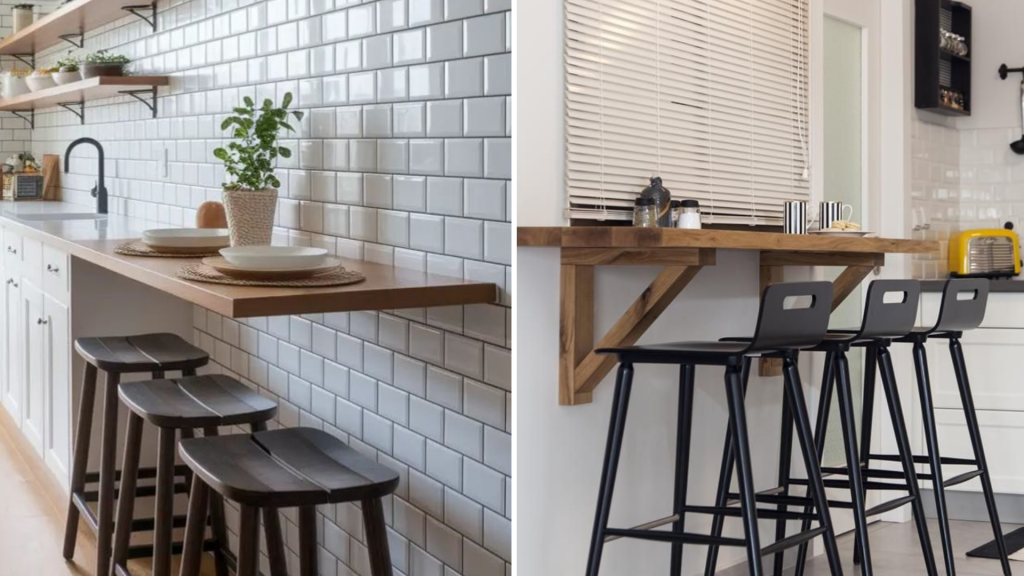
A wall-mounted design, also called a floating design, has no legs or supporting structure touching the floor. Your eyes get a wider and relaxed view like this. This makes the room feel more spacious, less cluttered, and gives it an airy, open atmosphere.
8. Minimalistic Breakfast Counter
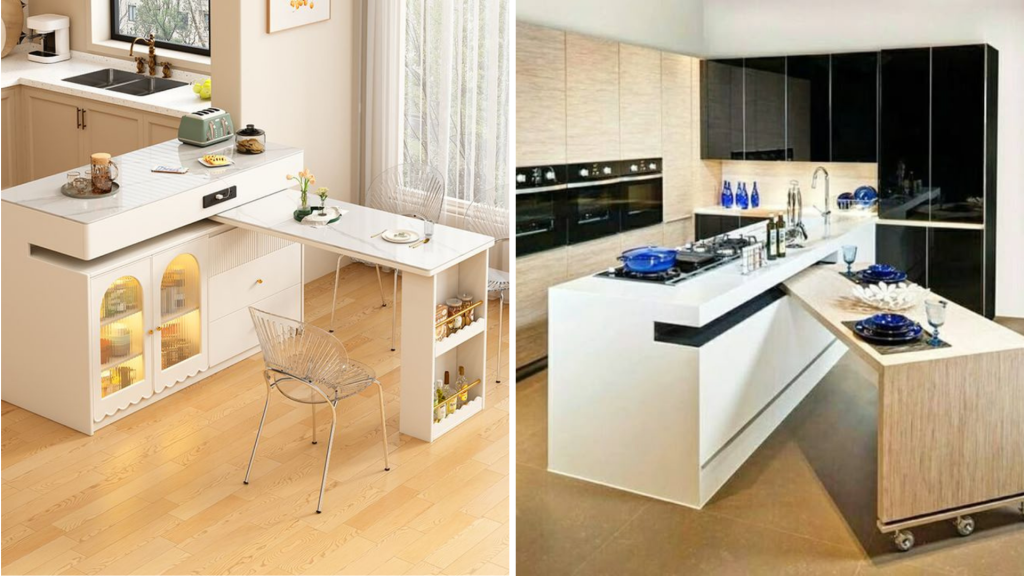
A minimalistic breakfast counter focuses on tidy surfaces, polished lines, and built-in storage for a well-organized area.
9. Bar Style Kitchen Countertop for the Bar Feel
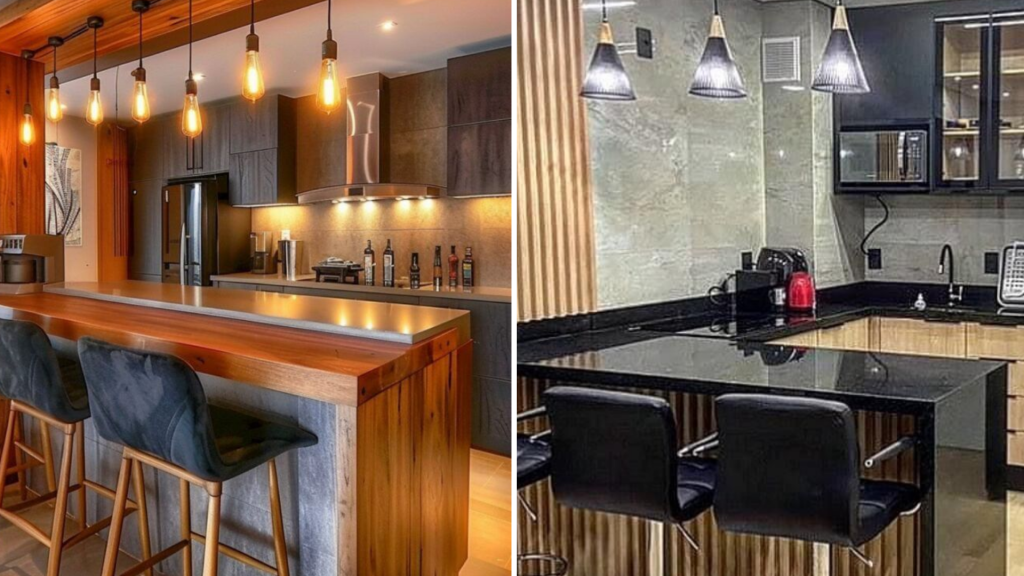
This design promotes a lounge-like, social setting for drinking and entertaining, with its higher 42-inch height.
What material is used for breakfast countertops?
You can create a certain mood with today’s choices, which range from quartz counters to natural stone.
1. Classic Wooden Breakfast Counter
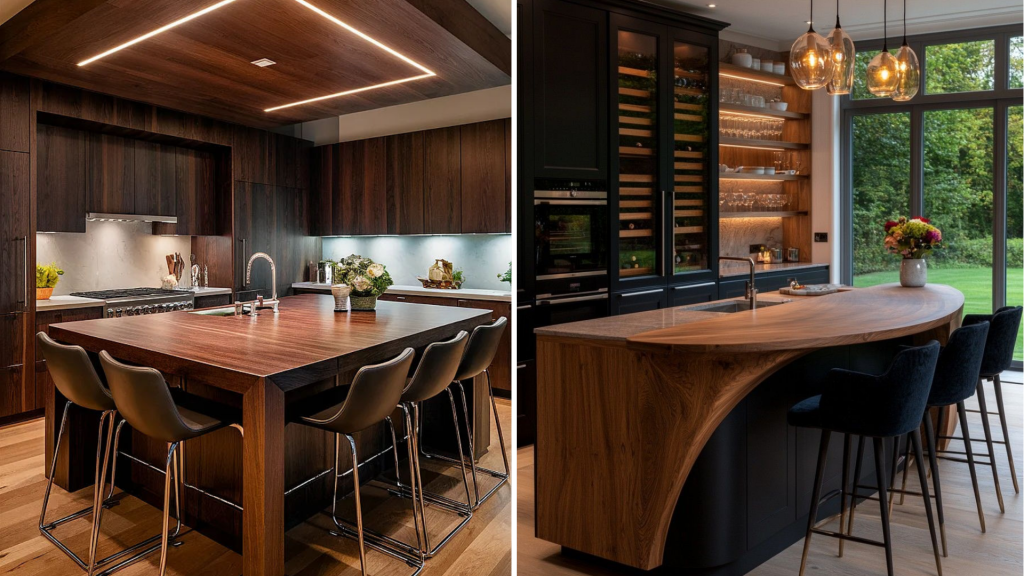
The use of solid oak, walnut, or teak in classic cabinetry contributes an evergreen homely touch and softness to the design of your kitchen breakfast counter.
2. Natural Stone (Granite & Quartzite)
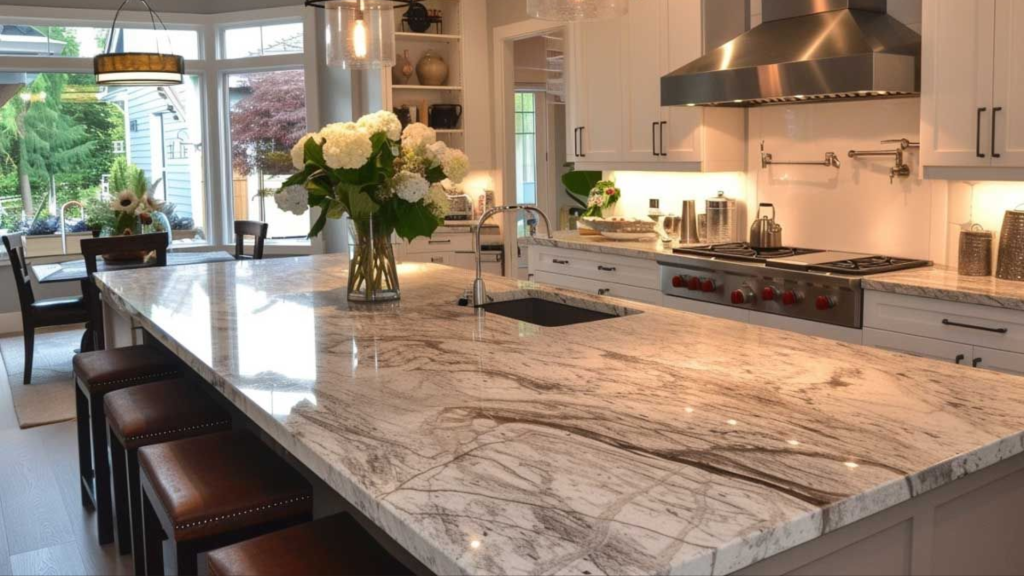
Natural stone, such as granite and quartzite, has a distinct, earthy beauty and exceptional durability. Every slab is unique. Although it needs to be sealed on a regular basis, it is robust and resistant to heat.
3. Butcher Block (Wood)
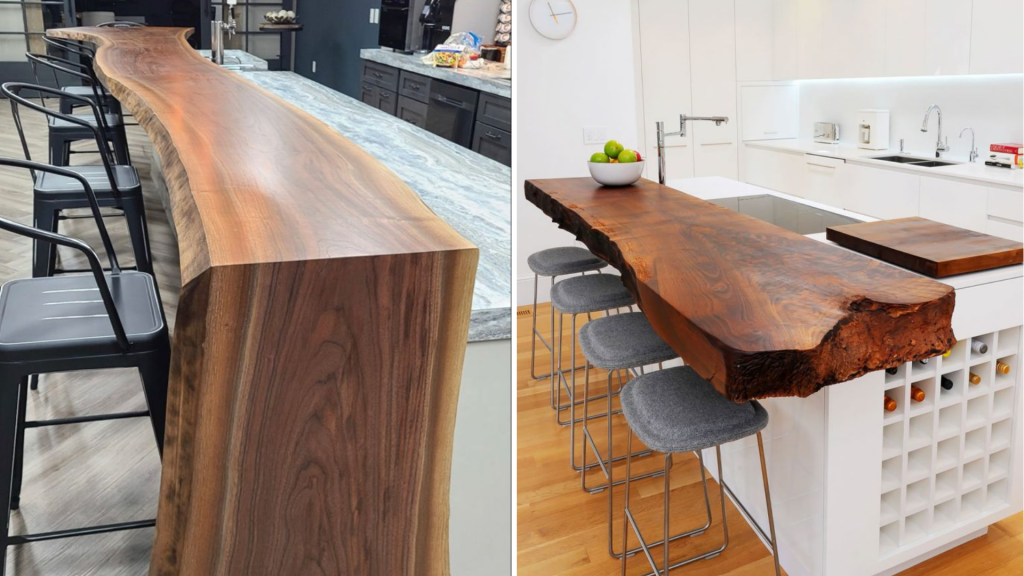
For a relaxed, welcoming atmosphere and instant warmth. Ideal for a farmhouse or cottage-style kitchen. It’s excellent for preparation, but it needs to be regularly oiled to avoid water damage and stains.
4. Engineered Quartz
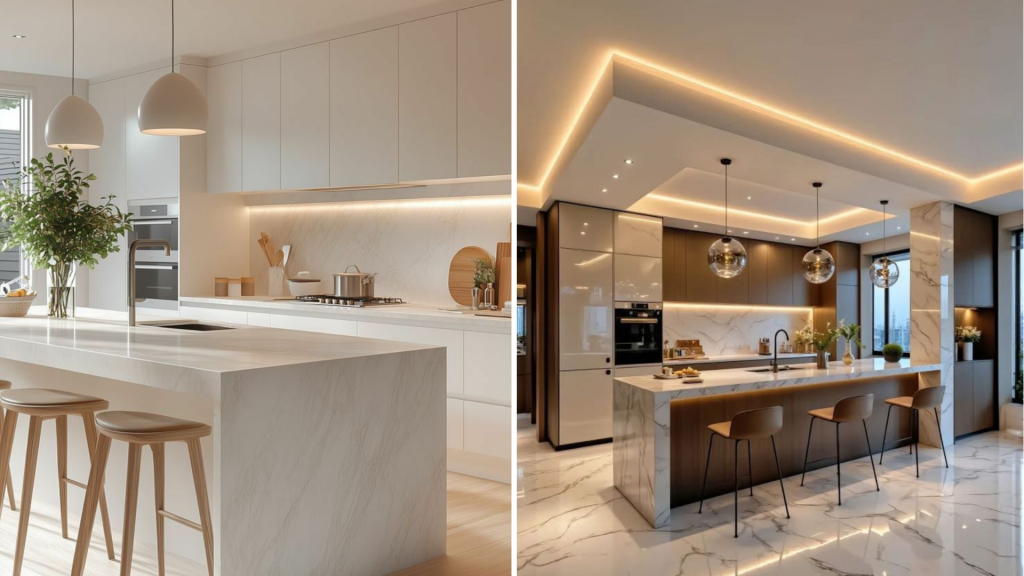
It is extremely durable, comes in a wide range of colors and patterns that can look like stone, and is non-porous, making it extremely resistant to stains and bacteria. It’s a great option for a busy breakfast counter.
5. Concrete
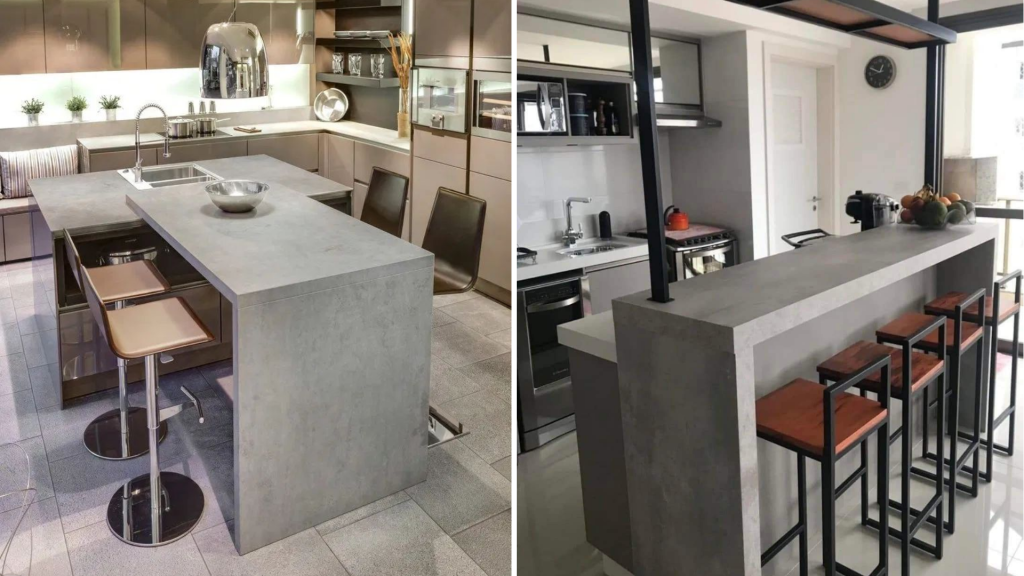
Breakfast counters that are made of concrete deliver a durable, customizable and modern look to the kitchen. Concrete can be tinted to any color and poured in place for a precisely fitted appearance. It needs a premium sealant to avoid stains because it is porous but incredibly durable.
6. Stainless Steel
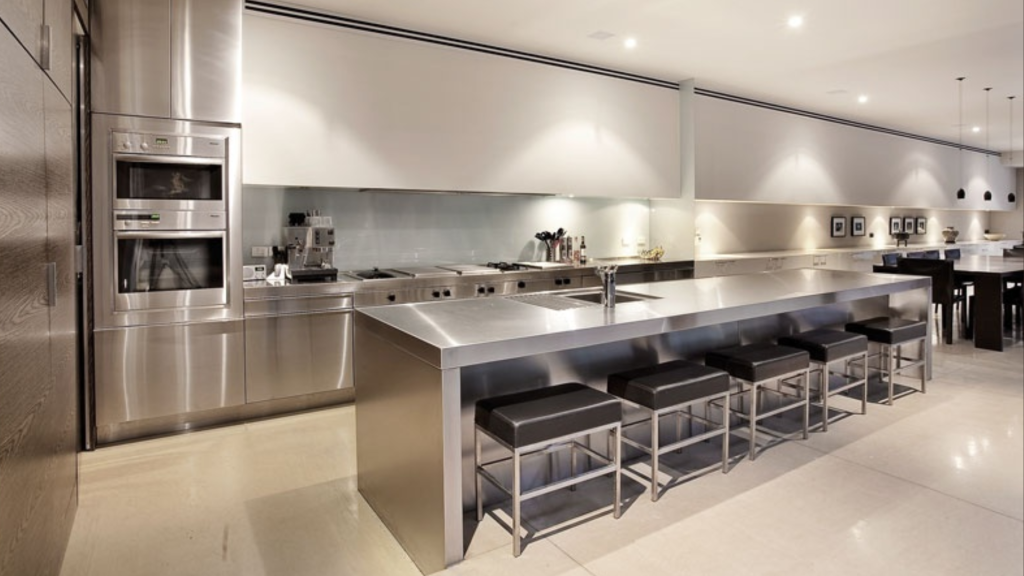
The most hygienic and professional surface is stainless steel. It is perfect as it is heatproof and simple to clean. It does exhibit scratches and fingerprints, which over time contribute to a worn-in patina.
7. Laminate
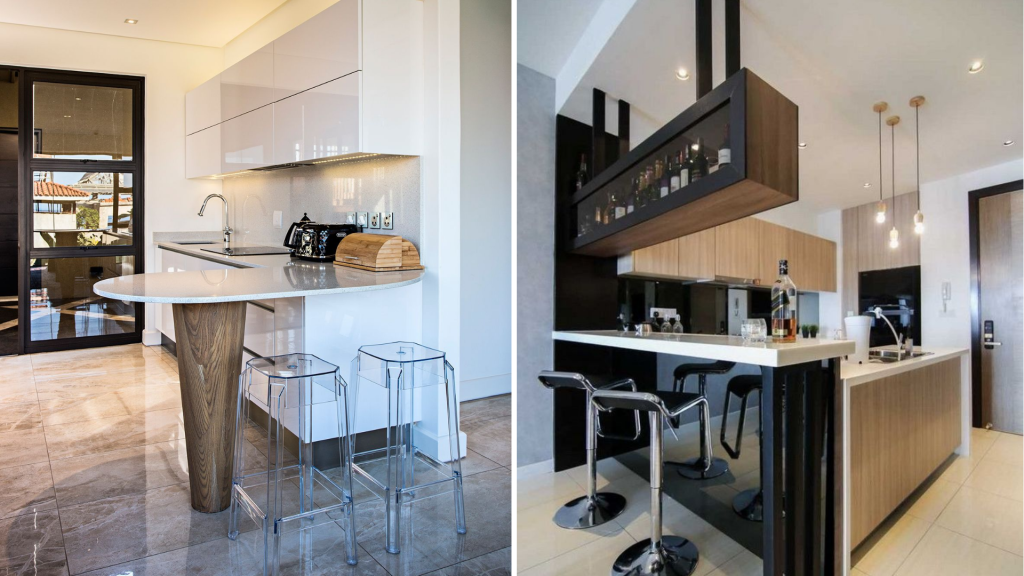
If you’re planning on saving and spending less, modern laminates are here at your service. They look like concrete, wood, and stone. It’s a great choice for a small breakfast counter as it does not cost much and it’s easy to clean.
8. Tiles
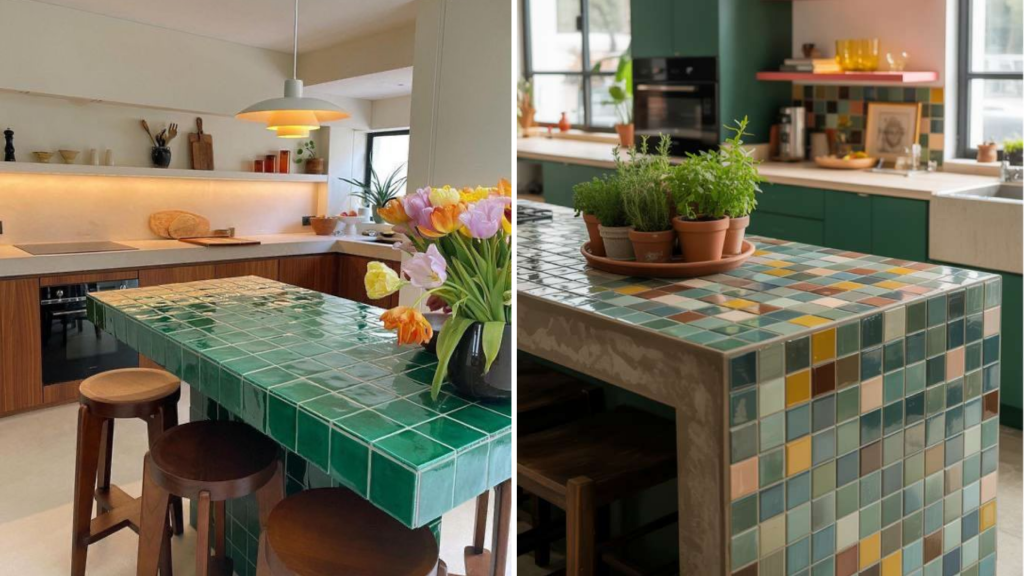
It allows you to show your creativity with modern colour and pattern. Larger-format tiles reduce the grout lines, which can be difficult to clean. It’s a fantastic way to add a unique, creative touch.
Finishing Touches with Lighting & Comfort
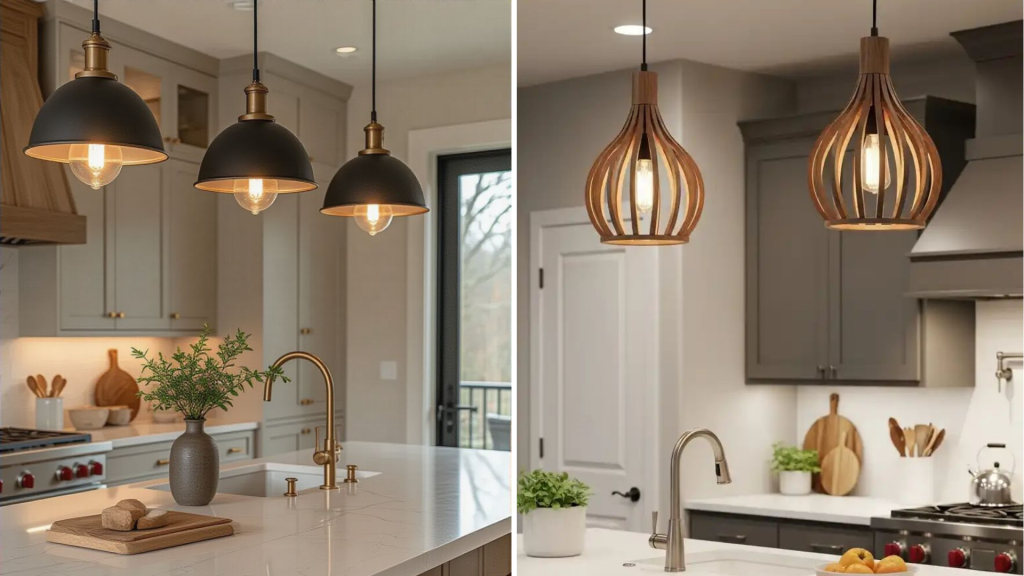
Lighting plays an important role. It is recommended to go for pendant lights for a classic and luxurious breakfast counter. Because these lights provide focused task lighting, visually define the space, and impart a major style element. You can hang them 28-34 inches above the countertop, centered over each seating position. It will give your kitchen or a living room cum open kitchen an intimate and well-lit zone.
How Can Opalspace Help You?
Finding the perfect breakfast counter, be it a smooth part of a modular kitchen, a clever foldable unit, or a social anchor in an open kitchen, is about uniting smart design with your daily life. No matter if you dream up a divider style breakfast counter design, a space-saving pull-out breakfast counter design, or a granite breakfast counter for that modern organic energy, we bring your concept to life.
FAQs
1. What's the ideal breakfast counter depth?
The ideal depth (overhang) for a comfortable seated eating area is typically 18 to 24 inches. This provides ample space for a place setting while allowing enough knee clearance underneath (usually 15-18 inches deep). Ensure the total countertop depth is deep enough to accommodate this overhang plus the base cabinets behind it.
2. What is the best countertop for a breakfast counter?
The ‘best’ material depends on your needs. Engineered quartz is often the top recommendation for its unbeatable blend of durability, non-porous hygiene, stain resistance, and wide design variety. It’s ideal for a busy, family-friendly breakfast counter. For a warm, classic look, butcher block or high-quality granite are excellent choices.
3. What material is used for breakfast counter tops?
Common materials include Engineered Quartz, Granite/Quartzite (Natural Stone), Butcher Block/Wood, Laminate, Solid Surface (e.g., Corian), Concrete, Stainless Steel, and Tile. Your choice should balance aesthetics, budget, durability, and maintenance requirements.
4. How wide should a breakfast counter be?
Plan for at least 24 inches of width per seated person for comfortable elbow room. For a standard two-seater breakfast counter, a minimum length of 48 inches is recommended. For three seats, aim for at least 72 inches.
5. What's the best shape for a breakfast counter?
The best shape is dictated by your kitchen layout. A straight, rectangular peninsula or island extension is most common and space-efficient. An L-shaped or curved breakfast counter can soften corners and improve traffic flow in an open plan. A circular or waterfall-end design can act as a striking focal point.